Delayed Sleep Phase Syndrome Chronotherapy – A Gradual Schedule Shift Protocol for Night Owls
Introduction
In today’s fast-paced world, sleep is more vital than ever, yet it is increasingly overlooked. Millions of people struggle each night with irregular sleep patterns. Among many sleep disorders, Delayed Sleep Phase Syndrome (DSPS) — also known as Delayed Sleep-Wake Phase Disorder (DSWPD) — is a major circadian rhythm sleep disorder that affects adolescents, young adults, and even older age groups.
Unlike typical insomnia, DSPS is characterized by a significant delay in sleep onset and wake times. Even when individuals try to fall asleep earlier, their bodies naturally resist sleep until the early hours of the morning — often between 2 a.m. to 6 a.m. As a result, waking up for school, work, or other morning obligations becomes nearly impossible.
This condition can severely impact social life, academic and career success, and mental health. Many sufferers are misdiagnosed with insomnia or are unfairly blamed for having poor sleep habits, while the real culprit is a biological shift in the body’s internal clock.
Enter chronotherapy. This is a structured sleep schedule modification technique designed to gradually shift a person’s circadian rhythm toward an earlier, socially acceptable sleep-wake pattern. Instead of forcing early sleep — which often fails — chronotherapy honors natural biological cues, gradually advancing the schedule until a consistent, earlier bedtime is achievable.
For night owls — people who naturally prefer late nights and late mornings — chronotherapy presents one of the most effective, sustainable, and non-medication-based solutions. In this article, we explore the science behind DSPS, examine how chronotherapy works, review expert recommendations and medical evidence, and provide practical steps to help realign your internal clock safely.
Features and Medical Evidence Supporting Chronotherapy for DSPS
Chronotherapy for Delayed Sleep Phase Syndrome is increasingly supported by sleep specialists worldwide. Recognized by the American Academy of Sleep Medicine (AASM) and included in the ICSD-3 (International Classification of Sleep Disorders), DSPS is formally acknowledged as a significant circadian disorder involving a misaligned body clock.
Scientific studies demonstrate that structured schedule modifications, timed exposure to light, and behavioral interventions like limiting evening light greatly enhance chronotherapy’s success. A notable study in the Journal of Clinical Sleep Medicine showed measurable improvements in individuals with DSPS using controlled schedule shifts (advancing or delaying sleep by 1–3 hours daily), guided by morning light therapy and evening darkness.
How Chronotherapy Works
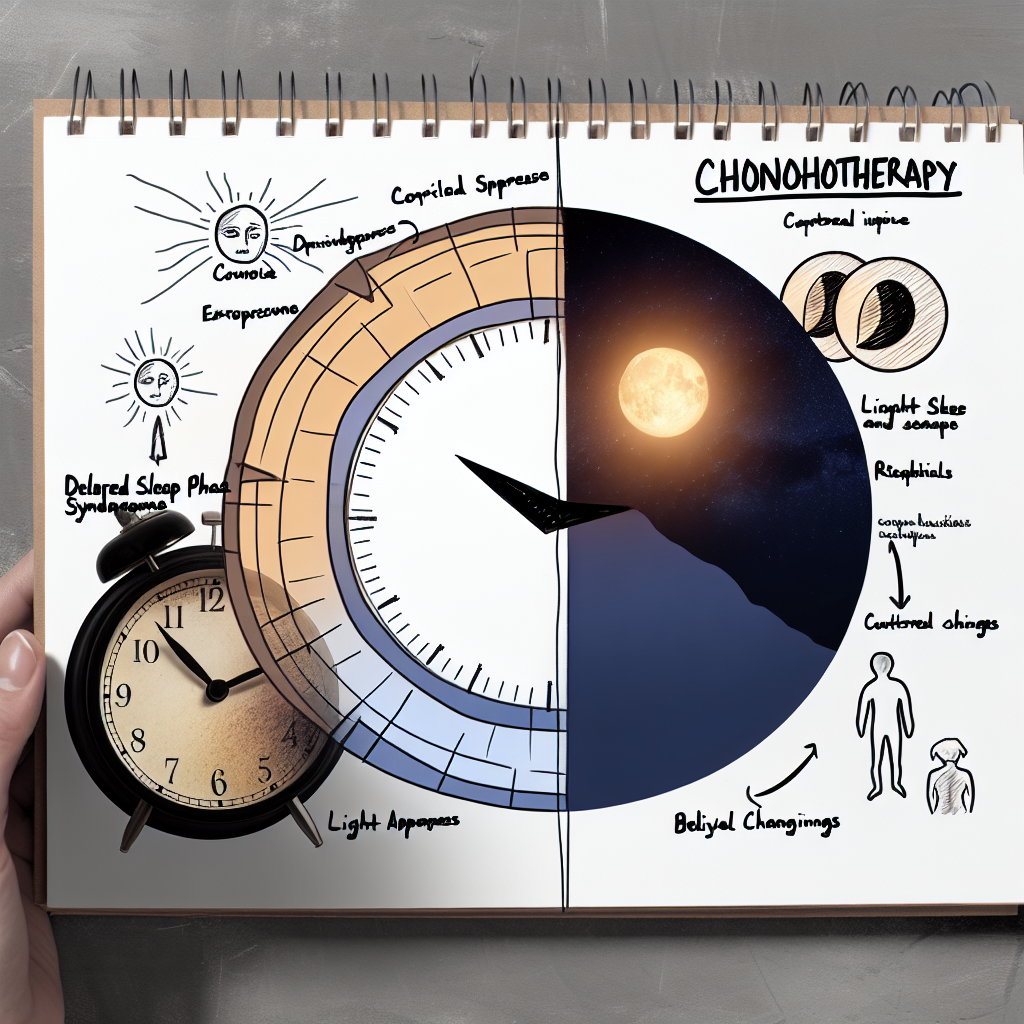
Chronotherapy manipulates the body’s circadian rhythm — regulated by the brain’s suprachiasmatic nucleus (SCN), which responds to light, melatonin, and environmental cues like temperature and food timing. The technique involves either delaying or advancing sleep incrementally each day until the desired sleep time is reached.
One widely used method is the clockwise rotation technique. For example, someone with a usual 4 a.m. bedtime who wants to shift to 11 p.m. would delay bedtime progressively: Day 1 – Sleep at 5 a.m., Day 2 – Sleep at 8 a.m., Day 3 – Sleep at 11 a.m., and so on—gradually cycling around the clock to land at 11 p.m.
This method recalibrates the body’s internal schedule and increases the likelihood of achieving consistent sleep-wake times aligned with daily demands.
Enhancing Chronotherapy with Light and Behavior
Chronotherapy is most effective when combined with strategic lifestyle changes. A 2017 review in Behavioral Sleep Medicine highlighted the benefits of morning bright light therapy, ideally using a 10,000-lux light box within 30 minutes of waking. This strengthens the sleep-wake cycle and boosts alertness.
To avoid counteracting the protocol, evening blue light exposure must be reduced. Devices like smartphones, tablets, and laptops should be minimized or filtered with blue-light-blocking glasses or apps. Consistency in wake time, even on weekends, is also critical.
Melatonin & Additional Supports
Supplementation with melatonin under supervision may amplify results. A 2022 review in Nature and Science of Sleep affirmed that melatonin can promote earlier sleep if taken 3–6 hours before desired bedtime. However, not everyone benefits from melatonin in the same way, and improper timing may worsen symptoms — medical guidance is strongly advised.
Who Should Try Chronotherapy?
Chronotherapy is recommended as a first-line treatment for adolescents and adults suffering from DSPS before trying sleep medications. It is especially suitable for teens (as supported by the American Academy of Pediatrics study) because behavioral methods are safer for developing bodies and do not carry the risks of medication dependence. Everyone considering chronotherapy should consult a sleep specialist for tailored support.
Conclusion
Delayed Sleep Phase Syndrome is not simply “staying up too late”—it is a biological rhythm disorder with serious consequences for daily life. Fortunately, chronotherapy offers a powerful, natural solution. Through controlled shifting of bedtimes, strategic light exposure, and consistent routines, your internal clock can be rewired to match social life, school, or work schedules.
Patience is key: successful chronotherapy takes time and discipline. However, the rewards are substantial—better sleep, clearer thinking, more energy, and improved emotional health. With guidance, chronotherapy remains a sustainable, drug-free option for long-term sleep improvement.
References
– American Academy of Sleep Medicine. (2014). ICSD-3: International Classification of Sleep Disorders.
– Journal of Clinical Sleep Medicine. (2011). Circadian rhythm sleep disorders: diagnostic review.
Concise Summary
Delayed Sleep Phase Syndrome (DSPS) is a circadian rhythm disorder where individuals naturally fall asleep and wake much later than societal schedules allow. Chronotherapy—a gradual, controlled shift of sleep and wake times—offers a behavioral method to correct this delay. Supported by scientific research and organizations like the AASM, chronotherapy works best when combined with morning light exposure, reduced evening screen time, and, in some cases, melatonin. Unlike medications, this non-invasive approach aligns internal biological rhythms naturally, improving sleep, mood, and productivity. With patience and consistency, chronotherapy empowers night owls to reset their clocks for healthier living.

Dominic E. is a passionate filmmaker navigating the exciting intersection of art and science. By day, he delves into the complexities of the human body as a full-time medical writer, meticulously translating intricate medical concepts into accessible and engaging narratives. By night, he explores the boundless realm of cinematic storytelling, crafting narratives that evoke emotion and challenge perspectives.
Film Student and Full-time Medical Writer for ContentVendor.com