EMF Sensitivity and Sleep – Practical Mitigation Strategies for the Electrically Sensitive Sleeper
In our fast-paced, technology-driven world, **sleep** is an essential refuge, crucial for maintaining overall health and well-being. However, an often-overlooked factor that could be disrupting our sleep is **electromagnetic fields** (**EMFs**). These invisible energy fields are generated by electronic devices such as **cell phones**, **Wi-Fi routers**, and other household electronics. While EMFs are all around us, some individuals are more sensitive to these fields and experience symptoms such as **headaches**, **insomnia**, and **fatigue**. This condition is often referred to as **electromagnetic hypersensitivity** (**EHS**) or **EMF sensitivity**.
The rise in electronic device usage has heightened concerns about how EMFs might impact sleep, particularly for those who are **electrically sensitive**. Sleep issues related to EMF exposure can become a significant health concern, impacting **cognitive function**, **emotional regulation**, and **physical health**. For those who already experience sleep disturbances, understanding the potential effects of EMFs and exploring practical mitigation strategies is crucial.
The interplay between EMFs and sleep health has garnered attention from both the **scientific community** and the general public. Although the research is ongoing and sometimes controversial, emerging studies suggest that EMFs can disrupt sleep patterns by affecting the body’s natural electromagnetic signals. There is evidence indicating that EMF exposure reduces the production of **melatonin**, a hormone that regulates sleep-wake cycles, which can lead to difficulties in falling asleep and staying asleep.
For individuals experiencing EHS, even low levels of EMFs can provoke a range of symptoms. These individuals may experience disrupted sleep patterns, which can lead to chronic sleep deprivation and subsequently affect overall health. Understanding the science behind EMF exposure and implementing mitigation strategies could improve sleep quality and overall well-being for those affected.
Features
The relationship between EMFs and health, particularly sleep, has been a subject of research for years. Although the **World Health Organization** ([WHO](https://www.who.int/peh-emf/publications/facts/fs296/en/)) has acknowledged the condition of EHS, it states that scientific evidence on the issue is inconsistent. Nevertheless, several studies have explored the potential effects of EMFs on sleep and health.
One study published in the *Journal of Sleep Research* indicated that exposure to EMF fields could affect sleep by altering **EEG readings** during sleep. These alterations suggest a potential disturbance in the natural sleep pattern. Furthermore, a study from *Bioelectromagnetics* found a link between EMF exposure and reduced melatonin production. Melatonin is vital for regulating sleep and any reduction in its production can disrupt sleep cycles.
Another study in the *European Journal of Neuroscience* found that nighttime exposure to certain frequencies of EMFs could affect the natural flow of brain activities that occur during sleep, possibly impeding the restorative processes that sleep is meant to provide. The studies underscore the importance of mitigating EMF exposure, especially for individuals exhibiting EMF sensitivity symptoms.
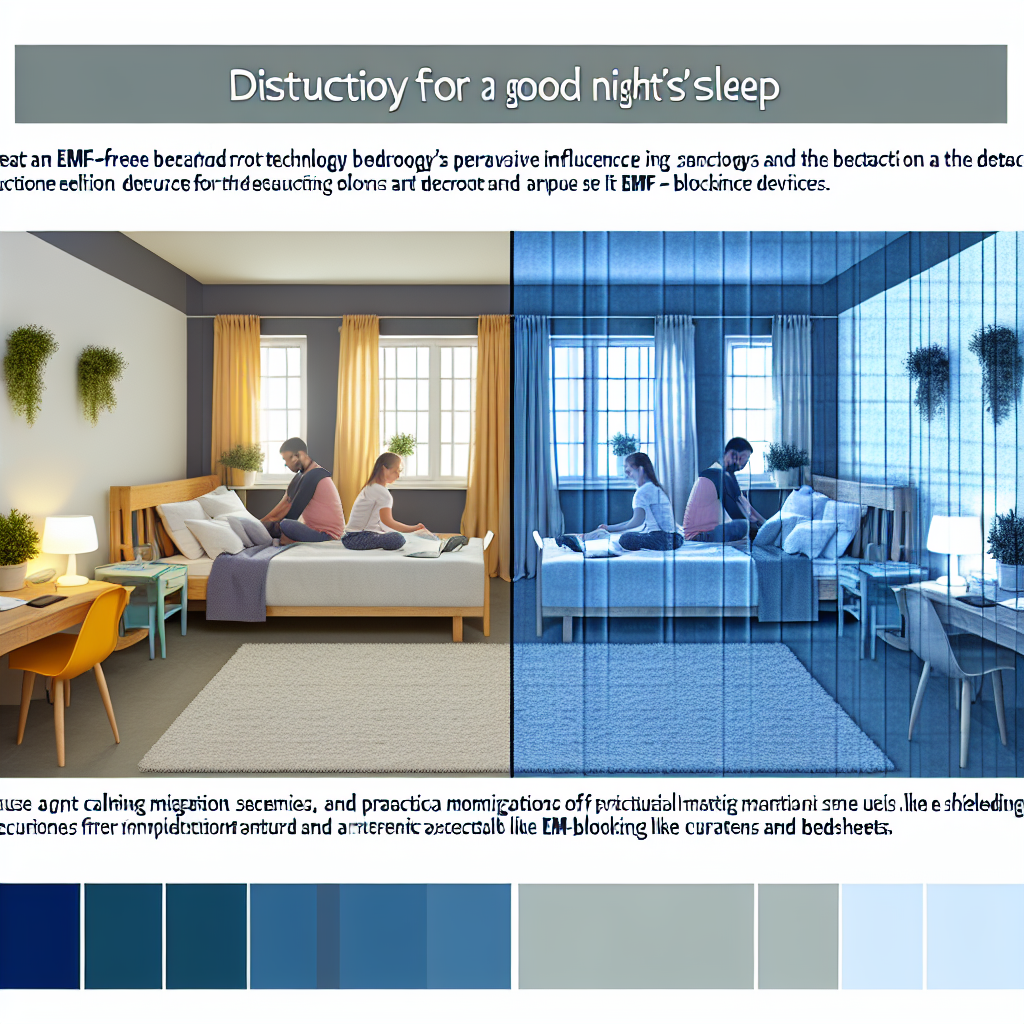
The development of strategies to mitigate EMF exposure has seen an increase in demand. Research suggests creating a sleep environment with minimal electronic devices, using EMF-blocking materials, and optimizing bedroom settings can help improve sleep quality for EHS individuals. Items such as **EMF-shielding canopies** or **paint**, and the removal of electronic devices from bedrooms are practical solutions for reducing EMF exposure during sleep.
While scientific exploration into the effects of EMFs continues, the need for practical solutions is vital for those impacted by EMF sensitivity. As research evolves, greater understanding and improved mitigation options are expected to emerge.
Conclusion
In conclusion, while the comprehensive understanding of **EMF sensitivity** and its impact on sleep is still developing, there is enough evidence to suggest that EMF exposure can interfere with sleep patterns for some individuals. For those electrically sensitive sleepers, implementing EMF mitigation strategies can result in significant improvements in sleep health. Steps such as creating an **EMF-free sleep environment**, using EMF-blocking products, and limiting night-time exposure to electronic devices may reduce symptoms and enhance sleep quality.
As we continue to integrate technology into our daily lives, understanding its effects, particularly in sensitive individuals, remains essential. Awareness and education about EMF sensitivity and sleep must be prioritized to adapt to our increasingly electronic world. In this way, we can safeguard our health and ensure that technology enhances our lives without compromising our essential rest.
**References:**
– [World Health Organization](https://www.who.int/peh-emf/publications/facts/fs296/en/). (2005). *Electromagnetic fields and public health*.
– [Journal of Sleep Research](https://onlinelibrary.wiley.com/doi/10.1111/j.1365-2869.2007.00583.x). (2007). *The effect of electromagnetic fields emitted by mobile phones on human sleep*.
– [Bioelectromagnetics](https://pubmed.ncbi.nlm.nih.gov/11169425/). (2001). *Radiofrequency electromagnetic field exposure and sleep disturbances*.
– [European Journal of Neuroscience](https://onlinelibrary.wiley.com/doi/10.1111/j.1460-9568.2008.06468.x). (2008). *Impact of electromagnetic fields on the human brain*.
**Concise Summary:**
Electromagnetic fields (EMFs), emitted by common electronic devices, are a growing concern for their potential to disrupt sleep, particularly for those with electromagnetic hypersensitivity (EHS). Emerging research suggests that EMFs can affect melatonin production and sleep patterns. Solutions include creating EMF-free sleep environments and using EMF-blocking materials. Understanding and mitigating EMF exposure can significantly benefit sleep quality and overall health as we continue to integrate technology into our daily lives.

Dominic E. is a passionate filmmaker navigating the exciting intersection of art and science. By day, he delves into the complexities of the human body as a full-time medical writer, meticulously translating intricate medical concepts into accessible and engaging narratives. By night, he explores the boundless realm of cinematic storytelling, crafting narratives that evoke emotion and challenge perspectives.
Film Student and Full-time Medical Writer for ContentVendor.com