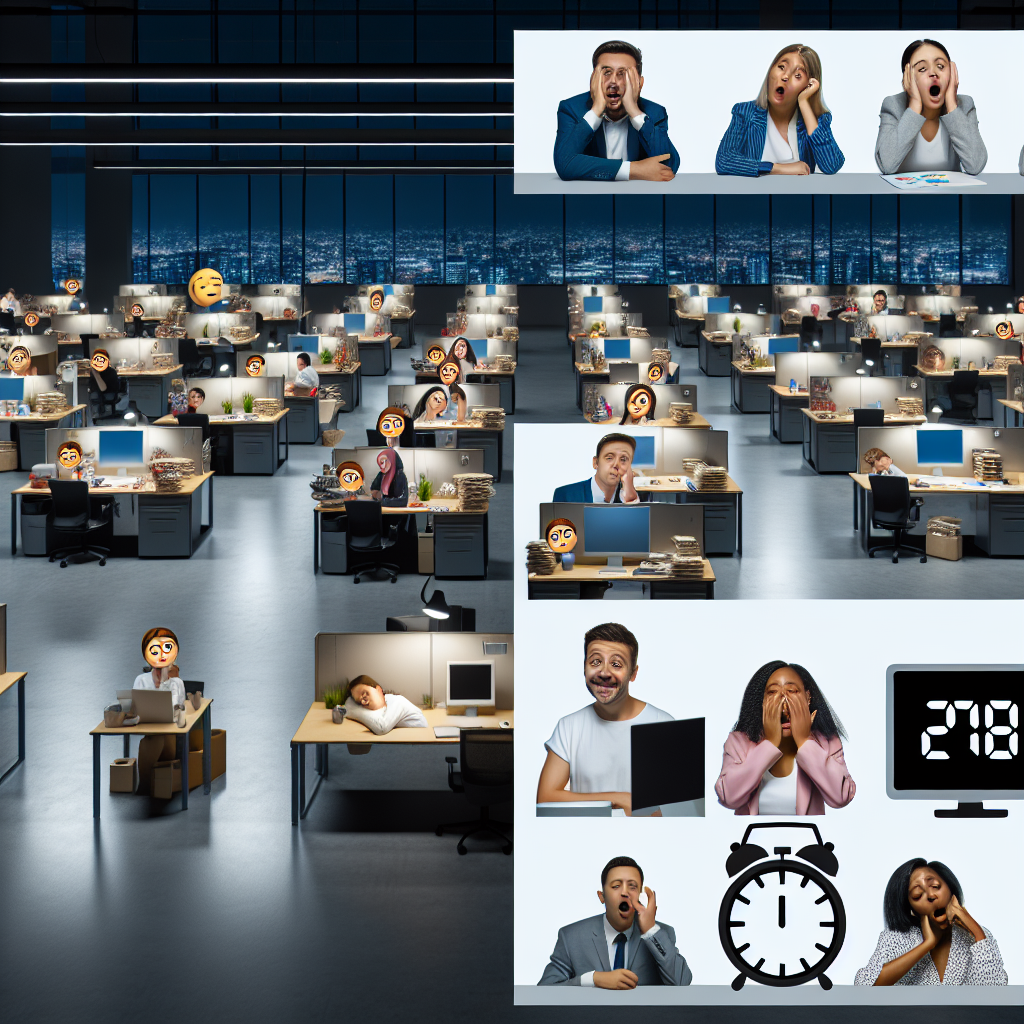
The Hidden Sleep Epidemic That’s Tanking Workplace Productivity And Nobody’s Getting Diagnosed
In today’s fast-paced world, the importance of **quality sleep** often falls by the wayside. As we juggle work, family, and various personal commitments, sleep becomes a commodity rather than a necessity. However, an increasing number of studies have highlighted a hidden **sleep epidemic** that is quietly eroding **workplace productivity**. Although **sleep disorders** and **sleep deprivation** have long been recognized as widespread issues, there is an alarming gap in diagnosis and treatment, particularly in the context of how these conditions impact **workplace efficiency**. This epidemic is not just about individuals feeling tired; it poses significant economic implications and affects the overall health and well-being of employees across all industries.
**Sleep** is not just a passive state of rest; it’s an active process that significantly impacts nearly every system in the body, from the brain to the heart. Despite this, **sleep disorders** are frequently underdiagnosed. Conditions like **insomnia**, **sleep apnea**, and **restless leg syndrome** disrupt sleep quality, leading to increased daytime fatigue, irritability, and impaired cognitive function. The **Centers for Disease Control and Prevention (CDC)** define sleep deprivation as a public health epidemic, but the ripple effects reach far beyond personal health. In the workplace, inadequate sleep undermines productivity, increases error rates, and contributes to accidents and injuries—a hidden drain on corporate resources that few organizations address adequately.
One of the largest contributing factors to this unrecognized epidemic is the stigma surrounding sleep. Culturally, sleep is often viewed as a luxury or a sign of weakness. The “I’ll sleep when I’m dead” mentality prevails, glorifying short sleep durations in the name of productivity. This social narrative is misleading and detrimental, as sleep is fundamental to effective cognitive and physical performance. Chronic insufficient sleep is linked to a plethora of health problems, including **cardiovascular disease**, **obesity**, and **diabetes**, and it significantly exacerbates mental health issues like **depression** and anxiety. Employers, therefore, have a vested interest in advocating for better sleep health in the workplace as a strategy to enhance employee performance and well-being.
A **Harvard Medical School** study estimates that sleep deprivation costs U.S. companies $63.2 billion annually in lost productivity. This staggering figure points to the essential need for businesses to prioritize **sleep health initiatives** as a cornerstone of corporate wellness programs. Equipping employees with knowledge about **sleep hygiene**, offering flexible work schedules, and creating an environment that supports rest and recovery can have a profound impact on overall productivity and job satisfaction.
Features: Medical Research on Sleep and Workplace Productivity
Scientific studies have consistently underscored the profound link between **sleep** and **productivity**. Research published in the **”Journal of Occupational and Environmental Medicine”** indicates a direct correlation between sleep deprivation and decreased work performance. The study report emphasizes that workers who obtain less than six hours of sleep per night are significantly more likely to experience productivity loss than their well-rested counterparts.
Moreover, a study by the **RAND Corporation** provides a comprehensive analysis of the economic impact of insufficient sleep. It reveals that sleep deprivation leads to a higher likelihood of **absenteeism** and “presenteeism,” a term used to describe reduced productivity while at work. The RAND study estimates that increasing nightly sleep for workers to 8-9 hours could add up to 1.35 million working days back into the economy every year.
On a neurological level, the importance of sleep for **cognitive function** and **decision-making** cannot be overstated. The **National Sleep Foundation** highlights that during sleep, the brain processes information and consolidates memories, which enhances creativity and problem-solving abilities—skills that are critical in most workplaces. Sleep also affects mood stability, interpersonal communications, and stress management, all of which are essential for a harmonious and productive work environment.
The underdiagnosis of sleep disorders is another aspect worth noting. A report in the journal **”Sleep Medicine Reviews”** suggests that nearly 80% of moderate to severe obstructive sleep apnea cases remain undiagnosed. Untreated sleep apnea can lead to significant daytime sleepiness and cognitive impairments, with negative repercussions on work performance. Despite the high prevalence and impact of this disorder, it often goes unnoticed by both employees and employers.
In response to these findings, several companies have started implementing sleep wellness programs. For instance, offering nap pods and quiet rooms, along with promoting flexible work hours, has shown promise in enhancing employee productivity and satisfaction. These initiatives represent a progressive shift towards recognizing the immense value of sleep in the modern workplace.
Conclusion
The hidden sleep epidemic is more than an individual health issue; it’s a societal concern with far-reaching economic and personal implications. As awareness grows, there is a critical need for a paradigm shift in how sleep is perceived both culturally and within the workplace. Organizations can no longer afford to ignore the importance of sleep in enhancing employee productivity and overall well-being. By fostering an environment that prioritizes sleep health, companies can unlock greater potential and productivity while also contributing to the holistic well-being of their employees. Acknowledging the power of a good night’s sleep not only benefits the individual but ultimately strengthens the foundation of thriving businesses.
References
[Centers for Disease Control and Prevention (CDC)](https://www.cdc.gov/sleep/about_sleep/sleep_deprivation.html)
[Harvard Medical School’s Division of Sleep Medicine](https://healthysleep.med.harvard.edu/healthy/matters/consequences)
[Journal of Occupational and Environmental Medicine](https://journals.lww.com/joem)
[RAND Corporation: Why Sleep Matters](https://www.rand.org/pubs/research_reports/RR1791.html)
[Sleep Medicine Reviews](https://www.sciencedirect.com/journal/sleep-medicine-reviews)
**Concise Summary:**
Inadequate sleep is increasingly recognized as a significant impediment to workplace productivity, impacting both individual and corporate health. Studies reveal that sleep disorders like **insomnia** and **sleep apnea** are vastly underdiagnosed, contributing to economic costs exceeding $63 billion annually in the U.S. Companies are beginning to adopt sleep-friendly workplace practices, such as flexible schedules and nap pods, to counteract these productivity losses. By promoting healthier sleep patterns, businesses can enhance employee well-being and efficiency. This shift not only supports personal and communal health but also strengthens economic resilience.

Dominic E. is a passionate filmmaker navigating the exciting intersection of art and science. By day, he delves into the complexities of the human body as a full-time medical writer, meticulously translating intricate medical concepts into accessible and engaging narratives. By night, he explores the boundless realm of cinematic storytelling, crafting narratives that evoke emotion and challenge perspectives.
Film Student and Full-time Medical Writer for ContentVendor.com