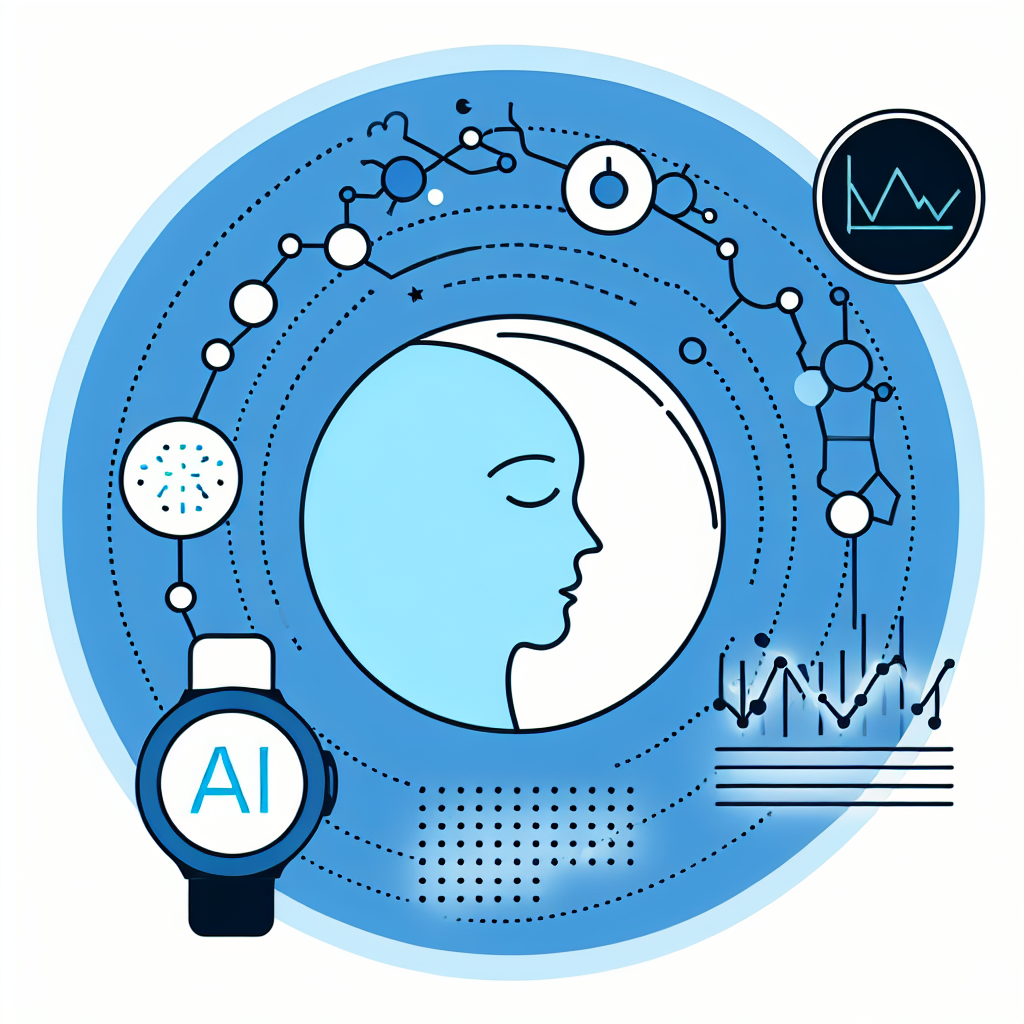
Unlocking the Future of Sleep Medicine: AI-Driven Breakthroughs in Diagnosing Sleep Disorders
Introduction
In recent years, **sleep medicine** has undergone a remarkable transformation, thanks to significant technological advancements. As sleep is fundamental to overall health and well-being, understanding and treating **sleep disorders** is crucial. From insomnia and **sleep apnea** to restless leg syndrome and narcolepsy, millions of individuals worldwide are affected by these conditions, impairing their quality of life. According to the [**Centers for Disease Control and Prevention (CDC)**](https://www.cdc.gov/sleep/index.html), insufficient sleep is a public health problem, with an estimated 50-70 million U.S. adults experiencing sleep disorders.
The traditional approaches to diagnosing sleep disorders have often relied on subjective assessments, patient-reported symptoms, and time-intensive tests like **polysomnography**. While these methods can be effective, they come with limitations, including accessibility, cost, and human error. Enter **artificial intelligence (AI)**—a game-changer that is revolutionizing the detection and treatment of sleep disorders. AI brings unparalleled precision and efficiency, transforming the landscape of sleep medicine by leveraging vast amounts of data and sophisticated algorithms.
AI-driven tools and technologies offer new possibilities for healthcare professionals. These tools are designed to enhance, rather than replace, clinician judgment, providing a more accurate diagnosis and personalized treatment plans. By harnessing **machine learning**, big data analytics, and predictive modeling, AI offers a holistic understanding of sleep patterns and potential disorders. In combination with wearable technology and home-based sleep monitoring devices, AI enables continuous data collection in natural sleep environments, offering a comprehensive view of an individual’s sleep health.
As we explore the cutting-edge developments in AI-driven sleep medicine, it’s important to highlight both the scientific achievements and potential ethical considerations. The integration of AI in sleep medicine raises important questions about **data privacy**, algorithmic bias, and human oversight in decision-making. Despite these challenges, the benefits of AI in diagnosing and managing sleep disorders are undeniable, promising a future where improved sleep health is more accessible and affordable for all.
Features
Several professional and medical studies underscore the impact of AI on sleep disorder diagnosis and management. A noteworthy study conducted at [Stanford University](https://news.stanford.edu/) utilized AI algorithms to analyze sleep data from polysomnography tests. The AI model outperformed human experts in detecting specific sleep patterns and disorders, such as **sleep apnea**, by analyzing minute changes in sleep stages and respiratory patterns. The accuracy and consistency of AI-driven analysis were found to be significantly higher, minimizing false diagnoses and unnecessary treatments.
Moreover, wearable technology, coupled with AI, plays a critical role in sleep studies and diagnosis. Devices like smartwatches and fitness bands collect continuous data on heart rate, activity levels, and sleep patterns. A study published in the [Journal of Medical Internet Research](https://www.jmir.org/) demonstrated that AI algorithms could effectively diagnose **insomnia** and predict sleep disturbances using data from consumer-grade wearables. This approach allows for a more comfortable and less invasive method of monitoring sleep, making it a feasible option for long-term sleep health assessment.
AI is also advancing personalized treatment for sleep disorders. Researchers at [University of Oxford](https://www.ox.ac.uk/news) have developed AI models that can recommend tailored treatment plans, predicting patient responses to various interventions such as **cognitive-behavioral therapy for insomnia (CBT-I)** or continuous positive airway pressure (CPAP) for sleep apnea. These advancements allow clinicians to optimize treatment efficacy and reduce trial-and-error approaches, thereby improving patient outcomes.
While AI proves beneficial in sleep medicine, there are challenges that need addressing, particularly regarding the ethical use of AI and data privacy concerns. Ensuring AI systems are free from biases and inclusive of diverse demographics is critical for equitable healthcare delivery.
Conclusion
In conclusion, the integration of artificial intelligence in sleep medicine represents a transformative leap toward more accurate, efficient, and personalized care. As technology continues to advance, the potential for AI to reshape how we diagnose and manage sleep disorders grows exponentially. While ethical considerations and data privacy issues must be diligently managed, the promise of AI-driven sleep health is undeniable. By leveraging AI’s capabilities, we are on the brink of unlocking a new era of sleep medicine that fosters better health outcomes, enhances quality of life, and makes superior sleep health accessible to all. As these developments progress, continued research, collaboration, and regulation will be essential in ensuring that the future of sleep medicine remains safe, equitable, and beneficial to everyone.
Summary
**Artificial Intelligence (AI)** is revolutionizing **sleep medicine** by improving the diagnosis and management of sleep disorders like **insomnia** and **sleep apnea**. Traditional diagnostic methods, though effective, are limited by costs and potential errors. AI offers increased precision using machine learning and big data analytics, providing a holistic view of sleep health. Studies from **Stanford University** and the **University of Oxford** illustrate AI’s ability to outperform human assessments and create personalized treatments. Despite ethical concerns like data privacy and algorithmic bias, AI promises more accessible, affordable, and effective sleep health solutions. Continued research and collaboration are essential for equitable AI integration in healthcare.

Dominic E. is a passionate filmmaker navigating the exciting intersection of art and science. By day, he delves into the complexities of the human body as a full-time medical writer, meticulously translating intricate medical concepts into accessible and engaging narratives. By night, he explores the boundless realm of cinematic storytelling, crafting narratives that evoke emotion and challenge perspectives.
Film Student and Full-time Medical Writer for ContentVendor.com