The Next Frontier in Sleep Medicine: How AI-Driven Predictions Are Revolutionizing Sleep Apnea Diagnostics
Introduction
**Sleep** is a fundamental aspect of human health, influencing everything from cognitive function to physical health. Yet, disorders like **sleep apnea** disrupt this vital process, contributing to a host of health problems including **cardiovascular disease, diabetes**, and impaired **cognitive performance**. Traditional diagnostics for sleep apnea involve **polysomnography (PSG)** conducted in sleep laboratories, a method considered the gold standard but one that is incredibly resource-intensive, costly, and often inconvenient for patients.
Enter the world of **Artificial Intelligence (AI)**, a transformative force cutting across various sectors, and now making waves in the realm of **sleep medicine**. AI-driven predictions are poised to revolutionize the way sleep apnea is diagnosed, offering a quicker, more accurate, and less intrusive alternative to traditional methodologies. By leveraging **machine learning algorithms**, vast amounts of data can be analyzed with speed and precision to identify patterns and anomalies in sleep patterns indicative of sleep apnea. This emerging technology not only enhances diagnostic accuracy but also democratizes access to care, bringing state-of-the-art medical diagnostics to even the most remote corners of the globe.
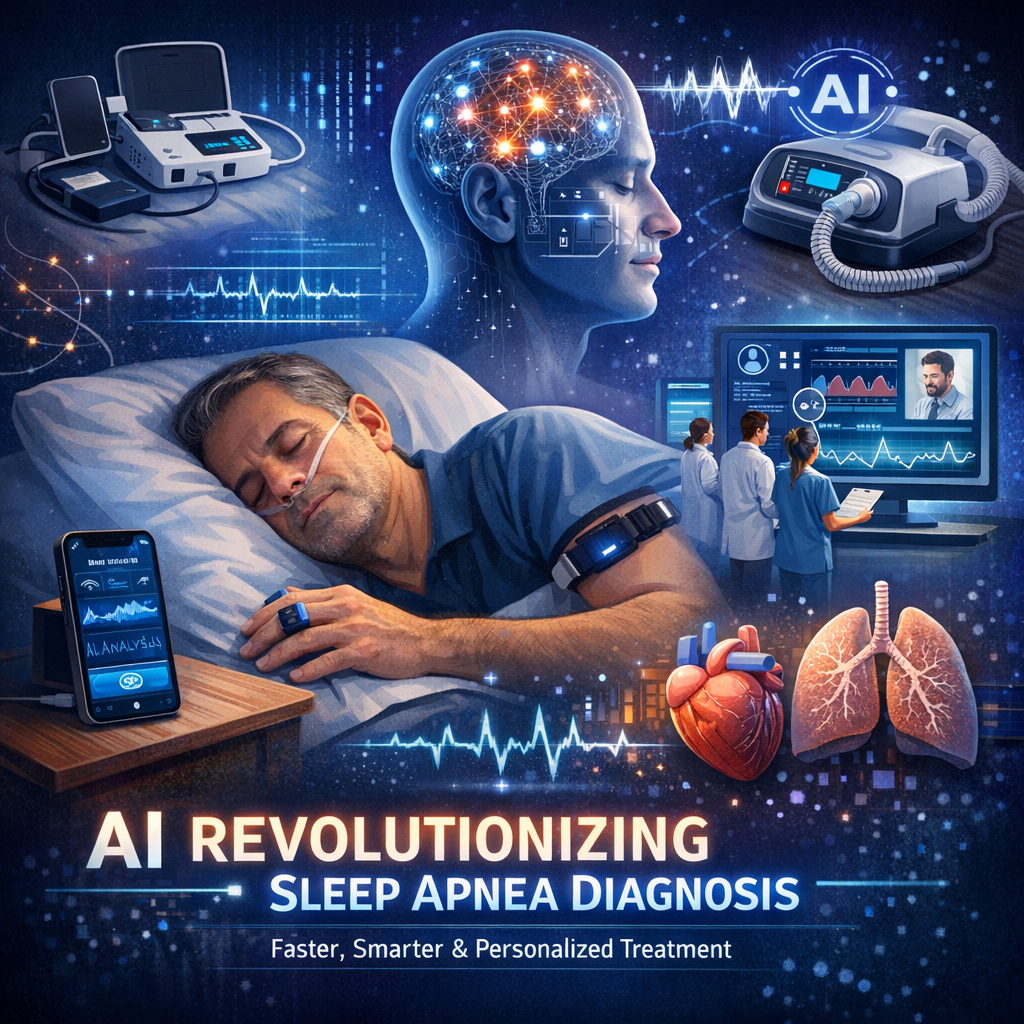
The integration of **AI in sleep medicine** represents a thrill of anticipation and hope for millions affected by sleep apnea. From portable diagnostic tools in your home to AI-driven software that can analyze data more accurately than the human eye, the potential applications seem boundless. As AI continues to evolve, it promises to simplify complex diagnostic procedures while reducing costs and streamlining patient care pathways. The implications for global health are enormous, holding promise for personalized and predictive healthcare models that cater specifically to individual needs.
The convergence of AI and sleep medicine is an exciting development, painting a future where sleep disorders are easier to detect and manage. This innovation stands at the frontier of modern medicine, heralding a new era of healthcare that is smarter, faster, and more inclusive.
Features
Advancements in **AI technology** are underpinned by significant professional and medical studies that validate its application in sleep apnea diagnostics. The **machine learning approach** involves training algorithms using datasets from thousands of previous sleep studies. A recent study published in the journal **”[Sleep](https://academic.oup.com/sleep)”** highlights how AI algorithms analyzed data sets far broader than those typically examined by human technicians. The researchers found that AI could predict the presence of sleep apnea with high precision, accuracy that rivaled and sometimes exceeded conventional methods.
One example of AI application is the use of **convolutional neural networks (CNNs)** to classify sleep stages and apnea events. A study from the **”[Journal of Clinical Sleep Medicine](https://jcsm.aasm.org)”** demonstrated how CNNs can be trained to detect subtle changes in breathing and oxygen saturation levels, hallmark indicators of sleep apnea. These networks process multiple variables simultaneously, learning from each data entry and thereby honing their diagnostic capabilities over time.
Moreover, **AI-driven models** extend beyond diagnostics to **predictive analytics**. For instance, scientists from **Stanford University** have developed an AI system that can predict the likelihood of sleep apnea in patients by analyzing their **electronic health records, lifestyle factors**, and genetic data. This kind of predictive modeling can lead to proactive interventions, reducing the risk of complications associated with untreated sleep apnea.
AI not only aids in diagnosing sleep apnea but also holds potential for tailoring individualized treatment plans. Studies have shown the promise of AI in monitoring the effectiveness of interventions like **Continuous Positive Airway Pressure (CPAP) therapy**. By assessing large volumes of patient data over time, AI systems can identify patients at risk of non-compliance and suggest personalized adjustments in therapy.
As AI establishes its foothold in sleep medicine, ongoing research continues to expand its applications, including home-based diagnostics and real-time monitoring. These innovations are not only about convenience but are crucial for early detection and management of sleep apnea, ultimately improving patient outcomes.
Conclusion
**Artificial Intelligence** is poised to become an indispensable ally in the diagnosis and management of sleep apnea. By transforming traditional methodologies, AI offers unprecedented accuracy, efficiency, and accessibility. Integrating AI into sleep medicine not only enhances diagnostic processes but also paves the way for personalized treatments, making healthcare more patient-centric. As AI technology advances and more studies validate its efficacy, the potential for improving sleep health becomes boundless. This progress signals a promising shift in healthcare paradigms, indicating an era where AI-driven insights lead to better decision-making and, ultimately, healthier lives. The future of sleep medicine is here, and with AI as a guiding force, we are on the cusp of remarkable discoveries. This journey may well redefine how we understand, diagnose, and treat sleep disorders across the globe.
References
– AI Model for Sleep Apnea: [Journal of Clinical Sleep Medicine](https://jcsm.aasm.org)
– AI in Health Records Analysis: [Stanford University Research](https://med.stanford.edu/news/all-news/2021/07/ai-predicts-sleep-apnea.html)
– Convolutional Neural Networks Study: [Sleep Journal](https://academic.oup.com/sleep)
**Concise Summary**
Artificial Intelligence is redefining sleep apnea diagnostics, moving beyond traditional polysomnography with capabilities like machine learning algorithm-enhancements and predictive modeling. AI-driven tools enable faster, more precise diagnostics and access to care globally. Leveraging technologies such as convolutional neural networks, AI not only assists in sleep apnea detection but also supports personalized treatment strategies. The evolution of AI into home diagnostics and real-time monitoring is reshaping patient outcomes and signifies a major leap in medical paradigms, making healthcare more patient-focused and predictive. The future of sleep medicine with AI promises a new era in managing sleep disorders.

Dominic E. is a passionate filmmaker navigating the exciting intersection of art and science. By day, he delves into the complexities of the human body as a full-time medical writer, meticulously translating intricate medical concepts into accessible and engaging narratives. By night, he explores the boundless realm of cinematic storytelling, crafting narratives that evoke emotion and challenge perspectives.
Film Student and Full-time Medical Writer for ContentVendor.com