Why Is Sleep Apnea the Silent Contributor to Early Onset Dementia?
Introduction
**Sleep apnea**, a condition characterized by repeated interruptions in breathing during sleep, often goes unnoticed due to its silent nature. Despite its widespread prevalence, affecting millions globally, the condition is frequently undiagnosed. With daytime symptoms like **fatigue**, **irritability**, and concentration difficulties, it’s easy to misattribute these signs to day-to-day stressors instead of a more insidious underlying cause. Recently, emerging **research** highlights a concerning link between sleep apnea and early onset **dementia**, revealing how the condition can silently accelerate **cognitive decline**.
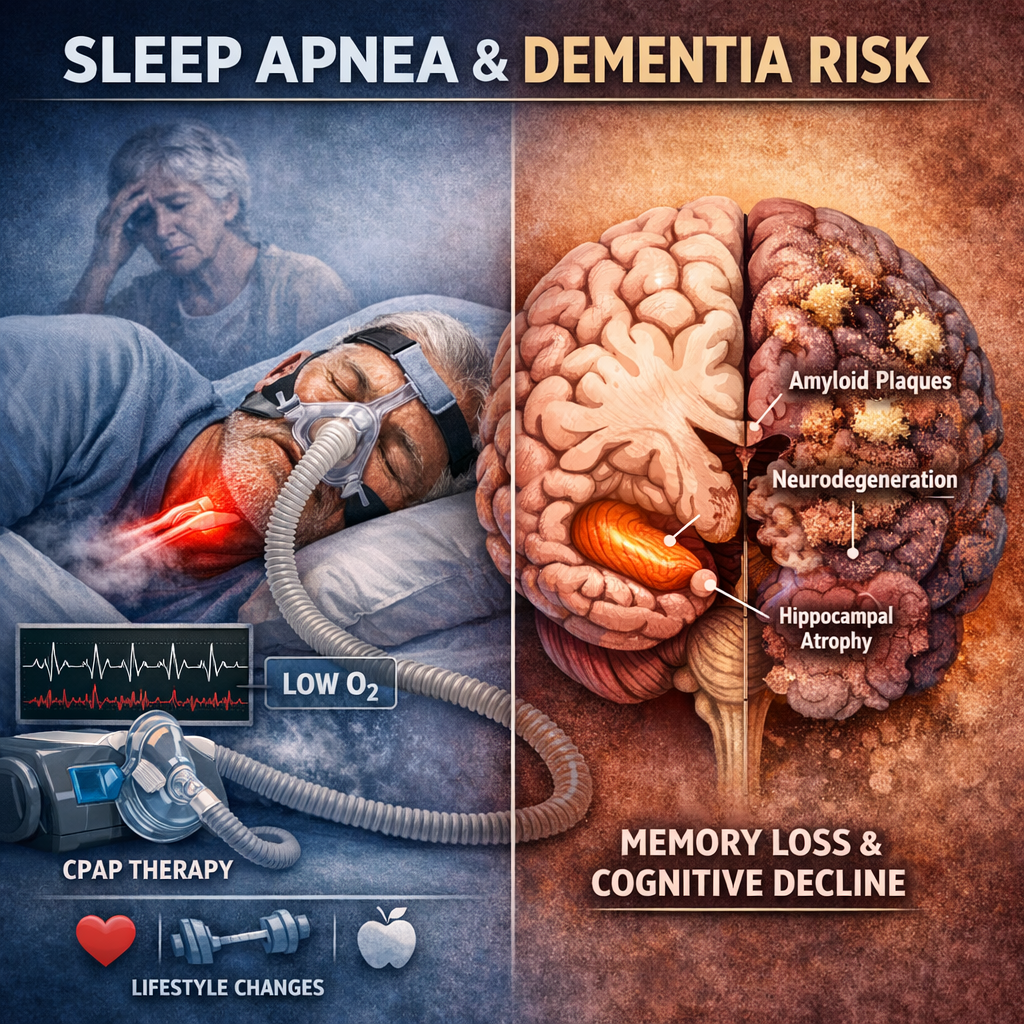
Sleep serves a crucial role in brain health by providing a period for the brain to rest, repair, and consolidate memories. During uninterrupted sleep, neurotoxins are flushed out, synaptic connections are reinforced, and the brain’s metabolism is reset. However, individuals with sleep apnea endure repeated episodes of low oxygen levels (hypoxia), disrupting this restorative process. Continuous exposure to **hypoxia** can lead to **neurodegeneration**, an early marker for dementia. Furthermore, sleep apnea often results in **fragmented sleep**, depriving the brain of crucial deep and rapid eye movement (REM) sleep stages, both vital for **cognitive functioning**.
The silent contribution of sleep apnea to dementia can be attributed to several key mechanisms. Hypoxia contributes to the accumulation of **amyloid-beta plaques**, one of the pathological hallmarks of **Alzheimer’s disease**. Similarly, sustained sleep disruptions due to apnea can lead to **chronic inflammation**, a known risk factor for neurodegenerative diseases. Moreover, the condition can exacerbate other dementia risk factors, such as obesity, hypertension, and diabetes, leading to a cascade of health issues that further strain cognitive resources.
Recognizing sleep apnea is vital in mitigating its long-term impacts on cognition. With advancements in medical technologies and increased awareness, the condition can be more readily identified and managed. Treatments such as **Continuous Positive Airway Pressure (CPAP) therapy** not only alleviate apnea symptoms but also potentially slow cognitive decline if initiated timely. Understanding the intricate connection between sleep health and brain function could thereby transform approaches to preventing and managing early onset dementia in individuals at risk.
Features
Several professional and medical studies have reinforced the link between sleep apnea and early onset dementia. In a [landmark study](https://jcsm.aasm.org/doi/abs/10.5664/jcsm.8320) published in the *Journal of Clinical Sleep Medicine*, researchers found that individuals with untreated sleep apnea were more than twice as likely to develop mild cognitive impairment or dementia over a five-year period compared to those without the condition. This study highlights the vital need for early diagnosis and consistent treatment to potentially delay cognitive decline.
Another significant [research](https://www.mayoclinic.org) conducted by the Mayo Clinic further emphasized the impact of sleep apnea on brain health. The study revealed that **chronic sleep disruption** could lead to reduced brain volume in regions associated with memory and cognitive processing. Repeated episodes of hypoxia contribute to neuronal damage and inadequate glymphatic function—the system responsible for clearing metabolic waste from the central nervous system. Impairment of this physiological cleaning process can lead to the accumulation of **neurotoxic waste products**, expediting the onset of dementia.
Research involving **neuroimaging** has also illustrated the structural changes within the brain due to sleep apnea. A study in the journal *Neurobiology of Aging* utilized MRI scans to show atrophy in the hippocampus and frontal lobes in individuals with untreated sleep apnea. These brain areas are crucial for learning, memory, and executive functions, and their degeneration is a known precursor to Alzheimer’s disease.
Furthermore, studies indicate that sleep apnea exacerbates vascular health issues, such as **hypertension** and **endothelial dysfunction**, which are closely linked to the pathogenesis of dementia. The interruption of normal sleep patterns activates the body’s stress responses, raising the levels of cortisol and other stress hormones that can adversely affect the brain’s structural and functional integrity over time.
Evidence from these studies underscores the importance of recognizing undiagnosed sleep apnea as a substantial risk factor for cognitive decline. By addressing sleep apnea through appropriate interventions, such as lifestyle changes, CPAP therapy, and regular medical monitoring, it is possible to mitigate one of the silent contributors to early onset dementia, offering a possible avenue for preserving cognitive health.
Conclusion
The connection between sleep apnea and early onset dementia highlights the critical need to understand sleep as an integral component of overall brain health. Despite its often silent presentation, sleep apnea’s impact on the brain can have profound long-term effects, necessitating vigilance in diagnosis and intervention. The condition’s underlying mechanisms, including hypoxia-induced neurodegeneration and sleep fragmentation, compound the risk of dementia, warranting proactive management strategies.
Through increased awareness and timely treatment of sleep apnea, individuals stand to benefit not just from improved sleep quality but also from a potentially reduced risk of early cognitive decline. Incorporating sleep health into regular medical screenings and encouraging open dialogues about sleep disturbances can transform preventive healthcare approaches. By acknowledging and addressing the silent threat of sleep apnea now, we pave the way for healthier aging populations, less burdened by the specter of dementia.
References
1. [Sleep Apnea and the Risk of Dementia: An Observational Study](https://jcsm.aasm.org/doi/abs/10.5664/jcsm.8320). Journal of Clinical Sleep Medicine.
2. [Chronic Sleep Deprivation Effect on Brain Structure and Cognitive Function](https://www.mayoclinic.org). Mayo Clinic.
3. [Structural Brain Changes and Disorders of Sleep](https://www.ncbi.nlm.nih.gov/pmc/articles/PMC2888788). Neurobiology of Aging.
Concise Summary
**Sleep apnea** significantly impacts brain health, contributing to early onset **dementia** through mechanisms such as continuous hypoxia and sleep fragmentation, which lead to neurodegeneration and cognitive decline. Studies show untreated sleep apnea heightens the risk of mild cognitive impairment or dementia. Understanding and addressing sleep apnea with timely interventions, like CPAP therapy, can help reduce these risks. Increased awareness and proactive management of sleep apnea are essential to lessen its role as a silent contributor to dementia and improve cognitive health outcomes in at-risk populations.

Dominic E. is a passionate filmmaker navigating the exciting intersection of art and science. By day, he delves into the complexities of the human body as a full-time medical writer, meticulously translating intricate medical concepts into accessible and engaging narratives. By night, he explores the boundless realm of cinematic storytelling, crafting narratives that evoke emotion and challenge perspectives.
Film Student and Full-time Medical Writer for ContentVendor.com