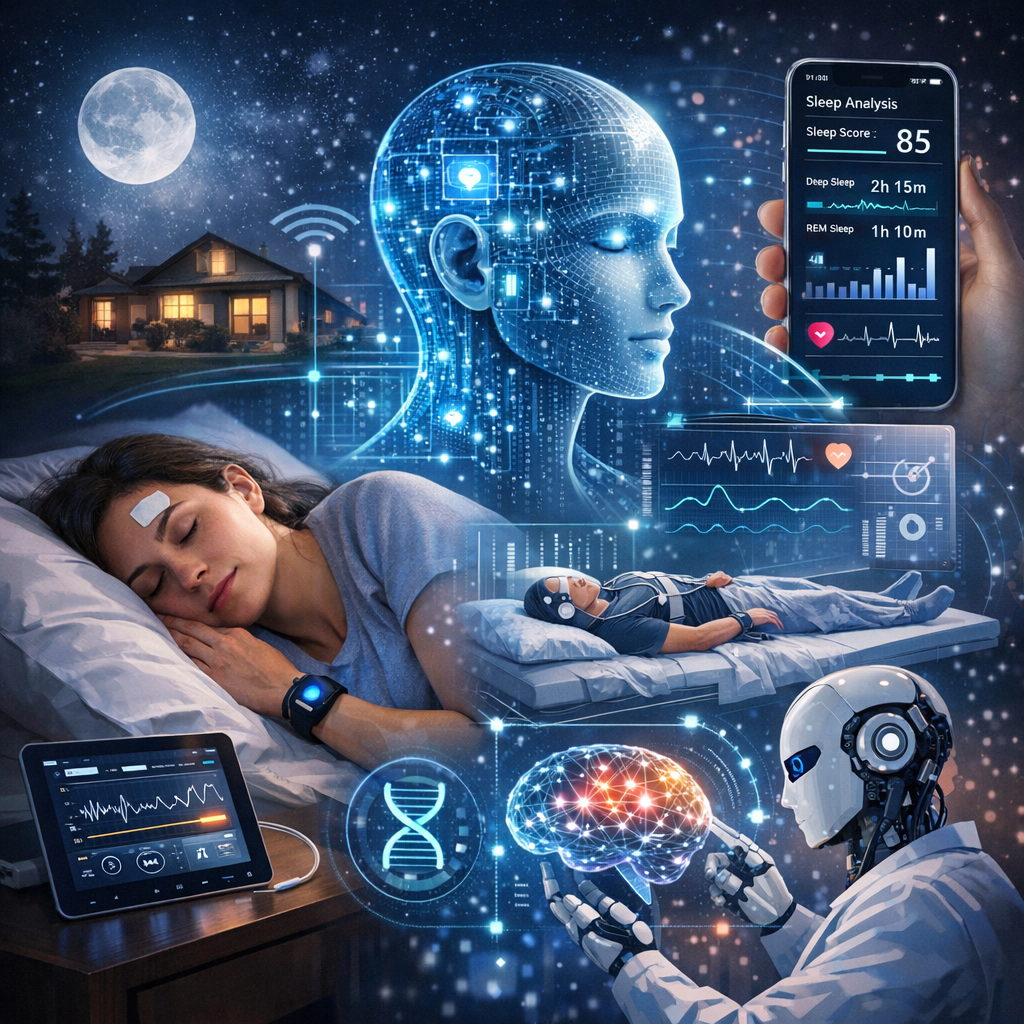
The Future of Sleep Medicine: AI-Driven Diagnosis for Hidden Sleep Disorders
**Introduction:**
Sleep is a **cornerstone of health**, influencing physical recovery, cognitive function, emotional stability, and immune system performance. Unfortunately, numerous individuals suffer from **sleep disorders** that often go undiagnosed due to their complexity and subtle symptoms. Enter **artificial intelligence (AI)**, a promising technology revolutionizing **sleep medicine** by enhancing the efficiency and accuracy in diagnosing and treating these hidden **sleep ailments**.
Traditionally, diagnosing **sleep disorders** has involved comprehensive tests like **polysomnography**, which require overnight observation in a sleep lab, posing challenges of expense, inconvenience, and stress potentially impacting results. Consequently, many endure **daytime fatigue**, emotional disturbances, and increased risks of hypertension, diabetes, and cardiovascular diseases without proper diagnosis or treatment.
AI presents an exciting alternative by simplifying complex diagnostic procedures, enhancing accuracy, and making **sleep assessment** scalable and accessible. Utilizing **deep-learning algorithms** and **machine learning**, AI can analyze sleep data from wearables and home devices more swiftly and reliably than human experts. These technologies effectively identify patterns and anomalies indicating sleep disorders, enabling healthcare professionals to provide timely, personalized treatment plans.
Moreover, AI-driven tools empower patients in their sleep health management. By using AI-enabled devices or apps tracking sleep patterns, individuals gain insights into their **sleep quality** and can proactively adjust habits or seek professional advice sooner. The integration of AI in sleep medicine not only diagnoses hidden disorders but also transforms the landscape of sleep health management, offering a comprehensive approach at personal, clinical, and global levels.
**Features:**
Recent research showcases AI’s potential in diagnosing **sleep disorders**. At the **Massachusetts Institute of Technology (MIT)** and **Massachusetts General Hospital**, researchers developed a **deep neural network model** interpreting sleep-stage data comparably to trained specialists. According to their study published in [Nature Medicina](https://www.nature.com/articles/s41591-018-0264-4), the AI model’s accuracy in determining sleep stages matches manual scoring traditionally used in clinical settings. The tool allows real-time analysis, significantly enhancing early diagnosis and treatment efficiency for disorders like **sleep apnea**, which affects millions yet often remains undetected.
AI is also revolutionizing **at-home sleep monitoring**, bypassing costly and stressful overnight clinic stays. Companies like [SleepScore Labs](https://www.sleepscore.com/) and [Sleepio](https://www.sleepio.com/) use AI systems analyzing data from home-monitoring devices, offering reports identifying potential sleep issues. These insights provide users with sleep health trends to discuss with healthcare providers.
Additionally, AI applications extend to therapeutic treatments for **sleep disorders**. At **Northwestern University’s Center for Circadian and Sleep Medicine**, AI is explored for diagnostics and in developing targeted **cognitive behavioral therapy (CBT)** modules through apps, personalized to each user’s unique sleep patterns and challenges. This digital therapeutic approach represents a paradigm shift in treating sleep disorders, aligning healthcare more integratively and patient-centrically (source: [Northwestern University](http://ccsm.northwestern.edu/)).
As AI technologies advance, so will their capabilities to interpret complex datasets and personalize healthcare. These highlights underscore the promising advancements towards more efficient, accurate, and accessible sleep disorder diagnosis and treatment, marking a transformative era in sleep medicine.
**Conclusion:**
**Artificial intelligence** has the potential to reshape **sleep medicine** profoundly. By streamlining diagnostic processes, offering personalized and scalable assessment tools, and empowering both patients and practitioners, AI acts as a catalyst in unveiling hidden sleep disorders. This transformation promises increased efficiency, accessibility, and the opportunity for personalized care plans tailored to individual sleep health. Current advancements indicate a promising trajectory towards integrative and proactive sleep health management, enhancing quality of life across age groups.
Adopting AI-driven innovations in sleep medicine could reduce the global burden of undiagnosed and untreated sleep disorders, potentially preventing associated long-term health risks. The advanced, accessible sleep diagnostics’ ripple effect will extend into broader society, improving workforce productivity, education outcomes, and community emotional well-being. As this field progresses, the future heralds a new era of health management, where technology and human care merge to offer holistic health solutions, ultimately contributing to societal betterment.
**Concise Summary:**
AI has the potential to transform the field of sleep medicine by improving the diagnosis and treatment of sleep disorders. Traditional methods like polysomnography are expensive and inconvenient, leading many people to remain undiagnosed. AI systems analyze sleep data from wearables and home devices, enhancing accuracy and accessibility. AI-driven tools empower patients to manage their sleep health, offering insights into sleep quality. Research highlights AI’s success in diagnosing sleep stages and developing personalized therapies, marking a transformative era for sleep medicine. Adopting AI innovations could reduce global sleep disorder burdens and improve societal well-being.

Dominic E. is a passionate filmmaker navigating the exciting intersection of art and science. By day, he delves into the complexities of the human body as a full-time medical writer, meticulously translating intricate medical concepts into accessible and engaging narratives. By night, he explores the boundless realm of cinematic storytelling, crafting narratives that evoke emotion and challenge perspectives.
Film Student and Full-time Medical Writer for ContentVendor.com