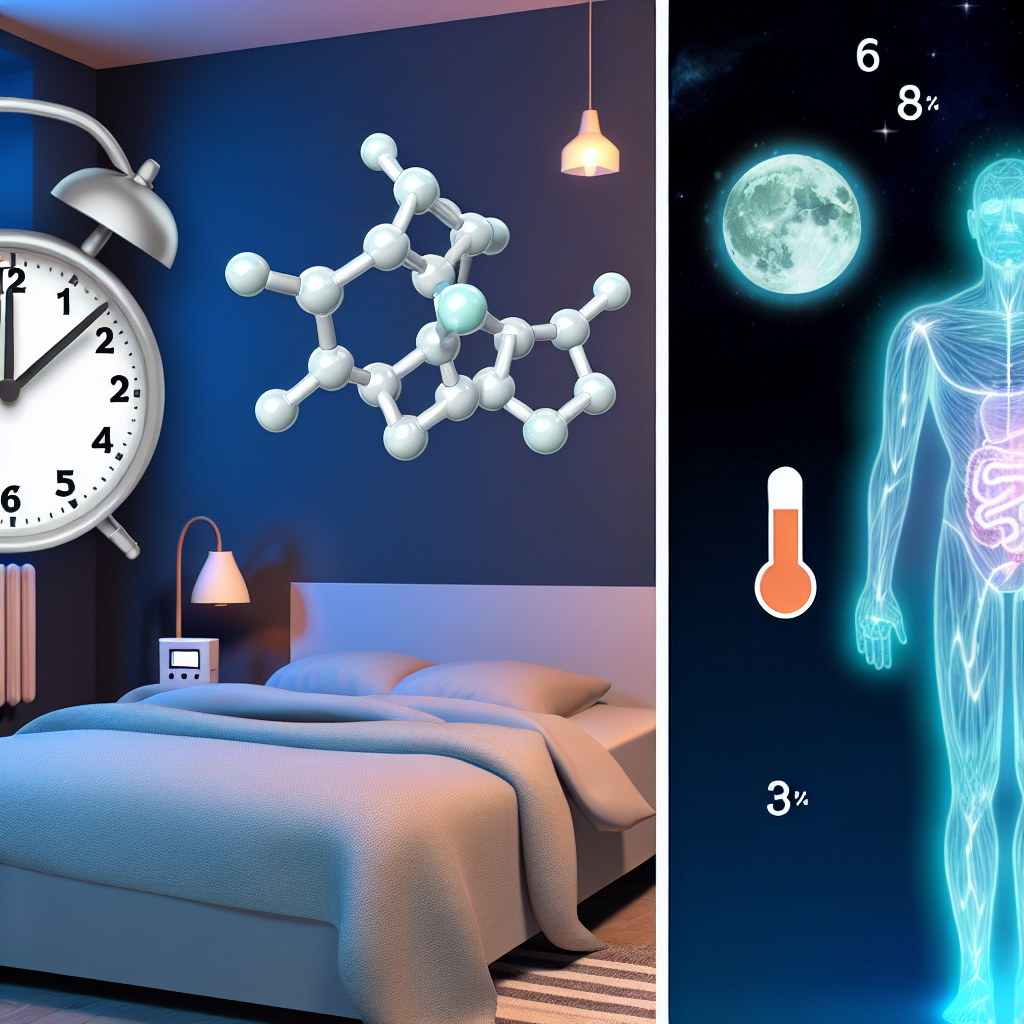
Unlocking the Brain-Breath-Sleep Connection: Revolutionary Insights from Neurobiology to Transform Sleep Medicine
**Introduction**
In an era where the pace of life continually accelerates, a **good night’s sleep** is often elusive. The struggle to attain restful sleep is not just a personal issue but a widespread concern affecting millions globally. As sleep continues to be a cornerstone of health and well-being, the quest to understand and enhance sleep quality remains a top priority for **sleep experts**. One of the most exciting developments in recent sleep research is the emerging understanding of the intricate relationship between **brain activity**, **breathing patterns**, and **sleep architecture**—a triad that has significant implications for **sleep medicine**.
The human body is a complex system where the brain orchestrates numerous physiological processes, including the regulation of **breathing** and **sleep**. Breathing is not merely a passive process but an active one, deeply influenced by neural mechanisms and patterns of brain activity. Recent neurobiological studies suggest that the synchronization between these processes can dramatically affect sleep quality, offering new avenues for therapeutic interventions in **sleep disorders**.
Neurobiology has unveiled that specific brain regions are pivotal in maintaining **sleep homeostasis** and modulating our breathing during sleep. The **prefrontal cortex**, **brainstem**, and **hypothalamus** play crucial roles in this regulation. During sleep, especially in the **Rapid Eye Movement (REM)** stage, the brain’s control over breathing becomes less stringent, often resulting in irregular breathing patterns. Understanding these connections provides a new framework to address sleep-related conditions such as **insomnia**, **sleep apnea**, and other sleep disorders.
This richer understanding also highlights the potential for harnessing **breathing exercises** and techniques, such as **mindfulness** and **paced breathing**, in a targeted manner to improve sleep outcomes. By focusing on these connections, researchers and clinicians can devise innovative strategies for optimizing sleep health, thus opening new horizons in sleep medicine.
**Features**
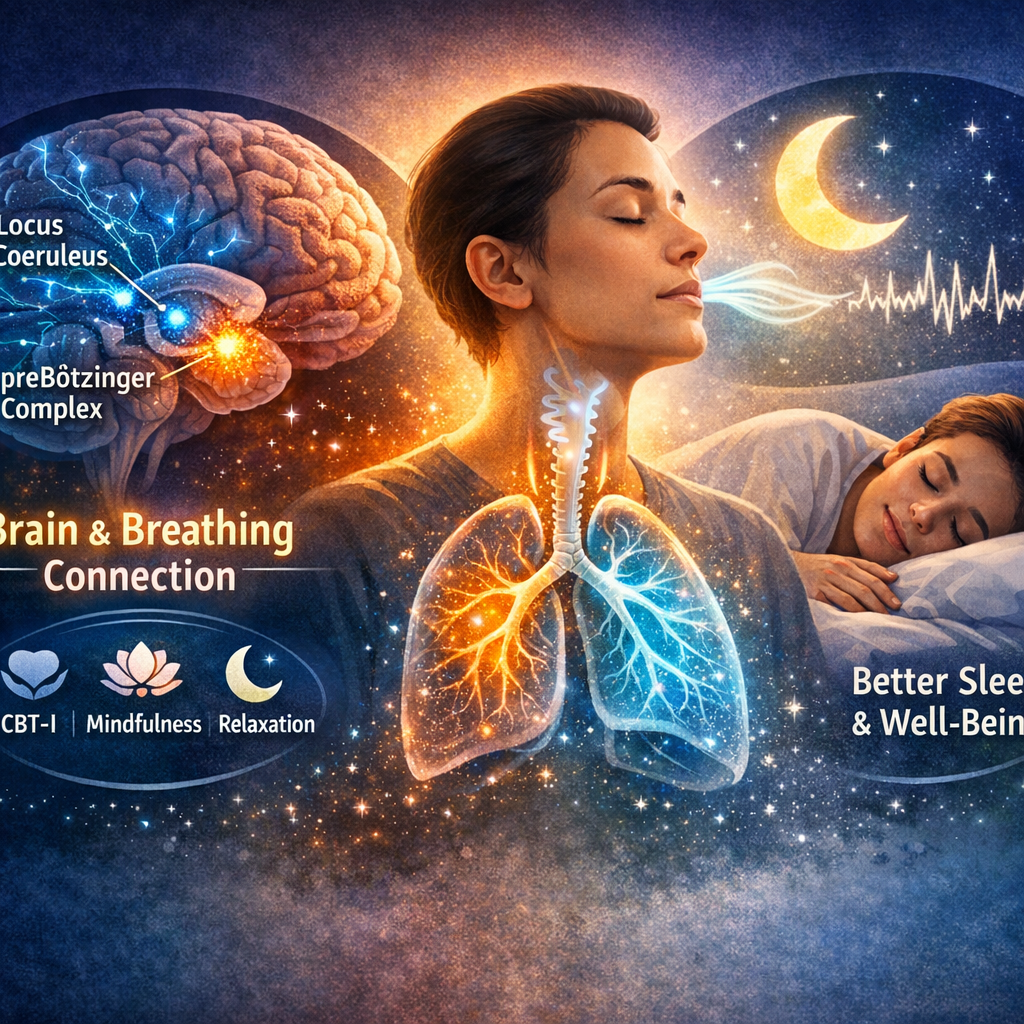
Recent studies have advanced our comprehension of how the **brain-breath-sleep connection** can revolutionize sleep medicine. A notable study published in [The Journal of Neuroscience](https://www.jneurosci.org/) explored the role of the **locus coeruleus**, a small brainstem nucleus involved in physiological responses to stress and panic, in regulating both the breathing pattern and alertness levels during sleep. The study revealed that disruptions in the locus coeruleus could lead to irregular breathing patterns and compromised sleep quality, providing novel insights into the development of sleep-related **breathing disorders**.
Additionally, research conducted at [Stanford University](https://www.stanford.edu/) has shed light on the role of the **preBötzinger complex**, another brainstem structure, as a key player in generating rhythmic breathing and contributing to sleep regulation. This research emphasized a correlation between disrupted breathing rhythms and disturbances in sleep phases, indicating the critical nature of consistent neurobiological signals for effective sleep cycles.
In addition to anatomical insights, studies have also focused on practical interventions leveraging the brain-breath connection. A compelling examination by [Harvard Medical School](https://hms.harvard.edu/) highlighted the effectiveness of controlled breathing exercises in enhancing **parasympathetic nervous system** activity, thereby promoting restful states conducive to sleep. Techniques such as **diaphragmatic breathing**, **4-7-8 breathing**, and **body scan meditation** not only foster relaxation but also align neural activity patterns beneficially affecting sleep.
Moreover, an insightful clinical trial published in [Sleep Medicine Reviews](https://www.journals.elsevier.com/sleep-medicine-reviews/) indicated that **cognitive behavioral therapy for insomnia (CBT-I)**, when combined with breathing exercises, yielded significant improvements in sleep onset and maintenance, suggesting a promising integrative therapeutic approach.
**Conclusion**
The interconnectedness of brain processes, breathing patterns, and sleep underscores a transformative frontier in sleep medicine. By delving deeper into the neurobiological mechanisms guiding these systems, researchers are unlocking new potential to combat the pervading issues of **sleep disorders**. The brain-breath-sleep triad presents a wealth of opportunities for innovative treatments that are both non-invasive and holistic, offering hope and solutions to those struggling with sleep-related afflictions.
Incorporating controlled breathing exercises, mindfulness practices, and cognitive strategies tailored to individual neural profiles could redefine approaches to sleep therapy, optimizing both sleep quality and overall health. As the nexus of neurobiology and practical intervention continues to evolve, it holds the promise of revolutionizing sleep medicine, paving the way for more restorative, healthful nights. Emphasizing this integrative understanding gives us a clearer path to enhancing sleep health across all ages, offering a roadmap toward a world where everyone can achieve optimal sleep wellness.
**Concise Summary**
Emerging research reveals the intricate connection between brain activity, breathing patterns, and sleep architecture, significantly influencing sleep quality and opening new horizons in sleep medicine. Key brain regions, including the prefrontal cortex, brainstem, and hypothalamus, regulate breathing and sleep. Disruptions in these areas can affect sleep phases, contributing to disorders like insomnia and sleep apnea. Integrating breathing exercises and mindfulness techniques can enhance sleep outcomes, while approaches like CBT-I combined with breathing exercises offer effective therapeutic solutions. This evolving understanding promises non-invasive, holistic innovations for improving sleep health globally.

Dominic E. is a passionate filmmaker navigating the exciting intersection of art and science. By day, he delves into the complexities of the human body as a full-time medical writer, meticulously translating intricate medical concepts into accessible and engaging narratives. By night, he explores the boundless realm of cinematic storytelling, crafting narratives that evoke emotion and challenge perspectives.
Film Student and Full-time Medical Writer for ContentVendor.com