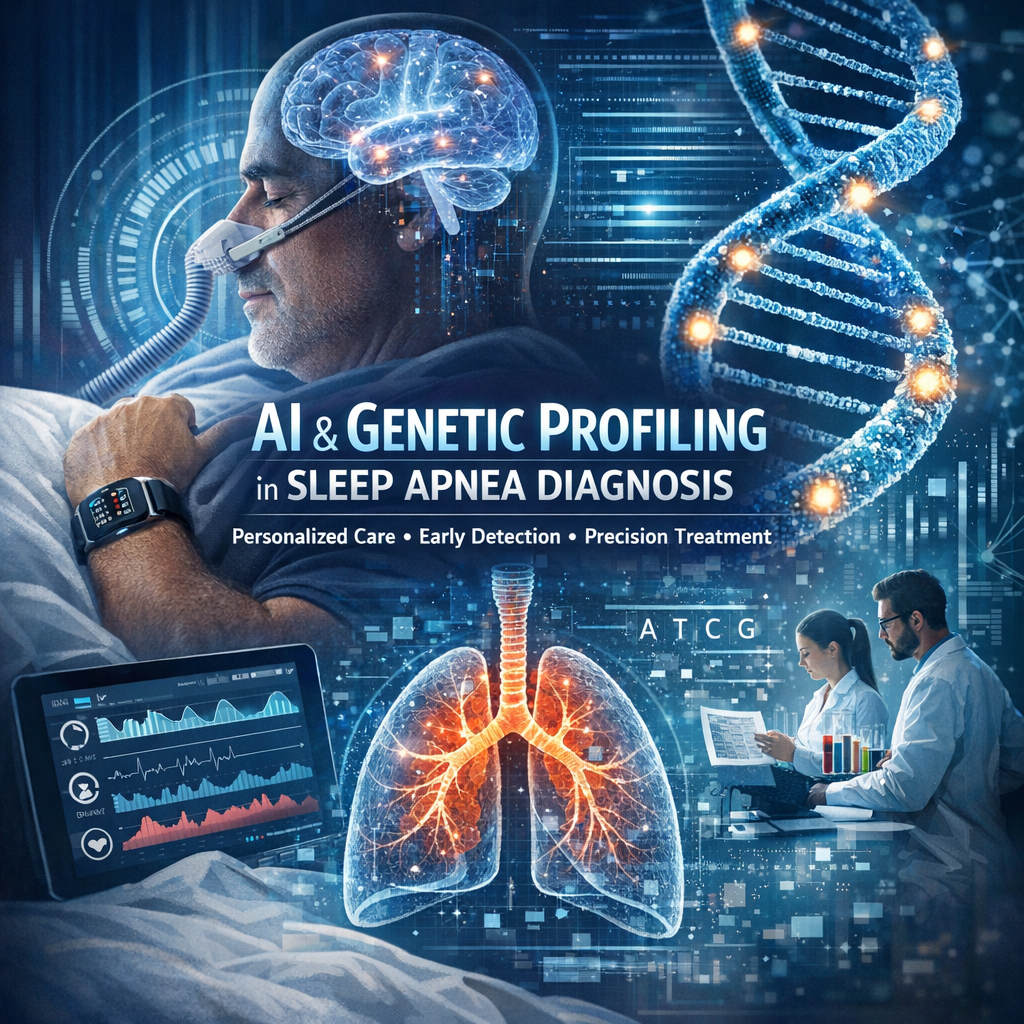
Revolutionizing Sleep Apnea Diagnosis: Discover How AI and Genetic Profiling Are Uncovering the Silent Killers of Sleep Disorders
Introduction
**Sleep apnea**, a condition characterized by repeated interruptions in breathing during sleep, is a pervasive health issue with significant implications for overall well-being. Traditionally, its diagnosis has relied on overnight **polysomnography (PSG)**, a method that, while effective, is time-consuming, costly, and often uncomfortable for patients. However, the advent of **artificial intelligence (AI)** and **genetic profiling** is poised to transform our understanding and diagnosis of sleep apnea, offering a more nuanced and comprehensive picture of this silent sleep disruptor.
AI has emerged as a significant force in **medical diagnostics**, thanks to its ability to swiftly analyze vast quantities of data and identify patterns invisible to the human eye. In **sleep medicine**, AI algorithms can process data from wearable devices that track heart rate, breathing patterns, and even brain activity to deliver a quicker, more precise diagnosis. The use of AI can mitigate the limitations of traditional methods by providing continuous monitoring over an extended period, capturing more detailed insights into sleep patterns.
Concurrently, genetic profiling is garnering attention for its potential to uncover inherent predispositions to sleep apnea and related disorders. By examining an individual’s genetic makeup, researchers can identify specific markers associated with increased risk for sleep-disordered breathing. This innovative approach enables a move towards **personalized medicine**, where interventions are tailored to an individual’s genetic profile, potentially improving the efficacy of treatment strategies.
Combining AI and genetic profiling signifies a breakthrough in sleep disorder diagnosis. This dual approach not only aids in identifying individuals at risk but also paves the way for developing preventive measures and targeted therapies. For instance, patients who are genetically predisposed to sleep apnea may benefit from earlier intervention and lifestyle adjustments, reducing the likelihood of developing more severe complications such as cardiovascular disease, diabetes, or cognitive impairment.
The integration of these technologies into standard diagnostic practices is not without challenges, including concerns about data privacy, the need for validation studies, and ensuring accessibility across diverse populations. Nonetheless, their potential to revolutionize sleep medicine is undeniable. In this article, we delve into the groundbreaking research and developments in **AI and genetic profiling** for diagnosing sleep apnea, highlighting the potential these advances hold for redefining patient care and improving sleep health for all ages.
Features
Numerous studies have highlighted the transformative impact of AI in diagnosing sleep apnea. A notable study published in the journal [*Nature and Science of Sleep*](https://www.ncbi.nlm.nih.gov/pmc/articles/PMC7740805/) demonstrated the accuracy of AI algorithms in diagnosing sleep apnea using data from wearable devices. The study involved a large cohort of subjects and showed that AI could match the diagnostic accuracy of traditional polysomnography while offering the added benefits of being non-intrusive and cost-effective. Another study in [*The Lancet Digital Health*](https://www.thelancet.com/journals/landig/article/PIIS2589-7500(21)00001-5/fulltext) reported similar findings, emphasizing AI’s role in providing continuous monitoring and capturing variations in sleep patterns that might escape periodic assessments.
**Genetic profiling** is equally promising. Research has identified several genetic markers linked to obstructive sleep apnea. For example, a study published in [*Nature Communications*](https://www.nature.com/articles/s41398-021-01400-1) found associations between specific gene variants and increased susceptibility to sleep apnea. These findings suggest that genetic profiling can identify individuals who may develop sleep apnea long before symptoms emerge, facilitating preventative healthcare strategies.
One critical advantage of genetic profiling is its potential to guide treatment personalization. A groundbreaking study in the [*American Journal of Respiratory and Critical Care Medicine*](https://www.atsjournals.org/doi/full/10.1164/rccm.201909-1836CI) highlighted how genetic information could customize therapy for sleep apnea patients. Genetic insights could determine which patients are likely to respond to specific treatments, such as continuous positive airway pressure (CPAP) therapy or alternative interventions like oral appliances and lifestyle modifications.
Despite these advancements, the integration of AI and genetic profiling into clinical practice is at an exploratory stage. The [*Journal of Clinical Sleep Medicine*](https://jcsm.aasm.org/doi/10.5664/jcsm.3774) has outlined the necessity for standardized protocols and validation studies to ensure these technologies’ reliable implementation. Furthermore, ethical considerations surrounding data sharing and privacy must be addressed to maintain patient trust.
Conclusion
The intersection of AI and genetic profiling represents a significant leap forward in diagnosing sleep apnea and other sleep disorders. These innovations hold the promise of more accurate, efficient, and personalized diagnoses, potentially changing how sleep disorders are managed globally. By harnessing AI’s predictive capability and genetic profiling’s personalized insights, healthcare providers can identify at-risk individuals earlier, tailor treatments more effectively, and ultimately improve patient outcomes.
As research and technology continue to advance, the field of sleep medicine is poised to become more integrated with precision medicine. While challenges persist, particularly concerning data privacy and the need for widespread validation, the potential benefits far outweigh the hurdles. With concerted efforts from the medical community, AI and genetic profiling could soon be integral tools, offering a new era of hope and health for those struggling with sleep apnea. These technologies not only represent progress in diagnosis but also chart a path toward a future where sleep health is accessible, **personalized**, and optimized for every individual.
**Concise Summary:**
AI and genetic profiling are transforming sleep apnea diagnosis by offering more accurate, efficient, and personalized methods than traditional polysomnography. AI utilizes data from wearable devices for precise analysis, while genetic profiling identifies predispositions to sleep disorders, enabling personalized treatment. Although challenges like data privacy persist, these innovations promise significant improvements in patient outcomes and the management of sleep health.

Dominic E. is a passionate filmmaker navigating the exciting intersection of art and science. By day, he delves into the complexities of the human body as a full-time medical writer, meticulously translating intricate medical concepts into accessible and engaging narratives. By night, he explores the boundless realm of cinematic storytelling, crafting narratives that evoke emotion and challenge perspectives.
Film Student and Full-time Medical Writer for ContentVendor.com