Revolutionize Your Sleep Quality: AI-Driven Breathing Techniques for Optimal Oxygen Flow
Introduction
In the modern world, achieving a restful night’s sleep often feels elusive. Research emphasizes the importance of quality sleep for overall health, prompting the exploration of new methods to improve sleep. Enter the revolutionary fusion of **artificial intelligence (AI)** and sleep science: AI-driven breathing techniques designed to optimize **oxygen flow** and enhance sleep quality.
Breathing is more than a basic subconscious function. It deeply affects our physiological state, particularly the balance of oxygen and carbon dioxide, impacting sleep quality. Sleep therapists have long explored breathing techniques to enhance relaxation and correct dysfunctional patterns that disrupt sleep. With AI, these techniques achieve unmatched precision, becoming a reality.
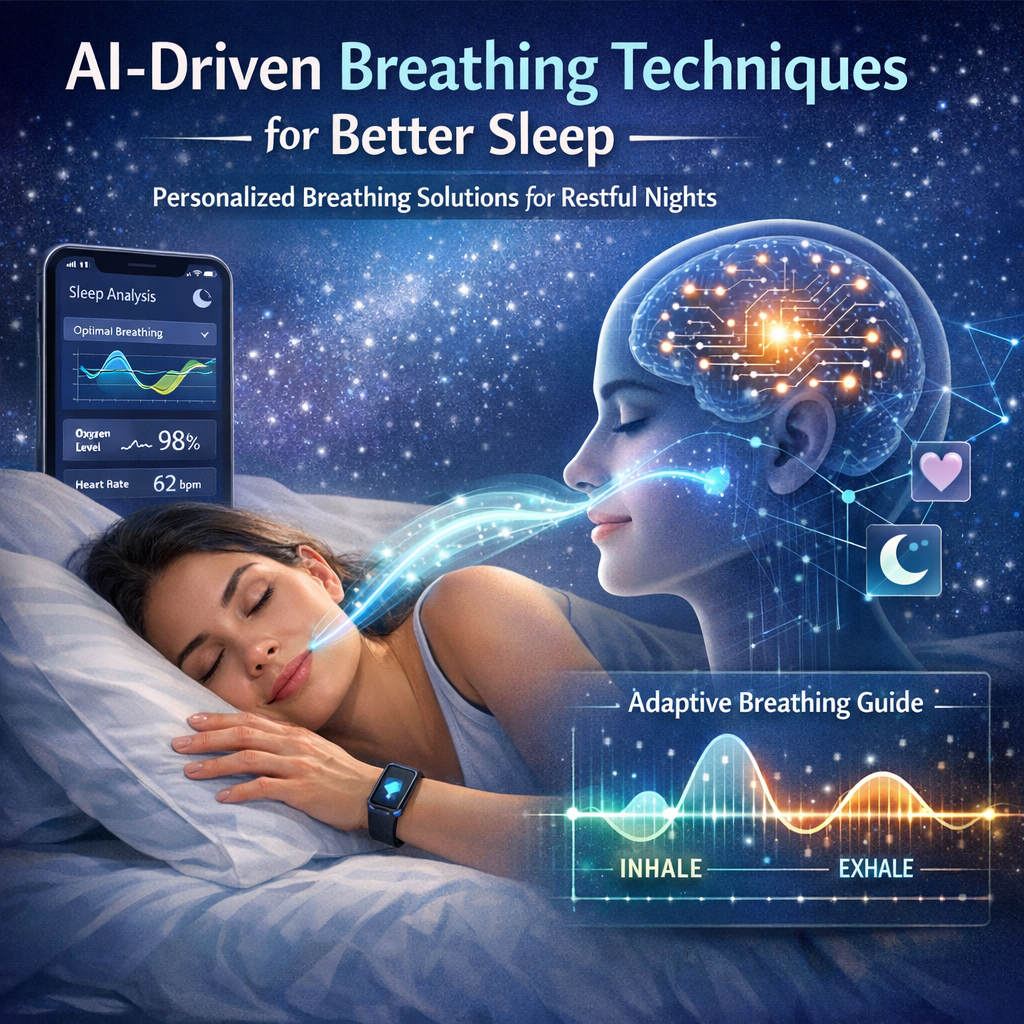
**AI algorithms** analyze vast datasets, including respiratory patterns, sleep cycles, and oxygen saturation levels, to tailor strategies to individual needs. By considering parameters like age, fitness level, and specific sleep disorders, AI offers real-time guidance for optimized breathing, enhancing sleep efficiency and health outcomes.
This precision and customization are accessible due to **wearable technology** and smartphone applications. AI-driven techniques empower individuals to control sleep health while fostering environments of relaxation and rejuvenation. As the field advances, AI in sleep hygiene holds immense potential for positive transformation.
Features
Recent studies in sleep medicine highlight a strong correlation between optimized breathing techniques and improved sleep quality. Breathing exercises play a crucial role in sleep therapy, particularly for addressing **insomnia** and **sleep apnea**. For instance, structured breathing interventions can reduce sleep onset latency and improve sleep quality in chronic insomnia, as published in the [Journal of Clinical Sleep Medicine](https://jcsm.aasm.org).
AI-driven solutions offer a personalized approach using large datasets to customize breathing exercises. AI systems analyze data from wearables, tracking sleep stages, respiratory rates, and body movement, using algorithms to identify patterns affecting sleep quality. A study by MIT demonstrated AI’s effectiveness in predicting **obstructive sleep apnea** events, providing a basis for custom interventions.
Additionally, AI can facilitate breath training programs, improving lung function and oxygen intake efficiency during sleep. The **American Thoracic Society** outlines benefits of tailored respiratory exercises in maximizing oxygen exchange and minimizing breathlessness, increasingly incorporated into AI [methodologies](https://www.thoracic.org).
The hands-free, continuous monitoring facilitated by these technologies is a significant advancement from traditional methods, offering immediate feedback to help individuals adjust habits in real-time. Moving away from a one-size-fits-all solution, AI-driven techniques have the potential to revolutionize sleep therapy by aligning with natural rhythms for restful sleep.
Conclusion
The merging of AI with breathing techniques for optimized sleep quality signals a transformative era in sleep health management. By leveraging data-driven insights, AI tailors breathing interventions to individual needs, leading to maximized oxygen flow and enhanced sleep quality. The application of AI in this realm underscores the growing importance of personalized medicine and technology’s potential in addressing health challenges. As advanced methodologies evolve, AI-driven breathing techniques promise significant improvements in sleep hygiene, making quality sleep attainable for all age groups. These advancements not only promise healthier sleep patterns but also uplift overall life quality in today’s demanding world. Staying informed and adapting to these cutting-edge techniques can serve as a major leverage point in achieving optimal health outcomes.
Concise Summary
Combining artificial intelligence with breathing techniques tailored to optimize oxygen flow can greatly improve sleep quality. By analyzing vast datasets, including respiratory patterns and sleep cycles, AI customizes breathing strategies for individual needs, addressing sleep disorders and enhancing overall health. Accessible through wearables and apps, these AI-driven methods empower individuals to take control of sleep health and foster restful environments. With customizable, real-time guidance, the fusion of AI and sleep science represents a transformative frontier in personalized sleep solutions, promising better sleep hygiene and life quality for users worldwide.

Dominic E. is a passionate filmmaker navigating the exciting intersection of art and science. By day, he delves into the complexities of the human body as a full-time medical writer, meticulously translating intricate medical concepts into accessible and engaging narratives. By night, he explores the boundless realm of cinematic storytelling, crafting narratives that evoke emotion and challenge perspectives.
Film Student and Full-time Medical Writer for ContentVendor.com