Unlocking Brain Power: How Untreated Sleep Apnea Could Be Sabotaging Your Cognitive Edge
Sleep is a fundamental necessity, a vital pillar supporting every aspect of our health and well-being. Yet, for many, achieving restful sleep remains elusive. **Sleep apnea**, a disorder characterized by breathing interruptions during sleep, often lurks undiagnosed, silently eroding the quality of rest and, consequentially, the quality of waking life. While **snoring** and **daytime fatigue** are the most recognized hallmarks of sleep apnea, the impact of untreated sleep apnea extends far beyond these symptoms—into the realm of cognitive function. Untreated sleep apnea undermines our **mental sharpness** and **creative capacities**.
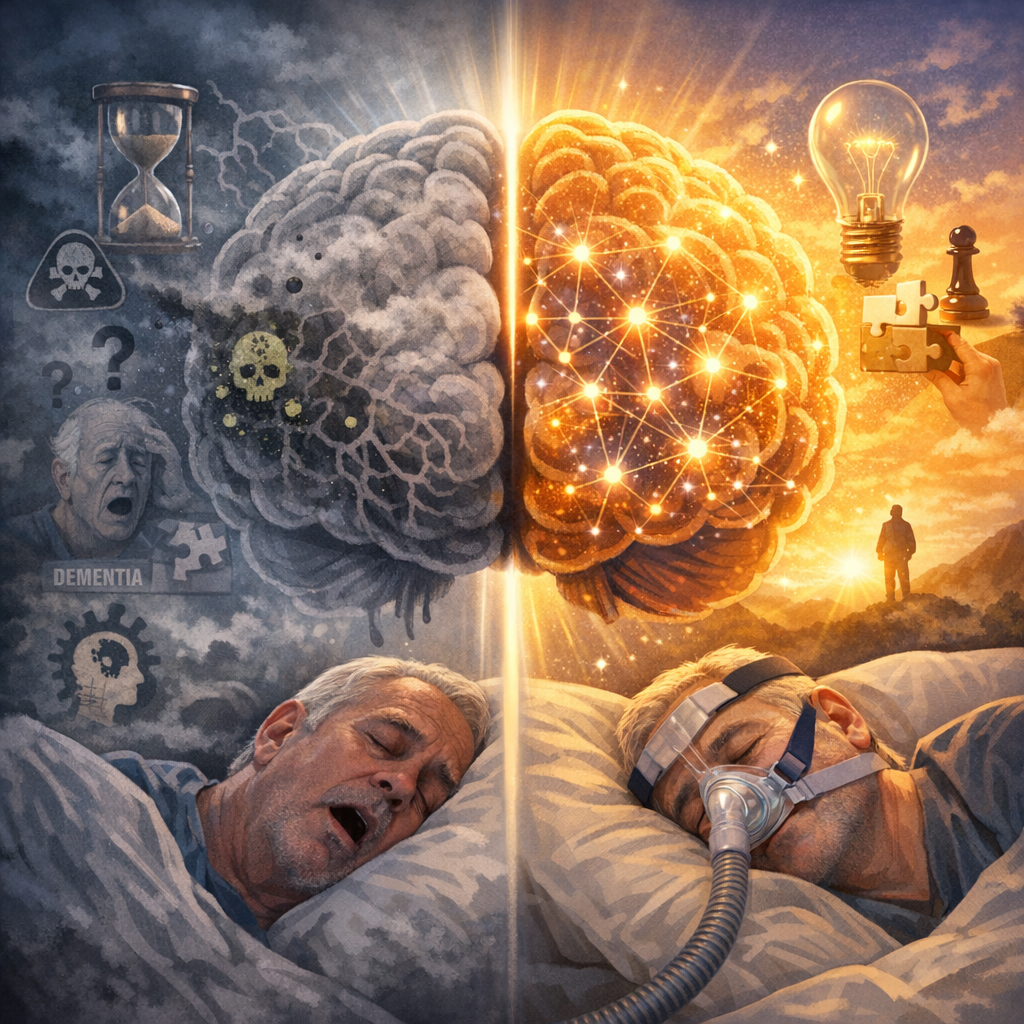
At first glance, one might overlook the subtle connections between adequate rest and cognitive capabilities. However, when we delve deeper, it becomes apparent that sleep serves as a critical time for **brain function refinement**. The brain actively processes memories, sweeps away toxic proteins, and fortifies connections that underlie learning and memory during sleep. Thus, when sleep is disrupted, as it often is with untreated sleep apnea, the brain’s cleansing and processing functions are compromised. This can lead to a range of **cognitive deficits**, manifesting as forgetfulness, difficulty concentrating, and decreased problem-solving skills—all essential components of maintaining a cognitive edge in today’s fast-paced world.
Recently, researchers have focused on how sleep apnea’s impact on brain function extends beyond short-term cognitive difficulties. Long-term cognitive health, particularly concerning conditions like **mild cognitive impairment** and even **Alzheimer’s disease**, may be significantly influenced by sleep-disordered breathing. Understanding and addressing sleep apnea transcend the immediate benefits of improved daily function, potentially offering protection against more serious **cognitive decline** later in life.
Understanding how untreated sleep apnea affects **cognitive function** is crucial for anyone looking to optimize their brainpower and protect their mental acuity as they age. By probing into the intersections of sleep medicine and cognitive neuroscience, individuals can gain valuable insights into optimizing their cognitive potential and securing a healthier, brighter future.
Features: Exploring the Scientific Landscape
A body of compelling research continues to explicate the profound link between untreated sleep apnea and cognitive dysfunction. For example, a study published in the journal **Thorax** demonstrated that individuals with untreated **Obstructive Sleep Apnea (OSA)** performed worse on tests of memory, attention, and concentration compared to those without the condition. This finding was reinforced by the observation that **Continuous Positive Airway Pressure (CPAP) therapy**—a standard treatment for OSA—significantly improved cognitive test scores, underscoring the direct relationship between treatment and cognitive health ([source](https://thorax.bmj.com/)).
Further, neuroimaging studies provide visual testimony to the cognitive impacts of sleep apnea. **Magnetic Resonance Imaging (MRI)** research has revealed structural differences in the brains of individuals with untreated sleep apnea, specifically in areas crucial for memory and executive function, such as the **hippocampus** and **frontal cortex**. Such physical changes may underlie the observable cognitive impairments and highlight the significance of oxygen deprivation, recurrent in sleep apnea, on brain health ([source](https://pubmed.ncbi.nlm.nih.gov/)).
Perhaps one of the most alarming aspects of untreated sleep apnea is its potential to act as a silent precursor to more severe cognitive disorders. The **Journal of Clinical Sleep Medicine** underscores a correlation between sleep apnea and a heightened risk of developing **dementia**. This arises partly from the hypothesis that chronic intermittent hypoxia (reduced oxygen) may facilitate neurodegenerative pathways, advancing cognitive decline ([source](https://www.aasm.org/)).
By elucidating these connections, scientific inquiries encourage timely diagnosis and intervention. Greater awareness of how untreated sleep apnea affects cognitive performance can motivate individuals to seek adequate assessment and initiate life-changing treatment plans. This plays a pivotal role in enhancing immediate cognitive function and building resilience against long-term cognitive deterioration.
Conclusion: Prioritizing Sleep for Cognitive Health
In conclusion, untreated sleep apnea is more than a nightly nuisance—it is a formidable adversary in the quest for cognitive excellence. As the evidence accumulates, it becomes clear that sleep serves as the bedrock for **mental acuity**, **creativity**, and overall cognitive health. By addressing sleep apnea, individuals are not merely improving their sleep quality—they are fortifying their cognitive function, safeguarding against premature cognitive decline, and bolstering their capacity to navigate the mental demands of contemporary life.
Prioritizing sleep health is a proactive and empowering step towards unlocking your brain’s full potential. Embracing tools such as **CPAP therapy** can transform how you live and think, showcasing the incredible interplay between quality sleep and a vibrant, resilient mind. For those seeking to maintain their cognitive edge, recognizing the signs of sleep apathy and proactively addressing them serves as a foundational step toward a healthier, more cognitively enhanced future.
By harnessing the power of sleep, you’re not just resting; you’re investing in your future’s cognitive resilience and vitality.
**Concise Summary**
Untreated sleep apnea significantly affects cognitive function by disrupting the brain’s processing of memories, cleansing toxins, and fortifying connections essential for learning. This disruption leads to cognitive deficits such as forgetfulness and difficulty concentrating. Long-term impacts include heightened risks for mild cognitive impairment and Alzheimer’s disease. Studies highlight that treatments like CPAP therapy can improve cognitive performance and protect against cognitive decline. Prioritizing sleep health by addressing sleep apnea harnesses the power of sleep to maintain mental acuity, creativity, and resilience against cognitive disorders.

Dominic E. is a passionate filmmaker navigating the exciting intersection of art and science. By day, he delves into the complexities of the human body as a full-time medical writer, meticulously translating intricate medical concepts into accessible and engaging narratives. By night, he explores the boundless realm of cinematic storytelling, crafting narratives that evoke emotion and challenge perspectives.
Film Student and Full-time Medical Writer for ContentVendor.com