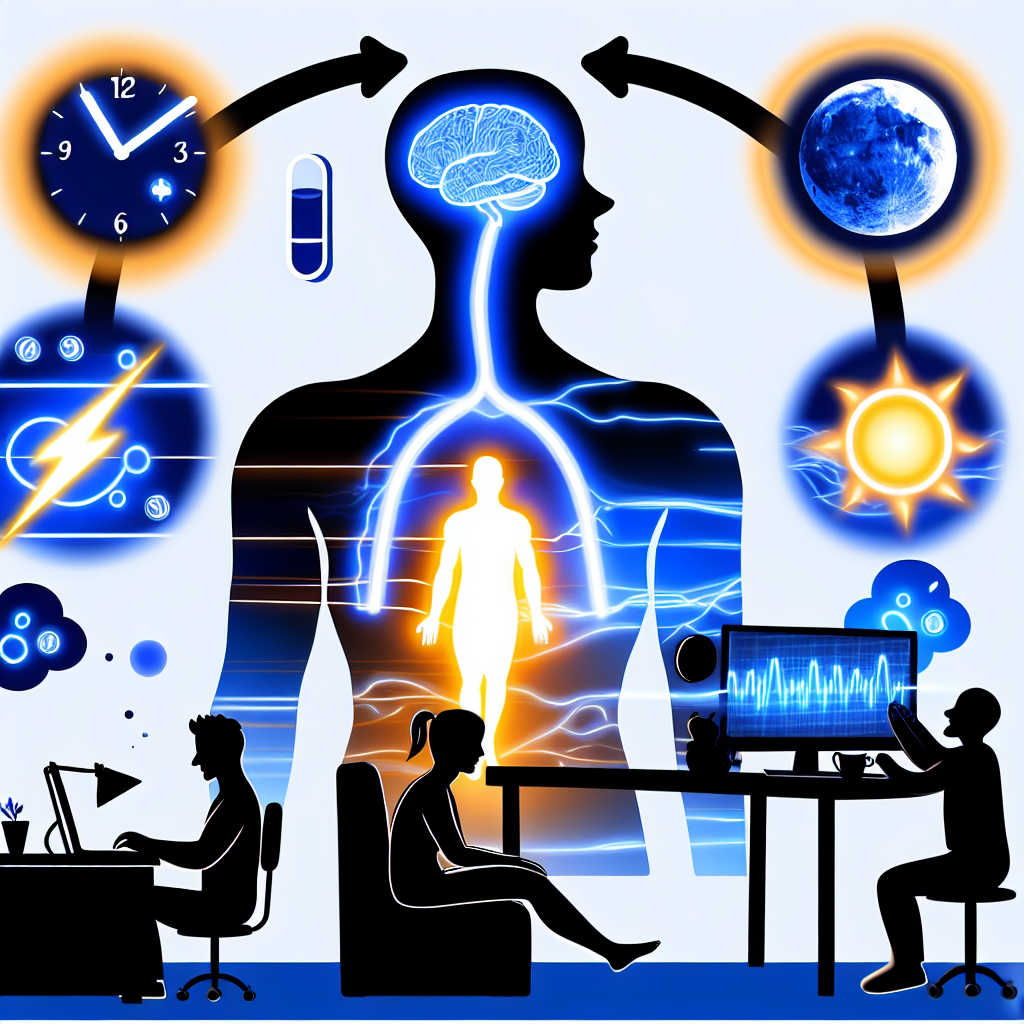
The Second-Wind Phenomenon Decoded – A Neurochemical Strategy for a Racing Mind at Bedtime
Introduction
After a long day, most people expect to wind down naturally and drift into **sleep** as bedtime approaches. However, for many, something counterintuitive occurs: instead of winding down, their energy levels spike, their **mind begins to race**, and sleep becomes elusive. This unexpected boost in alertness and mental stimulation is commonly referred to as the second wind phenomenon.
While it might seem beneficial during exam prep or late-night work sprints, the second wind can be a nightly source of **sleep disruption** and long-term **sleep deprivation** if misunderstood.
Often misinterpreted as procrastination or caffeine-induced arousal, the second wind is actually tied to deeply rooted **neurobiological mechanisms**. Governed by an interplay of **circadian rhythms**, **neurotransmitter activity**, and **environmental cues**, understanding this phenomenon is especially important for those suffering from **insomnia**, **anxiety**, or **ADHD**, where the struggle of a racing mind is all too familiar.
This blog unpacks the science behind the second wind from a neuroscience and sleep medicine perspective. By understanding the roles of cortisol, dopamine, GABA, and melatonin, we will explore how bedtime mental spikes occur and, more importantly, how to offset them using neurochemical strategies and behavioral tools.
Whether you’re a student burning midnight oil, a parent juggling responsibilities, or an older adult experiencing new nighttime patterns, knowledge of this process can improve your **sleep hygiene**, resulting in noticeable differences in mood, cognition, and vitality. It’s time to learn how to work with, not against, your biology—especially in a tech-driven, light-saturated world.
Scientific Background of the Second-Wind Phenomenon
To better understand the second wind phenomenon, it’s essential to explore the fundamental biology governing it. The body’s internal sleep-wake timing is regulated by the **circadian rhythm**, a 24-hour internal clock highly influenced by **light exposure**. This rhythm controls the timing of essential hormones—most notably melatonin and cortisol.
At the heart of a second wind is circadian misalignment. Researchers at Harvard Medical School found that many individuals experience a second peak in alertness during the early evening hours. This occurs even after feeling sleepy earlier, and is due to delayed melatonin production and the persistence of elevated cortisol levels—especially among people exposed to stress, **screens**, or **stimulants** in the evening.
Similarly, the National Institutes of Health (NIH) reports that **blue light** exposure suppresses melatonin, the hormone responsible for preparing the body for rest. With **melatonin suppressed** and **cortisol elevated**, the brain is flooded with mixed signals: it feels both alert and exhausted.
When someone engages in mentally engaging activities late at night—working, texting, intense media watching—their brain’s **dopaminergic system** is stimulated. Dopamine, the neurotransmitter playing a key role in reward, arousal, and goal-seeking behavior, contributes to the sensation of a late-night “creative rush” or energy boost. Unfortunately, this creates a troublesome feedback loop that delays sleep further.
Those with mental health or neurodevelopmental conditions face even more difficulty. In people with ADHD or Generalized Anxiety Disorder (GAD), studies like the one published in the Journal of Clinical Sleep Medicine confirm problems with GABAergic function. GABA (gamma-aminobutyric acid) is the main inhibitory neurotransmitter that helps calm the brain. When GABA is insufficient or imbalanced, it’s as if the brain lacks braking power at the end of the day.
The interplay of these neurochemicals—dopamine for arousal, GABA for calm, melatonin for timing, and cortisol for stress—creates a neurochemical tug-of-war in the brain. This battle sets the stage for the second wind phenomenon.
Fortunately, by using science to guide behavior, it becomes possible to fight fire with chemistry, so to speak. Techniques such as **reducing screen time**, **regulating light exposure**, practicing **mindfulness**, and optimizing **sleep environments** all contribute to rebalancing this complex bio-chemical cloud.
In some cases, people explore natural supplementation—such as **melatonin**, **GABA analogues**, or **L-theanine**—to support better sleep initiation. However, any supplementation should be considered in consultation with a sleep specialist or healthcare provider.
Conclusion
The second wind phenomenon isn’t just feeling wired at bedtime—it’s a full-on neurochemical cascade influenced by hormones, neurotransmitters, habits, and modern environmental stimuli. While productivity culture may reward late-night energy, chronic delays in sleep carry tangible risks: reduced memory consolidation, weakened immunity, elevated anxiety, and increased risk of burnout.
Understanding how to work in harmony with your body’s natural signals can help you sleep more deeply and restore your mind and body more completely. Strategies like dimming bright lights after sunset, avoiding overly stimulating activities late in the evening, and fostering a calming pre-bed ritual can re-synchronize your internal clock.
With awareness, intention, and often small tweaks, your bedtime routine can shift from chaotic to calming. Sleep is not passive—it’s an active process governed by a symphony of brain chemistry. Learning to direct that orchestra may be the ultimate strategy in reclaiming long-term **restorative sleep** and enduring mental clarity.
References
– Harvard Medical School – Understanding Circadian Rhythms
– NIH – Evening Use of Light-Emitting E-Readers Negatively Affects Sleep
– Journal of Clinical Sleep Medicine – Insomnia and Neurotransmitter Imbalances
– Science Advances – Circadian Rhythm Disruption Affects Sleep and Mood
– Sleep Foundation – What Causes a Racing Mind at Night
Summary
The second-wind phenomenon is a late-evening surge in alertness that disrupts the body’s internal clock and delays sleep. Governed by neurochemicals like cortisol, dopamine, melatonin, and GABA, this biological event is worsened by screen exposure, stress, and overstimulation. Common in people with insomnia, ADHD, or anxiety, it makes falling asleep difficult when energy spikes instead of winding down. Understanding the science behind it allows for practical solutions—like managing light exposure, calming evening routines, and possible supplementation. By aligning behavior with brain chemistry, individuals of all ages can improve sleep quality and reduce chronic restlessness at bedtime.

Dominic E. is a passionate filmmaker navigating the exciting intersection of art and science. By day, he delves into the complexities of the human body as a full-time medical writer, meticulously translating intricate medical concepts into accessible and engaging narratives. By night, he explores the boundless realm of cinematic storytelling, crafting narratives that evoke emotion and challenge perspectives.
Film Student and Full-time Medical Writer for ContentVendor.com