Non-24 Sleep-Wake Disorder Management – A Light and Melatonin Entrainment Strategy for Shift Workers
Introduction
Non-24-Hour Sleep-Wake Disorder (Non-24 or N24SWD) is a circadian rhythm sleep disorder where an individual’s internal body clock becomes misaligned with the 24-hour day. While it is commonly observed in people who are completely blind, it also affects sighted individuals—particularly those with inconsistent schedules caused by working night or rotating shifts.
For shift workers, continuous disruption of light and dark exposure—our primary environmental cue for circadian timing—can result in a drifting sleep cycle that becomes increasingly out of sync with day and night. This leads to chronic insomnia, excessive daytime sleepiness, and a sleep-wake schedule that gradually shifts later each day.
Unlike temporary circadian misalignment from jet lag or a single night shift, Non-24 involves a persistent inability to entrain to a 24-hour routine. It is particularly difficult to diagnose in sighted individuals, as its symptoms are often mistaken for lifestyle choices or general sleep deprivation.
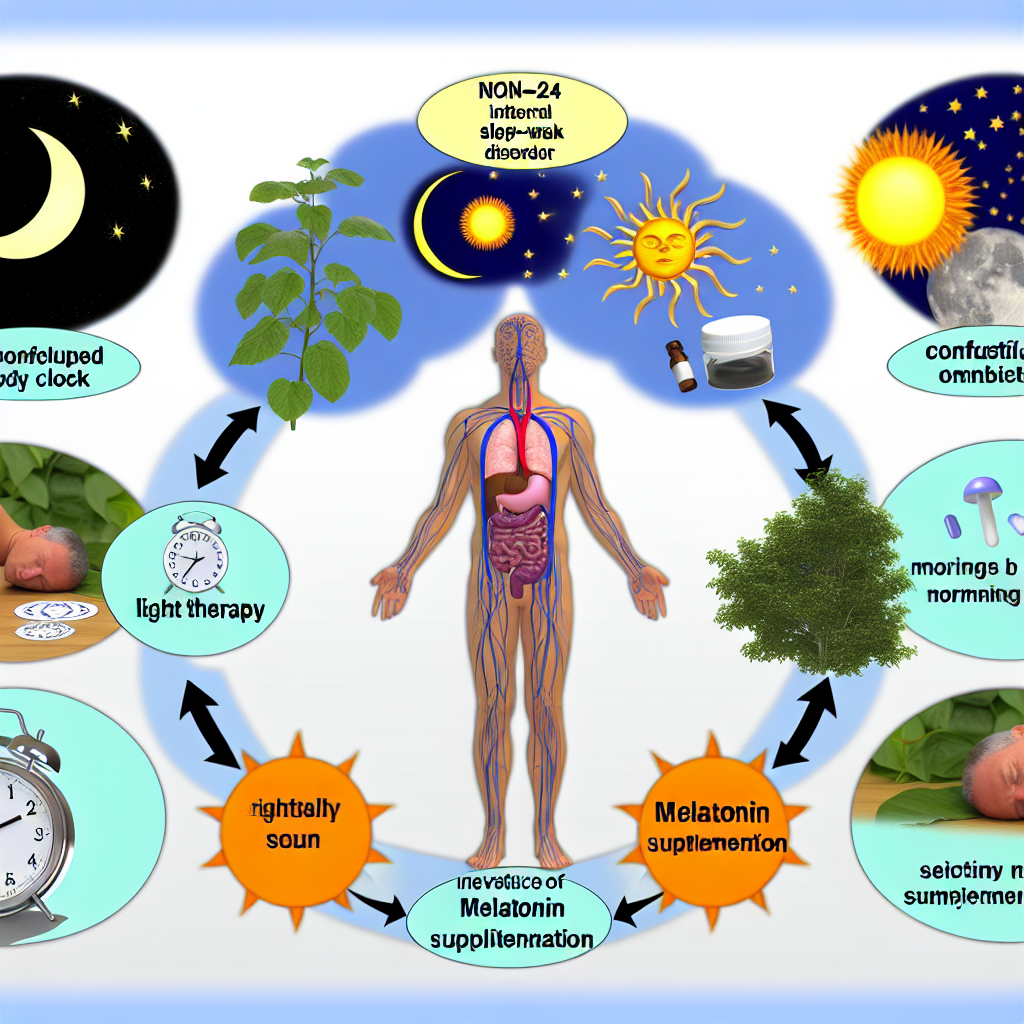
Effective treatment requires a comprehensive approach, combining behavioral adjustments and physiological interventions—particularly well-timed melatonin supplementation and light exposure. These techniques aim to reset and align the body’s internal clock through a strategy known as entrainment.
In this article, we explore real-world applications of melatonin and bright light therapy for shift workers with Non-24, based on cutting-edge research from the fields of sleep medicine and chronobiology.
Medical Research and Strategy for Circadian Entrainment
Entrainment refers to the process of synchronizing the body’s internal circadian rhythms to the 24-hour day, primarily through environmental cues such as light and biological signaling molecules like melatonin.
In patients with Non-24, especially those among the sighted shift working population, this process becomes disrupted. Fortunately, a growing body of research supports the use of external cues to correct this misalignment.
A landmark clinical study by Lockley et al. in The New England Journal of Medicine demonstrated the efficacy of the drug tasimelteon—a melatonin receptor agonist—for realigning the circadian rhythm in blind individuals with Non-24. Tasimelteon mimics natural melatonin by binding to MT1 and MT2 receptors in the brain, helping regulate sleep and wake cycles.
Though initially tested on those lacking light perception, implications from the research suggest positive outcomes for sighted individuals exposed to irregular lighting schedules, such as night shift workers. Melatonin use in these populations—especially in controlled, low doses (0.5 to 3 mg)—has proven effective for advancing or delaying sleep based on when it’s administered.
Additionally, findings from a Chronobiology International study by Burgess et al. found that scheduled bright light therapy in the morning (roughly 10,000 lux for 30–60 minutes) can help the body adjust by shifting the circadian clock earlier. This approach is especially beneficial for those experiencing delayed sleep phase or rotating shifts, helping to promote more regular sleep and wake patterns across a variable schedule.
Practical Application for Shift Workers
For shift workers navigating chronic misalignment, success lies in a personalized circadian adjustment plan. Here are recommended strategies:
- Melatonin Timing: Melatonin should be taken 2–3 hours before the intended sleep time. For those transitioning to daytime sleep following a night shift, administer melatonin just before sunrise to signal the body that it’s nighttime.
- Morning Light Management: Use blue-light blocking glasses on the way home after a night shift to avoid natural light exposure, which conflicts with your upcoming sleep period.
- Controlled Bright Light Exposure: Use bright light (10,000 lux) during your work shift to promote alertness. If you’re adapting to daytime hours, expose yourself to bright light in the morning to reset your internal rhythm.
- Sleep Hygiene: Maintain a cool, dark, and distraction-free** bedroom. Use blackout curtains, white noise machines, and eye masks. Avoid caffeine within six hours of planned sleep.
The American Academy of Sleep Medicine also recommends limiting shift variability for better long-term adaptation. Rotating from days to nights (clockwise) is easier for most individuals than counter-clockwise rotation.
Finally, while over-the-counter melatonin is relatively safe, improper dosing can delay sleep or worsen symptoms. Users should consult a sleep specialist before integrating melatonin into a routine.
Conclusion
Non-24-Hour Sleep-Wake Disorder presents a persistent challenge, not only for blind individuals but especially for shift workers struggling to maintain healthy circadian rhythms.
Fortunately, strategic entrainment with melatonin and light therapy provides a powerful solution. These scientifically validated methods can effectively reestablish alignment with a 24-hour day when implemented with precision and consistency.
Personalized approaches—considering factors like shift timing, light exposure, and melatonin dosage—can dramatically improve sleep quality, energy, and workplace performance. Continued advancements in chronobiology and sleep medicine suggest promising outcomes for adapting our environments to our biological clocks—rather than the other way around.
Summary
Non-24-Hour Sleep-Wake Disorder (Non-24) affects circadian rhythms, particularly in shift workers. Unlike temporary sleep issues, it causes a progressive sleep cycle drift. A dual strategy of timed melatonin supplementation and bright light therapy can help reset the internal clock. Melatonin should be taken before target bedtime, while morning bright light therapy can advance the circadian rhythm. Environmental adjustments, sleep hygiene, and limiting shift rotation also support recovery. When combined correctly, these techniques improve sleep quality, mood, and productivity for individuals battling circadian misalignment due to shift work.
References
- Lockley, S. W., et al. (2014). Tasimelteon for Non-24-Hour Sleep-Wake Disorder in Totally Blind People. The New England Journal of Medicine.
- Burgess, H. J., et al. (2002). Phase advances of the human circadian clock by light and melatonin. Journal of Biological Rhythms, 17(6), 538–545.
- American Academy of Sleep Medicine. (2021). Best Practices for Shift Work Sleep Disorder.
- National Institute of General Medical Sciences. Circadian Rhythms Fact Sheet.

Dominic E. is a passionate filmmaker navigating the exciting intersection of art and science. By day, he delves into the complexities of the human body as a full-time medical writer, meticulously translating intricate medical concepts into accessible and engaging narratives. By night, he explores the boundless realm of cinematic storytelling, crafting narratives that evoke emotion and challenge perspectives.
Film Student and Full-time Medical Writer for ContentVendor.com