How Many Heart Attacks Are Caused by Undiagnosed Sleep Apnea? This One Graph Explains Everything
In our fast-paced modern world, the significance of a good night’s sleep often gets overlooked. For some, minor instances of disturbed sleep are commonplace; however, for others, such disruptions might suggest an underlying condition with serious health implications. One of the most concerning of these conditions is **sleep apnea**, a disorder that frequently goes **undiagnosed**. This lack of diagnosis is not merely a statistic but a widespread issue with potentially life-threatening consequences. **Sleep apnea** is characterized by repeated pauses in breathing during sleep, which, if ignored, can lead to complications such as **heart problems**, including **heart attacks**.
The connection between **sleep apnea** and cardiovascular risk is profound. The intermittent lack of oxygen the body experiences with untreated **sleep apnea** causes stress on the cardiovascular system. This cycle of stopping and starting breathing at night repeatedly leads to **oxidative stress**, inflammation, and heightened **adrenaline release**, all of which strain the heart. Without adequate treatment, **sleep apnea** patients face a significantly increased risk of developing critical **heart conditions**.
For millions across the globe, **sleep apnea** remains undiagnosed due to various reasons, including a lack of awareness, misattribution of symptoms, and inadequate access to healthcare services. Statistics have painted a worrying picture, pointing out that around 80% of individuals suffering from moderate to severe **obstructive sleep apnea syndrome** remain undiagnosed. This figure translates to millions of adults who are unknowingly putting themselves at greater risk for heart-related issues with every restless night.
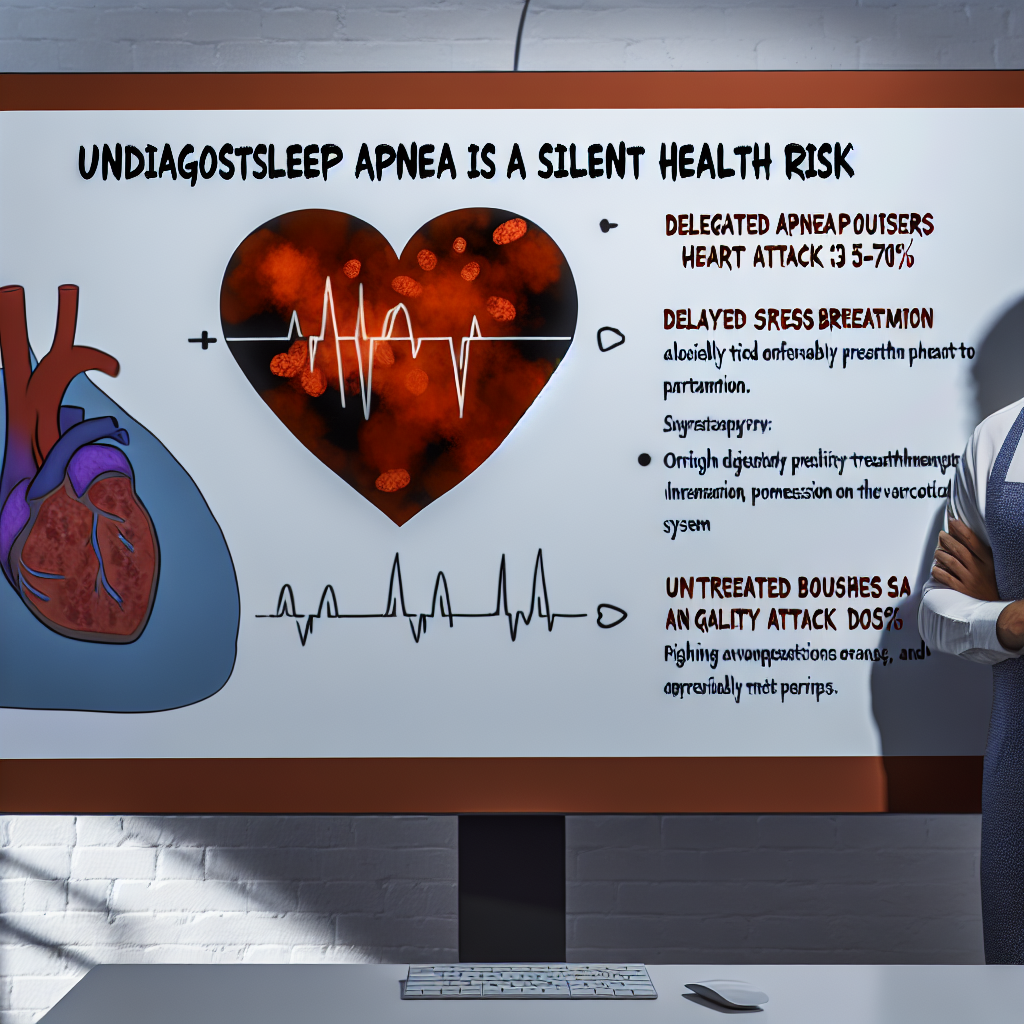
In understanding the link between undiagnosed **sleep apnea** and **heart attacks**, visual aids like graphs can play an essential role. One such graph shows the stark statistical relationship between undiagnosed **sleep apnea** and the prevalence of **heart attacks**. By examining data from large cohort studies, the graph clearly outlines the recurring correlation between untreated **sleep apnea** and an increase in cardiovascular incidents. This isn’t just about numbers on a page but reflects the everyday lives of individuals who, without diagnosis and treatment, remain at an escalated risk.
Features
Numerous medical studies have shed light on the substantial link between **sleep apnea** and **heart health**. One landmark study published in the [*New England Journal of Medicine*](https://www.nejm.org/) highlighted that individuals with untreated **obstructive sleep apnea** had a 30% higher risk of **heart attacks** over a multi-year period than those without the condition. This conclusion was reached after examining over 1,600 subjects who represented a cross-section of adults across diverse demographics.
Another influential study from the [*Journal of the American College of Cardiology*](https://www.jacc.org/) involved a cohort of patients with moderate to severe **sleep apnea**. It assessed the implications of Continuous Positive Airway Pressure (**CPAP**) treatment—an effective therapy for ameliorating the effects of **sleep apnea**. The study found that patients who adhered to **CPAP therapy** saw a significant reduction in the risk of cardiovascular events, including **heart attacks**, proving that timely diagnosis and treatment can decisively alter outcomes.
In 2013, a study in [*The Lancet*](https://www.thelancet.com/) demonstrated an alarming 70% increase in the risk of fatal **heart attacks** in individuals with severe, untreated **sleep apnea** compared to the general population. These findings underscore the dire health implications for those whose **sleep apnea** goes undiagnosed and consequently untreated.
Moreover, an analysis of data from the [*American Heart Association*](https://www.heart.org/) linked **sleep apnea** to increased rates of hypertension, a pivotal risk factor for **heart attacks**. The recurrent, intermittent hypoxia (low oxygen levels) experienced during **sleep apnea** episodes contributes to **endothelial dysfunction** and the proliferation of inflammatory markers—all of which critically affect heart health.
Conclusion
Recognizing and understanding the impact of **undiagnosed sleep apnea** on **heart health** is crucial. As demonstrated by pivotal studies, this condition represents more than a **sleep disorder**—it is a significant risk factor for **heart attacks** and other cardiovascular diseases. The importance of early diagnosis and appropriate intervention, such as **CPAP therapy**, cannot be overstated in preventing these dire outcomes.
For individuals who suspect they have **sleep apnea**, seeking medical advice is paramount. By prioritizing **sleep health**, we can significantly decrease the risk of **heart attacks** and improve overall well-being. Comprehensive public awareness and accessible healthcare services are critical in bridging the gap between **undiagnosed sleep apnea** and effective management. The path to a healthier heart begins with understanding the signs, seeking the right diagnosis, and following through with effective treatment options.
Concise Summary
**Sleep apnea** often goes undiagnosed, posing a significant risk for **heart attacks** and other cardiovascular issues. Studies show those with untreated severe **sleep apnea** have a considerably higher risk of heart-related incidents. Increasing awareness and improving diagnosis and treatment are crucial, as **CPAP therapy** has been proven to reduce cardiovascular risks. With 80% of moderate to severe cases undiagnosed, early intervention is vital for promoting heart health and preventing critical outcomes. Prioritizing sleep health and understanding symptoms can bridge the gap between undiagnosed **sleep apnea** and effective management.

Dominic E. is a passionate filmmaker navigating the exciting intersection of art and science. By day, he delves into the complexities of the human body as a full-time medical writer, meticulously translating intricate medical concepts into accessible and engaging narratives. By night, he explores the boundless realm of cinematic storytelling, crafting narratives that evoke emotion and challenge perspectives.
Film Student and Full-time Medical Writer for ContentVendor.com