Revolutionizing Sleep Diagnostics: How AI Could Redefine Sleep Medicine and Save Lives
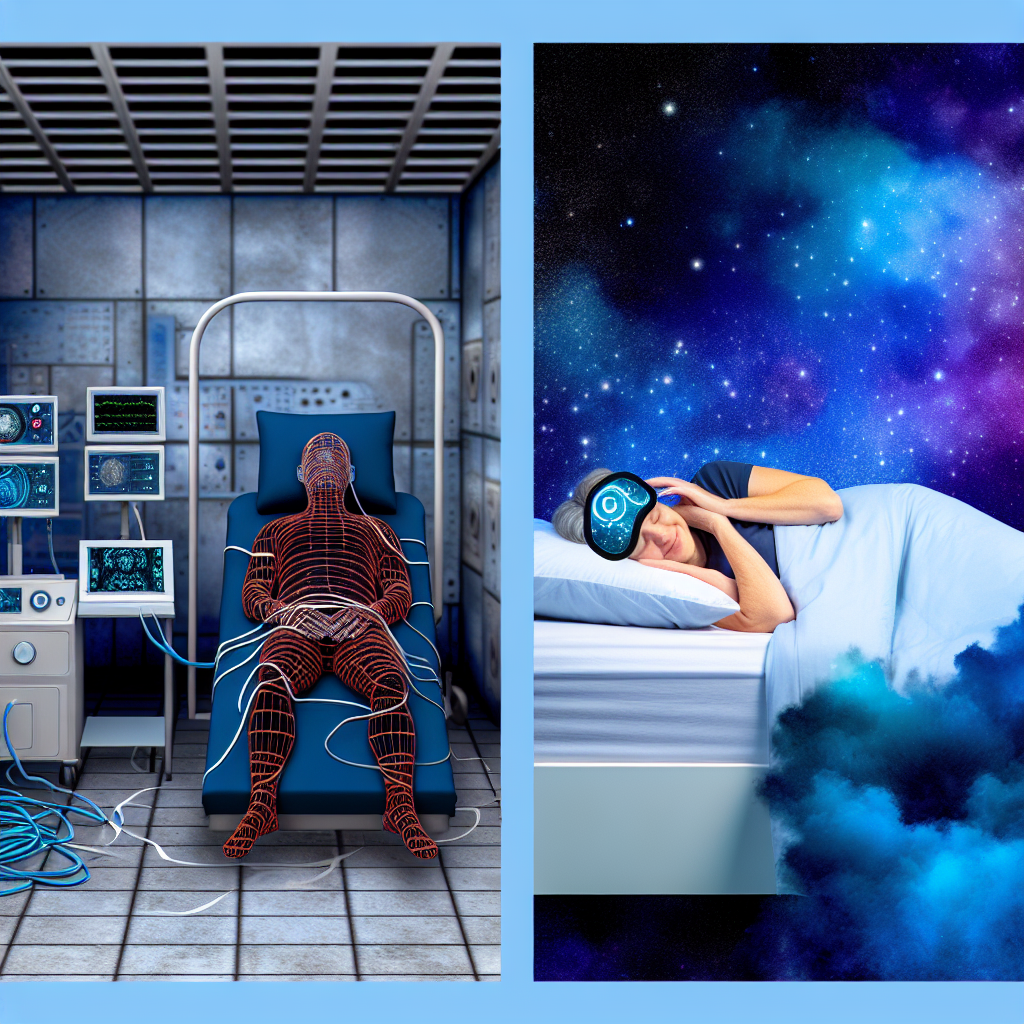
**Sleep** is an essential pillar of human health, influencing every aspect from cognitive function to immune regulation. Yet, **sleep disorders** remain both underdiagnosed and misunderstood. According to the **American Sleep Association**, an estimated 50 to 70 million adults in the United States have a sleep disorder, which underscores the urgent need for advances in **diagnostic methods**. Traditional techniques like **polysomnography (PSG)**, although detailed, are expensive, cumbersome, and often fail to capture the full picture of an individual’s sleep health due to their artificial setting. With rapid advancements in technology, **artificial intelligence (AI)** is emerging as a transformative tool that promises not only to enhance diagnosis but also to provide individualized treatment pathways for sleep disorders.
Artificial intelligence has made inroads into diverse fields, and **sleep medicine** is no exception. AI’s ability to analyze massive volumes of data quickly and accurately sets it apart from traditional diagnostic methods. **Wearable technology**, coupled with **AI algorithms**, is now capable of continuously monitoring a person’s sleep cycles, heart rate, breathing patterns, and even body movements. This real-time data collection allows for a more comprehensive understanding of a patient’s sleep architecture across multiple nights in a natural setting, something a single-night polysomnography might miss.
Moreover, **machine learning**—a subset of AI—can identify patterns in sleep data that are imperceptible to the human eye. For instance, AI can differentiate between various sleep stages and detect deviations from normal sleep patterns that may indicate underlying disorders like **sleep apnea**, **insomnia**, or **restless leg syndrome**. By recognizing these subtle irregularities, AI can flag potential health issues even before they manifest into more severe conditions, paving the way for preventive healthcare.
The possibilities AI offers in automating and refining sleep diagnostics extend beyond just convenience and cost-effectiveness. The potential implications for **patient-centric care** are groundbreaking. Personalized sleep interventions, tailored to the unique sleep signature of each individual, could lead to better health outcomes, reduce the risk of chronic illness, and significantly improve the quality of life. By redefining the way we approach sleep diagnostics, AI has the potential to save lives by addressing sleep disorders more effectively and efficiently.
Studies Highlighting AI in Sleep Diagnostics
Several studies underscore the transformative potential of AI in sleep medicine. A notable 2018 study published in *Nature Medicine* demonstrated a **neural network’s** ability to analyze polysomnography data from over 10,000 patients. The AI’s diagnostic accuracy was comparable to that of expert sleep technicians, highlighting its potential for real-world applications.
Another important study by Stanford University researchers showed that AI could significantly reduce the annotation time for sleep studies. This study involved a deep neural network that could analyze sleep stage data, cutting down the time professionals spent on manual analysis from over half an hour per study to mere seconds, without compromising accuracy (Stanford University).
Further research conducted by the Sleep Research Society found that AI algorithms could predict sleep apnea with similar precision to standard diagnostic tools, yet required considerably less data input. These predictive algorithms are breaking new ground in identifying high-risk patients who may otherwise remain undiagnosed due to the inaccessibility of traditional testing methods (Sleep Research Society).
Wearable technology integrated with AI further exemplifies the potential for revolutionizing sleep diagnostics. Devices like **smartwatches** and **fitness bands**, equipped with sensors that monitor physiological parameters, provide valuable data that AI can analyze to deliver insights about sleep quality and detect anomalies. These advancements democratize sleep health monitoring, making it accessible to a broader population and allowing for earlier intervention.
As research in this area continues to expand, the integration of AI in sleep medicine promises to usher in a new era, where sleep disorders are not only identified more efficiently but with a degree of personalization previously unattainable. This innovative approach paves the way for a proactive stance in managing sleep health, with implications that extend well beyond the traditional healthcare environment.
Conclusion
As AI continues to permeate the field of sleep medicine, its promise is not just limited to improved diagnostics but also extends to enhanced therapeutic outcomes and a deeper understanding of sleep itself. By providing a framework for personalized medicine, AI has the power to revolutionize sleep health, offering solutions that are both scalable and innovative. The integration of AI-driven technologies into mainstream practice could dramatically reduce the global burden of sleep disorders, leading to improved productivity, better mental health, and enhanced overall wellbeing.
Ultimately, the collaboration between AI and healthcare professionals presents an exciting frontier that can redefine our approach to one of humanity’s most vital yet overlooked health domains. As we look toward this promising horizon, the reiteration of our commitment to responsible AI deployment will be paramount in safeguarding patient confidentiality while maximizing the potential benefits. It’s not just about diagnosing faster or cheaper; it’s about leveraging technology to save lives, one night of restful sleep at a time.
**Concise Summary**: AI in sleep medicine offers revolutionary opportunities for improving diagnostics and personalizing treatments, promising better health outcomes. Leveraging **machine learning** and **wearable technology**, AI provides deep insights into sleep patterns that traditional methods may miss, identifying disorders like **sleep apnea** and **insomnia** more efficiently. Studies affirm AI’s accuracy and speed in diagnostics, flagging potential health issues early, thus enabling preventive care. As the technology integrates into mainstream practice, it could significantly reduce the global burden of sleep disorders, ensuring enhanced well-being and productivity.
**References**
- American Sleep Association. Sleep Statistics
- *Nature Medicine*. Deep Neural Networks for Sleep Stage Classification
- Stanford University. Automated Sleep Scoring with AI
- Sleep Research Society. AI for Sleep Apnea Prediction

Dominic E. is a passionate filmmaker navigating the exciting intersection of art and science. By day, he delves into the complexities of the human body as a full-time medical writer, meticulously translating intricate medical concepts into accessible and engaging narratives. By night, he explores the boundless realm of cinematic storytelling, crafting narratives that evoke emotion and challenge perspectives.
Film Student and Full-time Medical Writer for ContentVendor.com