Revolutionizing Sleep Medicine: How AI-Powered Diagnostics Are Transforming Apnea Treatment
In the realm of healthcare innovation, the integration of **artificial intelligence (AI)** with traditional medical practices has paved the way for revolutionary advancements, especially in the field of **sleep medicine**. **Sleep apnea**, a condition characterized by repeated interruptions in breathing during sleep, affects millions globally and can lead to severe health complications, including **cardiovascular disease**, diabetes, and even cognitive decline. Historically, diagnosing and treating sleep apnea relied heavily on overnight polysomnography conducted in specialized sleep centers. However, the advent of **AI-powered diagnostics** is transforming how the medical community approaches this pervasive condition, offering new hope and improved outcomes for patients.
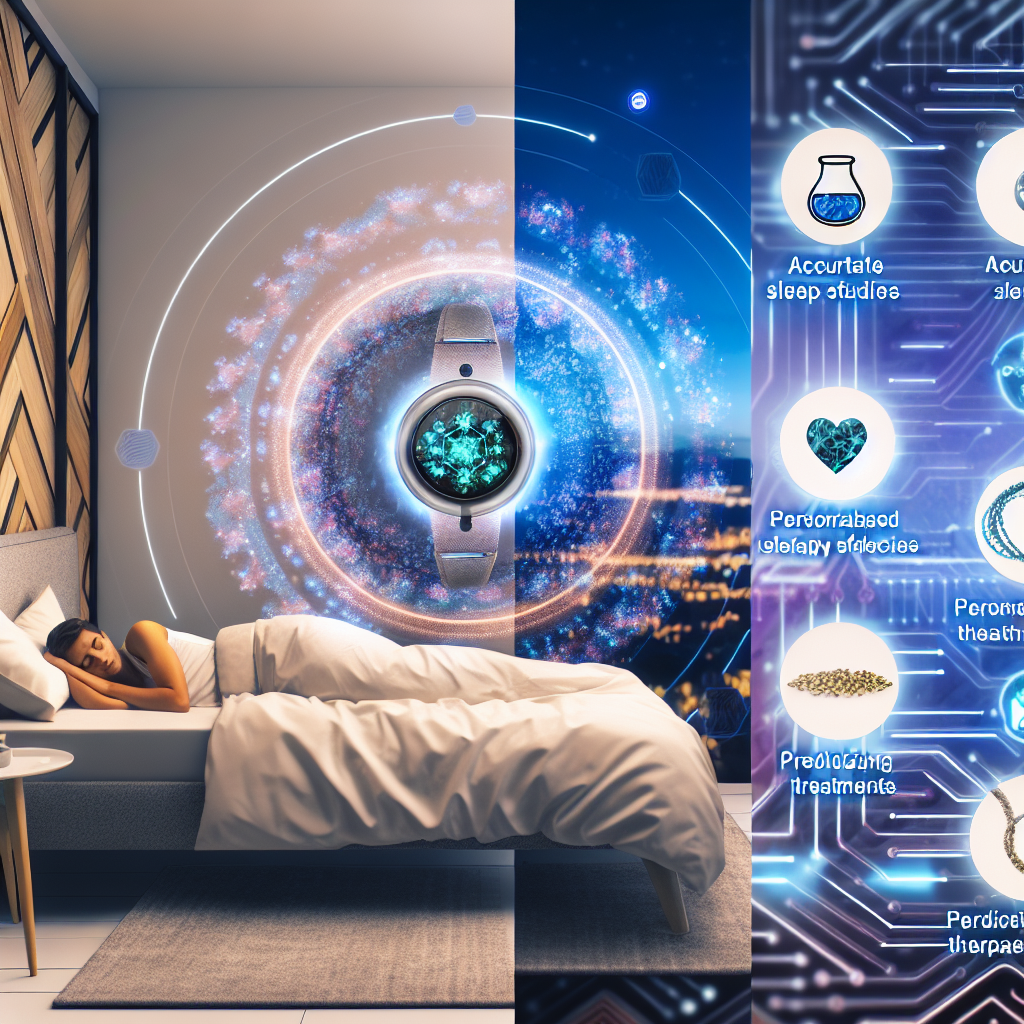
AI technologies are designed to mimic human intelligence, allowing them to analyze complex data sets with unprecedented speed and accuracy. When applied to sleep apnea diagnosis, AI systems can monitor patients’ sleep patterns through wearable devices and home-based technologies, significantly improving the accessibility and convenience of **sleep studies**. These devices collect comprehensive data that AI algorithms can analyze in real-time, identifying **apneic episodes**, determining their severity, and distinguishing between **obstructive sleep apnea (OSA)** and **central sleep apnea (CSA)**.
The impact of AI stretches beyond mere diagnosis. AI-driven solutions offer personalized treatment plans by leveraging machine learning capabilities to predict patients’ responses to various therapies, such as continuous positive airway pressure (CPAP) machines or lifestyle changes. Through continuous data monitoring, AI systems fine-tune these interventions, ensuring optimized care for each individual. Furthermore, AI can alert healthcare providers to changes in the patient’s condition, enabling timely intervention and reducing the risk of long-term complications.
Significant investments in AI research within the medical sphere are already creating waves. Tech companies and healthcare providers have collaborated to develop algorithms with the potential to revolutionize how sleep disorders are managed, ensuring patients receive efficient and effective care. The reduced need for on-site sleep studies and the delivery of personalized treatments signify a tremendous leap forward in patient-centric healthcare, making sleep apnea treatment more accessible to a broader population. Current studies and findings have shown promising results, bolstering confidence in the transformative role AI can play in the diagnosis and treatment of sleep apnea.
Features
Recent professional and medical studies underscore the transformative potential of AI in sleep apnea management. For instance, a study published in The Lancet Digital Health highlights the efficacy of AI algorithms in analyzing overnight oximetry data to diagnose OSA, achieving sensitivity and specificity rates comparable to conventional polysomnography [source](https://www.thelancet.com/journals/landig/article/PIIS2589-7500(20)30118-4/fulltext). Researchers there utilized a deep learning model trained on vast datasets to interpret oxygen saturation levels and detect apneic events with high accuracy.
Moreover, a pivotal study by a team at Google’s health division demonstrated AI’s capability in the interpretation of polygraphic data, pinpointing apnea occurrences with precision [source](https://www.nature.com/articles/s41746-019-0169-7). Their machine learning model assessed signals from multiple night recordings and effectively differentiated types of sleep apnea, an advancement that could streamline diagnosis and reduce costs associated with sleep studies.
AI applications are not limited to diagnostics; they extend to treatment adherence and improvement. A trial conducted by the American Academy of Sleep Medicine used AI-driven applications to monitor CPAP machine usage and effectiveness, with patients reporting increased adherence rates due to personalized feedback and adjustments [source](https://jcsm.aasm.org/doi/10.5664/jcsm.8108). The system’s adaptive learning feature provided real-time suggestions based on the user’s nightly data, significantly enhancing the user experience and treatment compliance.
Furthermore, collaboration between **technology firms** and academic institutions has resulted in the development of AI systems capable of predicting the success of surgical interventions for sleep apnea, such as **uvulopalatopharyngoplasty**. By assessing patient profiles and historical data, these systems offer valuable insights into outcomes, aiding clinicians in making informed treatment decisions.
Conclusion
The integration of AI in sleep medicine marks an epoch where technology and healthcare coalesce to offer innovative solutions to age-old problems. AI-powered diagnostics and treatments represent a paradigm shift in how we understand and address sleep apnea, enhancing diagnostic accuracy, simplifying treatment protocols, and improving patient engagement. While these technological advancements offer immense promise, ongoing research and careful implementation are imperative to harness their full potential safely and effectively. As AI technology continues to evolve, it holds the promise of not only transforming sleep medicine but also myriad other facets of healthcare, heralding a future where personalized, efficient, and effective care is the norm rather than the exception. With such advancements, the horizon seems bright for addressing sleep apnea, carving out pathways to healthier, more restful lives for affected individuals.
Concise Summary
The integration of artificial intelligence in **sleep medicine** is transforming the diagnosis and treatment of **sleep apnea**. By leveraging AI-powered **wearable devices** and home-based technologies, AI systems analyze sleep data in real-time, improving accessibility and accuracy. These systems also offer personalized treatment plans and alert healthcare providers to patient condition changes. Collaborations between tech companies and academic institutions demonstrate AI’s effectiveness in both diagnostics and patient adherence to treatments, showing promise in enhancing patient care and reducing treatment costs. As AI technology evolves, it promises a future with more personalized and efficient healthcare solutions for sleep apnea.

Dominic E. is a passionate filmmaker navigating the exciting intersection of art and science. By day, he delves into the complexities of the human body as a full-time medical writer, meticulously translating intricate medical concepts into accessible and engaging narratives. By night, he explores the boundless realm of cinematic storytelling, crafting narratives that evoke emotion and challenge perspectives.
Film Student and Full-time Medical Writer for ContentVendor.com