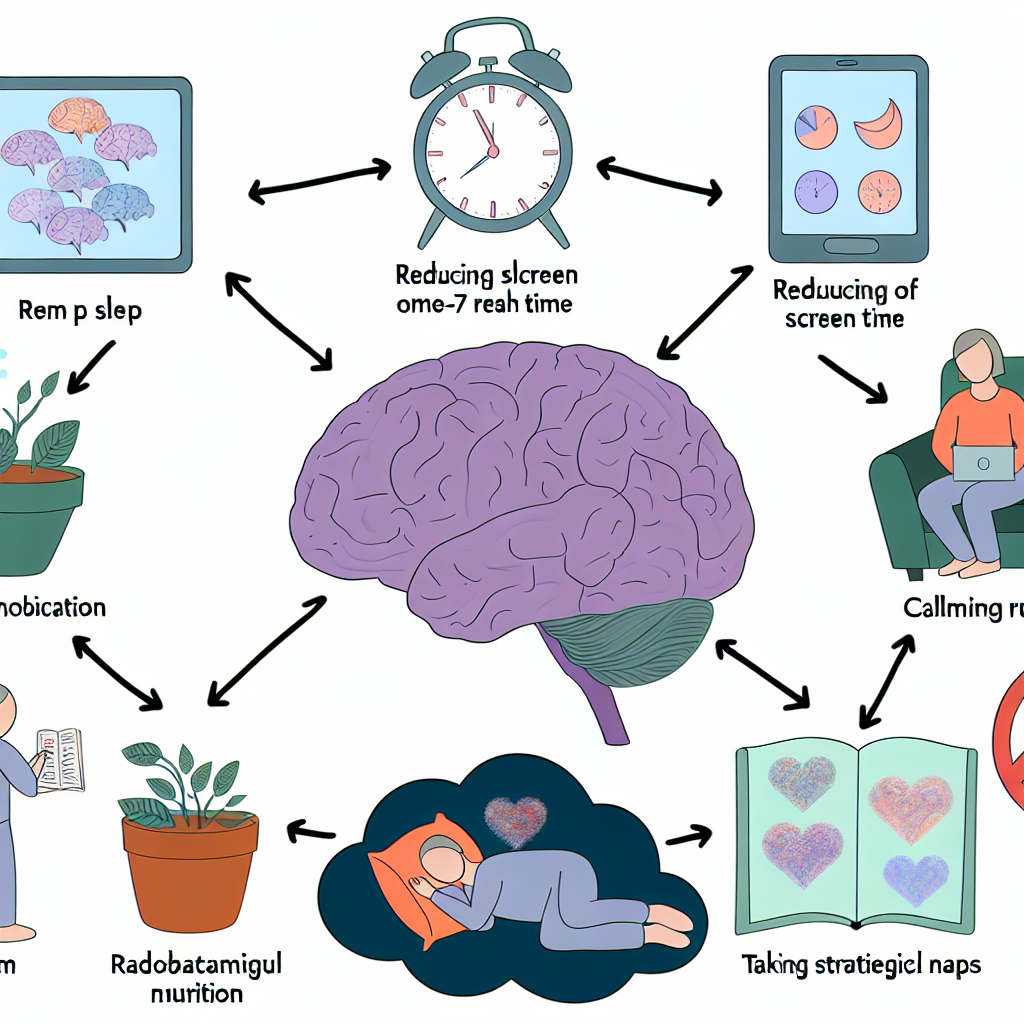
Sleep Creativity Protocol – REM Enhancement for Problem Solving
Introduction
Sleep is widely recognized for its restorative properties—repairing tissues, rejuvenating energy, and consolidating memories. However, science now reveals that sleep, particularly REM sleep (Rapid Eye Movement sleep), plays a pivotal role in boosting creativity and advanced problem-solving.
Known as the “creative sleep phase,” REM sleep enables the brain to draw connections between seemingly unrelated thoughts—facilitating cognitive flexibility, novel insights, and emotional processing. Whether you’re a student, an entrepreneur, a researcher, or anyone tackling regular challenges, enhancing REM sleep can unlock previously untapped potential in your thinking.
Modern challenges such as screen use, inconsistent routines, and stress often impair sleep quality. The Sleep Creativity Protocol offers a pathway to naturally optimize and extend REM sleep in order to support cognitive performance and emotional clarity.
We delve into the scientific backbone supporting this protocol, then provide practical, medically-informed steps to enhance your natural REM cycles—transforming sleep from a passive necessity into an active tool for innovation, clarity, and well-being.
Scientific and Medical Studies on REM Sleep and Cognitive Function
Multiple scientific studies confirm that REM sleep plays a crucial role in fostering creativity and problem-solving:
– A seminal 2009 study by researchers at the University of California, San Diego, published in Proceedings of the National Academy of Sciences, found that individuals who had more REM during naps excelled at creative word association tasks. This indicates that REM aids the brain in drawing links between disparate concepts, an integral function in innovative thinking.
– Dr. Sara Mednick of the University of California, Riverside, conducted experiments showing that REM sleep enhances associative thinking and creative performance, particularly in tests like the Remote Associates Test. Her findings suggest the REM phase fosters abstract ideation and emotional memory refinement.
– At Harvard Medical School, researchers found that REM sleep helps consolidate emotional memories, increasing the brain’s ability to apply emotional intelligence to resolve complex problems or interpersonal puzzles.
– Functional MRI scans show heightened activity in the amygdala and anterior cingulate cortex during REM sleep—regions linked to emotion and creativity. Interestingly, the brain’s analytical center, the dorsolateral prefrontal cortex, is less active at this time. This temporary “logic center” suspension allows freer combinations of ideas.
– A comprehensive review published in Trends in Cognitive Sciences highlights that sleep—especially REM—reorganizes previously learned information into new mental frameworks, laying the groundwork for what researchers call “insight-based learning.”
These findings validate the premise of a Sleep Creativity Protocol, reinforcing the idea that we can train ourselves not just to sleep better, but to sleep smarter.
Sleep Creativity Protocol: How to Enhance REM for Problem Solving
To train your brain for enhanced problem-solving and creativity, adopt the following practices to support a longer and more effective REM phase.
1. Prioritize Sufficient Sleep
Both the quantity and quality of sleep are critical. REM sleep increases in length during later sleep cycles. Sleeping less than seven hours severely limits your access to this vital stage. Adults should aim for 7–9 hours of uninterrupted sleep nightly.
2. Maintain a Consistent Sleep Schedule
Going to bed and waking up at the same times daily aligns your circadian rhythms, enhancing sleep efficiency. Your body’s clock helps regulate hormone release, brain wave activity, and internal temperature—each contributing to optimized REM sleep patterns.
3. Establish a Digital Detox
Blue light emitted from phones, tablets, and computers disrupts melatonin production, making falling into natural REM cycles harder. Shut off electronic devices at least one hour before bedtime to aid faster sleep onset and deeper sleep stages.
4. Optimize Evening Nutrition
What you eat and drink affects your sleep. Avoid alcohol, caffeine, and high-sugar foods after 6 PM. These can disrupt sleep architecture and suppress REM phases. Opt for sleep-supportive foods like almonds, chamomile tea, bananas, or small portions of complex carbs.
5. Practice Relaxation Techniques
Pre-sleep stress reduction can make a big difference. Engage in meditation, progressive muscle relaxation, yoga, or slow, deep breathing. These activities calm the nervous system, lower cortisol, and help transition into early sleep stages that precede REM sleep.
6. Strategic Napping for Creativity
A well-timed, 90-minute nap in the early afternoon can include full REM phases—providing a creativity boost mid-day. Studies suggest that a REM-inclusive nap can solve creative blockages and spark innovative thinking.
7. Dream Journaling and Cognitive Reflection
Writing down your dreams every morning improves your connection to your subconscious mind. Reviewing patterns in these writings can offer epiphanies you missed while awake. Engaging with your dreams also improves recall, which strengthens your awareness of REM experiences.
Conclusion
Creativity is not merely an inborn trait—it’s a cognitive function that can be actively developed. The Sleep Creativity Protocol offers a science-backed method for enhancing this development through better REM sleep. Enhancing this phase not only boosts creativity and innovation but also supports emotional intelligence and mental clarity.
Committing to proper sleep routines, screen management, mindful eating, and relaxation techniques can set the stage for breakthroughs to emerge—literally overnight. Whatever your mental goals, investing in quality sleep provides a profound return.
Wake not just rested, but inspired—proof that some of the greatest ideas first arrive in dreams.
Summary
REM sleep is a vital phase of rest closely tied to creativity, emotional insight, and cognitive flexibility. The Sleep Creativity Protocol outlines actionable steps—like maintaining a regular sleep schedule, digital detoxing, mindful eating, meditation, and dream journaling—that optimize REM duration and quality. Scientific research confirms that REM sleep enhances associative thinking and abstract problem-solving by relaxing logical brain regions and strengthening emotional and memory networks. Whether you seek academic success, artistic inspiration, or sharper decision-making, this protocol activates your brain’s innate problem-solving skills overnight—turning your sleep into a creative powerhouse.
References
– Mednick, S.C., et al. (2011). An opportunistic theory of REM sleep and memory consolidation. Nature Reviews Neuroscience.
– Cai, D.J., et al. (2009). REM, not incubation, improves creativity by priming associative networks. PNAS.
– Walker, M.P., & Stickgold, R. (2004). Sleep-dependent learning and memory consolidation. Neuron.
– Diekelmann, S., & Born, J. (2010). The memory function of sleep. Nature Reviews Neuroscience.
– Harvard Medical School Division of Sleep Medicine – Sleep and Mental Health

Dominic E. is a passionate filmmaker navigating the exciting intersection of art and science. By day, he delves into the complexities of the human body as a full-time medical writer, meticulously translating intricate medical concepts into accessible and engaging narratives. By night, he explores the boundless realm of cinematic storytelling, crafting narratives that evoke emotion and challenge perspectives.
Film Student and Full-time Medical Writer for ContentVendor.com