Sleep-Onset Myoclonus Management: A Mineral and Neuromuscular Relaxation Approach to Hypnic Jerks
Introduction
Sleep-onset myoclonus, more commonly known as **hypnic jerks**, can be an unsettling experience as one approaches sleep. Imagine being comfortably nestled in bed, your mind begins to wander, and just as you’re on the verge of sleep, a sudden involuntary jolt rudely awakens you. These **involuntary muscle twitches**, also referred to as sleep starts, can be alarming, often leaving one bewildered and anxious about their potential implications on **health** and **sleep quality**.
Prevalent across all age groups, **hypnic jerks** are typically **benign** and experienced by up to 70% of the population. The sensation can range from mild twitches to more pronounced jerks, occasionally accompanied by a **falling sensation** or **hallucinations**. While the exact cause remains an ongoing research topic, anxiety, stress, fatigue, and stimulants like caffeine contribute significantly to these nocturnal interruptions.
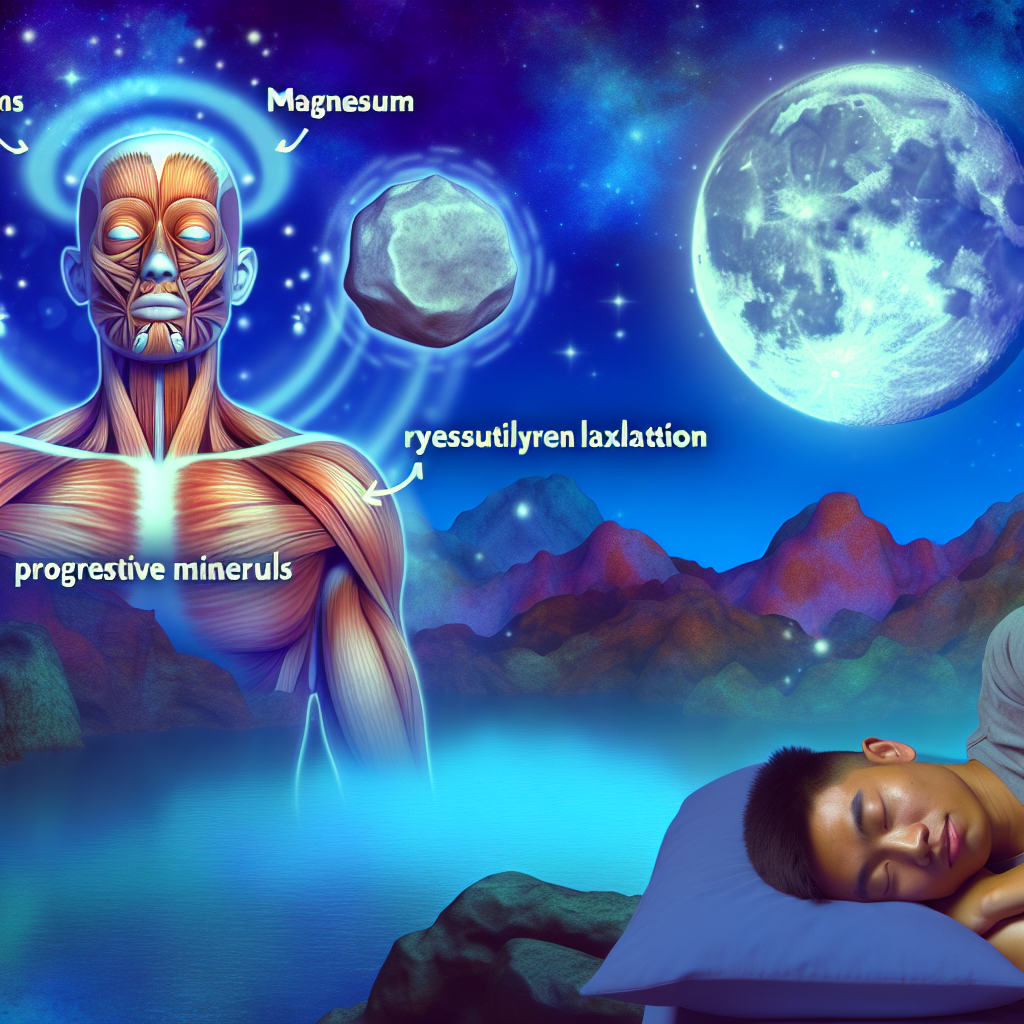
Managing **hypnic jerks** involves understanding the interplay of **minerals** and **neuromuscular relaxation** in optimizing **sleep health**. **Minerals** such as **magnesium** and **calcium** are vital in muscle function and nervous system regulation. When these are out of balance, muscle relaxation can be compromised, paving the way for the twitching characteristic of hypnic jerks. Conversely, neuromuscular relaxation – through techniques like **progressive muscle relaxation** or **mindfulness meditation** – reduces stress and induces calmness, thereby lowering the instances of hypnic jerks.
In this article, we delve into how a combined mineral supplementation and neuromuscular relaxation strategy can mitigate **hypnic jerks**, enhance **sleep quality**, and establish the foundation for restorative sleep. We will explore scientific studies supporting these strategies to offer comprehensive insights into a holistic approach for managing sleep-onset myoclonus.
Features
Scientific research supports the role of **minerals** in managing involuntary muscle activity associated with **hypnic jerks**. **Magnesium**, an essential mineral, is pivotal for muscle relaxation and nerve function. It acts as a natural calcium blocker, helping cells relax by counteracting calcium’s effects on muscle contraction. A study published in the [Journal of Research in Medical Sciences](https://www.ncbi.nlm.nih.gov/pmc/articles/PMC3703169/) highlights **magnesium’s effectiveness** in enhancing **sleep quality** for participants, attributing improvements to its muscle-relaxant properties.
**Calcium** balance is equally necessary, as it contributes to proper muscle function. An imbalance, particularly a deficiency, can lead to increased neuromuscular excitability, resulting in the twitches observed in sleep-onset myoclonus. The [Harvard Health Blog](https://www.health.harvard.edu/staying-healthy/calcium-the-good-the-bad-and-the-ugly) emphasizes the importance of a diet rich in **calcium** for maintaining neuromuscular equilibrium.
**Neuromuscular relaxation techniques**, often overlooked, have robust scientific backing. **Progressive muscle relaxation (PMR)**, for instance, has been widely studied for its efficacy in reducing anxiety and promoting restful sleep. According to a 2019 study published in the [Journal of Clinical Sleep Medicine](https://jcsm.aasm.org/doi/full/10.5664/jcsm.7120), PMR significantly decreased sleep onset latency and improved sleep quality for participants suffering from insomnia.
**Mindfulness meditation**, another potent tool, fosters a state of relaxation conducive to sleep. A 2015 study published in [JAMA Internal Medicine](https://jamanetwork.com/journals/jamainternalmedicine/fullarticle/2110998) found that **mindfulness meditation** improved **sleep quality**, suggesting that consciously reducing stress and promoting relaxation directly impacts the frequency of **hypnic jerks**.
A combined approach harnessing both **mineral supplementation** and **neuromuscular relaxation** addresses the physical and psychological components of sleep-onset myoclonus, providing a comprehensive management strategy. By examining both mineral levels and stress reduction techniques, individuals can address **hypnic jerks** from multiple angles, enhancing overall **sleep quality** and health.
Conclusion
Managing sleep-onset myoclonus through a **mineral** and **neuromuscular relaxation** strategy offers a holistic approach to improving **sleep health**. While **hypnic jerks** can be unsettling, understanding their causative factors—such as imbalances in essential **minerals** and heightened stress—guides effective management. Incorporating optimal levels of **magnesium** and **calcium** in your diet, alongside practicing **relaxation techniques** like **progressive muscle relaxation** and **mindfulness meditation**, empowers individuals to manage their symptoms proactively. Embracing this dual approach not only mitigates **hypnic jerks** but also sets the stage for **restorative** and quality sleep, vital for overall well-being. By taking these actionable steps, those affected can significantly enhance their **sleep experience** and overall **quality of life**.
Concise Summary
**Hypnic jerks**, or sleep-onset myoclonus, can significantly disrupt the transition to sleep. These involuntary muscle twitches affect up to 70% of people and are often exacerbated by anxiety, stress, and stimulants. A holistic approach involving **mineral supplementation** with **magnesium** and **calcium**, along with **neuromuscular relaxation techniques** like **progressive muscle relaxation** and **mindfulness meditation**, can effectively manage these disturbances. By targeting both physical imbalances and stress, individuals can improve **sleep quality** and overall well-being, leading to more restorative and uninterrupted sleep.

Dominic E. is a passionate filmmaker navigating the exciting intersection of art and science. By day, he delves into the complexities of the human body as a full-time medical writer, meticulously translating intricate medical concepts into accessible and engaging narratives. By night, he explores the boundless realm of cinematic storytelling, crafting narratives that evoke emotion and challenge perspectives.
Film Student and Full-time Medical Writer for ContentVendor.com