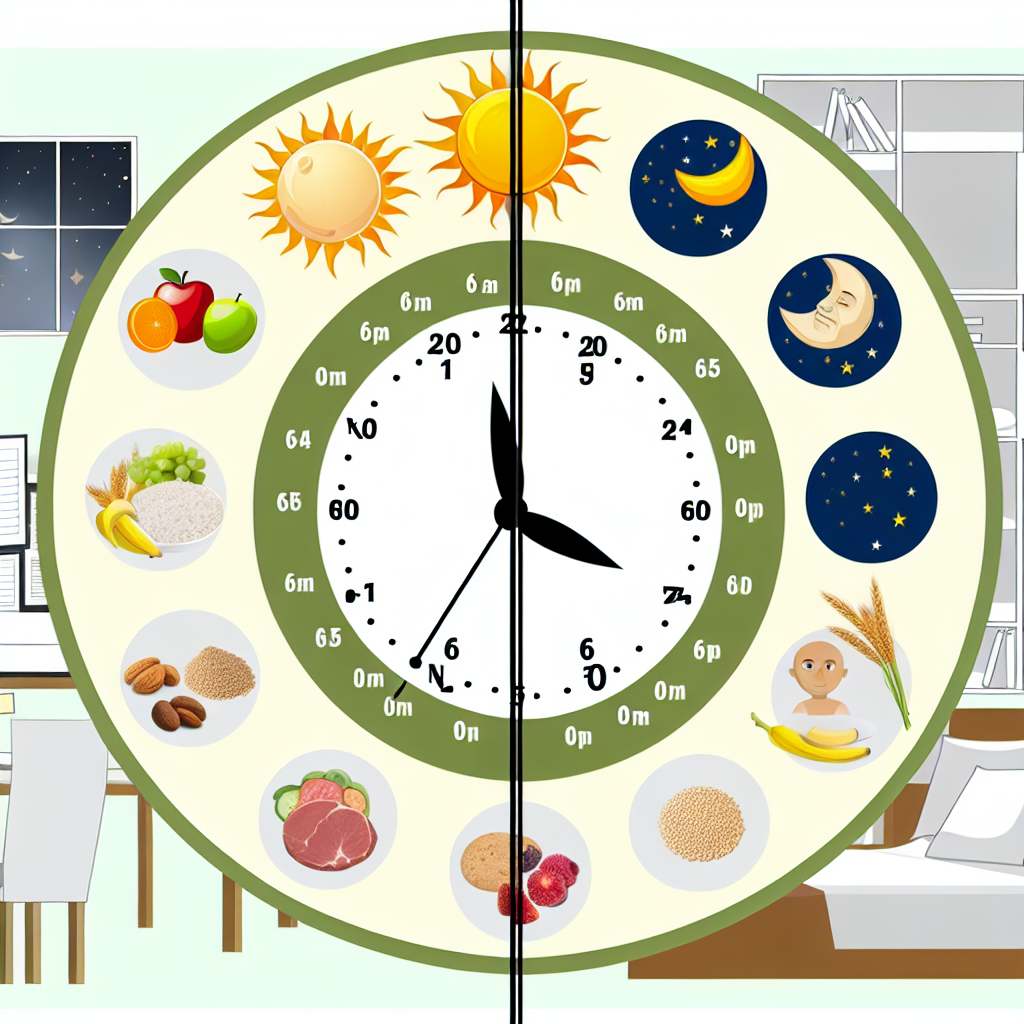
Sleep-Phase Eating Strategy – A Guide to Macronutrient Timing for Improved Sleep Continuity
Introduction
Quality sleep is crucial for overall health, yet many individuals fail to consistently achieve the recommended seven to nine hours of rest each night. While most people focus on lifestyle changes like reduced screen time or stress management, one emerging and highly influential factor is often overlooked: **nutrition and sleep**.
The **Sleep-Phase Eating Strategy** is a nutritional method that strategically aligns **macronutrient timing** with the body’s natural **circadian rhythm** to enhance **sleep continuity** and **overall sleep quality**. Our circadian clock—regulated internally on an approximately 24-hour cycle—governs not only sleep and wake times but also influences hormone secretion, digestion, metabolism, and appetite regulation.
Disruption of this system by erratic meal timing, late-night eating, or an imbalance of macronutrients can compromise sleep duration and depth. By consuming specific macronutrients—**proteins**, **carbohydrates**, and **fats**—at targeted times of day, this strategy taps into the body’s biological systems to naturally enhance calm, energy, and restful sleep.
– Proteins, especially those rich in the amino acid **tryptophan**, serve as building blocks for **melatonin** and **serotonin**, neurotransmitters that regulate sleep-wake cycles.
– **Complex carbohydrates** consumed in the evening help increase tryptophan bioavailability in the brain, facilitating melatonin synthesis and sleep induction.
– **Healthy fats**, such as omega-3s, support cell function and reduce inflammation, both vital to optimal cognitive rest.
The essence of the Sleep-Phase Eating Strategy is simple: front-load your day with **protein and moderate fats** to sustain energy and alertness, and taper into the evening with **complex, sleep-promoting carbohydrates**. This rhythm-aware eating pattern may result in quicker sleep onset, fewer mid-night awakenings, and better sleep architecture overall.
Scientific Evidence and Medical Studies Supporting Macronutrient Timing for Sleep
Emerging research from the disciplines of **chrononutrition** and **sleep science** confirms the powerful link between what—and when—we eat and how well we sleep.
A pivotal study published in the American Journal of Clinical Nutrition (Afaghi et al., 2007) discovered that consuming **high-glycemic-index (GI) carbohydrates** about four hours before bedtime significantly reduced **sleep onset latency**—the time it takes to fall asleep. Researchers attributed this effect to enhanced **tryptophan transport** into the brain, which fosters production of serotonin and melatonin.
A comprehensive review in Nutrients (St-Onge et al., 2016) evaluated the role of **protein intake** in maintaining sleep. It revealed that **high-protein meals** earlier in the day led to better ***sleep continuity*** and reduced occurrences of **nocturnal awakenings**. This may be due to more stable blood sugar levels and the steady release of amino acids necessary for neurotransmitter regulation throughout the night.
Fat intake, particularly the type of fat, also influences sleep. According to Nutrition Research, balanced intake of **unsaturated fats**, like omega-3 fatty acids from sources such as olive oil, walnuts, and fatty fish, promotes longer duration of **REM sleep**, the stage critical for **brain function and memory** consolidation. Conversely, consuming **saturated fats** late in the day is associated with **fragmented sleep**.
Moreover, results highlighted in the journal Frontiers in Psychology (Gohar et al., 2020) describe how **late-night eating**—regardless of macronutrient content—can **delay melatonin onset** and misalign the circadian clock, leading to disturbed sleep cycles and suboptimal rest.
Together, these findings affirm the principle of nutrient synchronization: that **macronutrient timing** is as pivotal as nutrient quality when it comes to supporting healthy sleep patterns.
Macronutrient Timing Recommendations
To adopt the Sleep-Phase Eating Strategy effectively, aligning your meals with natural neurological and hormonal patterns is essential. Here’s a breakdown of optimal macronutrient timing throughout the day:
Morning (7 AM – 11 AM):
– Emphasize a **protein-dominant breakfast** with moderate healthy fats and minimal refined carbs.
– Benefits: Enhances wakefulness, dopamine production, and sustained energy levels.
– Sample foods: Eggs, Greek yogurt, cottage cheese, lean turkey, avocado, chia seeds.
Afternoon (12 PM – 3 PM):
– Maintain **balanced protein** intake with a modest addition of complex carbohydrates and healthy fats.
– Benefits: Supports focus and hormonal stability during peak productivity hours.
– Sample foods: Grilled chicken salad with quinoa, lentil soup with whole grain bread, tofu bowl with brown rice.
Evening (5 PM – 8 PM):
– Shift toward **complex carbohydrate-based meals** with lighter proteins and limited fats.
– Benefits: Encourages serotonin and melatonin production for improved sleep readiness.
– Sample foods: Sweet potato with steamed vegetables, whole grain pasta with roasted vegetables, rice and black beans.
Pre-Bed Snack (optional, 60–90 minutes before sleep):
– If needed, choose a light, carbohydrate-rich snack.
– Sample options: Banana with almond butter, small bowl of oatmeal, tart cherry juice, or rice cakes.
Additional Tips for Success
– Stick to consistent meal times to reinforce your body’s natural rhythms.
– Avoid high-sugar or caffeinated foods and drinks after 2 PM.
– Stay hydrated during the day but taper fluid intake in the evening to reduce nighttime bathroom visits.
– Practice mindful eating—chew food thoroughly and disconnect from digital distractions while eating.
– Monitor how meal timing affects your personal energy and sleep patterns. Everyone’s circadian rhythm varies slightly, so fine-tune accordingly.
Conclusion
The **Sleep-Phase Eating Strategy** is a groundbreaking, evidence-based approach that restructures our daily eating patterns to support healthier **sleep cycles** and improved **restorative sleep**. By harmonizing our **macronutrient intake** with **circadian biology**, this method offers a natural, non-pharmaceutical intervention for more restful nights and energetic days.
Instead of focusing solely on what or how much we eat, we should consider when we eat. From **protein-packed mornings** to **carb-rich evenings**, tuning our nutrition to the body’s internal clock allows for better **hormonal balance**, fewer mid-night awakenings, and deeper REM sleep. Adopting this strategy may be especially helpful for individuals suffering from **insomnia**, **frequent night waking**, or **daytime fatigue**.
As the science of **chrononutrition** evolves, tailoring your eating habits to your body’s rhythms could become an essential pillar in your **personalized sleep wellness toolkit**.
Concise Summary
The Sleep-Phase Eating Strategy is a nutrient-timed approach that aligns macronutrient intake—proteins, carbohydrates, and fats—with the body’s natural circadian rhythm to enhance sleep quality. By emphasizing protein and fats in the morning to support energy and neurotransmitter production, and shifting to complex carbohydrates in the evening to support melatonin synthesis, this strategy promotes faster sleep onset, fewer mid-night awakenings, and improved sleep continuity. Supported by scientific evidence from sleep medicine and chrononutrition research, this dietary method offers a natural, lifestyle-based pathway to deeper, more restorative sleep.
References & Studies
– Afaghi, A. et al. (2007). High-glycemic-index carbohydrate meals shorten sleep onset. The American Journal of Clinical Nutrition
– St-Onge, M. P. et al. (2016). Effects of Diet on Sleep Quality. Nutrients
– Peuhkuri, K. et al. (2012). Diet promotes sleep duration and quality. Nutrition Research
– Almoosawi, S. et al. (2017). Chrono‐nutrition and obesity. Proceedings of the Nutrition Society
– Gohar, A. et al. (2020). Sleep and Nutrition: An Opportunity for Public Health Education. Frontiers in Psychology

Dominic E. is a passionate filmmaker navigating the exciting intersection of art and science. By day, he delves into the complexities of the human body as a full-time medical writer, meticulously translating intricate medical concepts into accessible and engaging narratives. By night, he explores the boundless realm of cinematic storytelling, crafting narratives that evoke emotion and challenge perspectives.
Film Student and Full-time Medical Writer for ContentVendor.com