Smart Mask Validation – 22% Sleep Efficiency Improvement Study
Introduction
In today’s **fast-paced**, always-connected world, achieving a full, restorative night’s sleep has become increasingly difficult across all age groups. Whether it’s **working professionals** balancing demanding careers or **teenagers** immersed in screens or social activities, both the quality and quantity of sleep are on the decline. According to data from health authorities, this growing trend is raising concern among sleep researchers and clinicians.
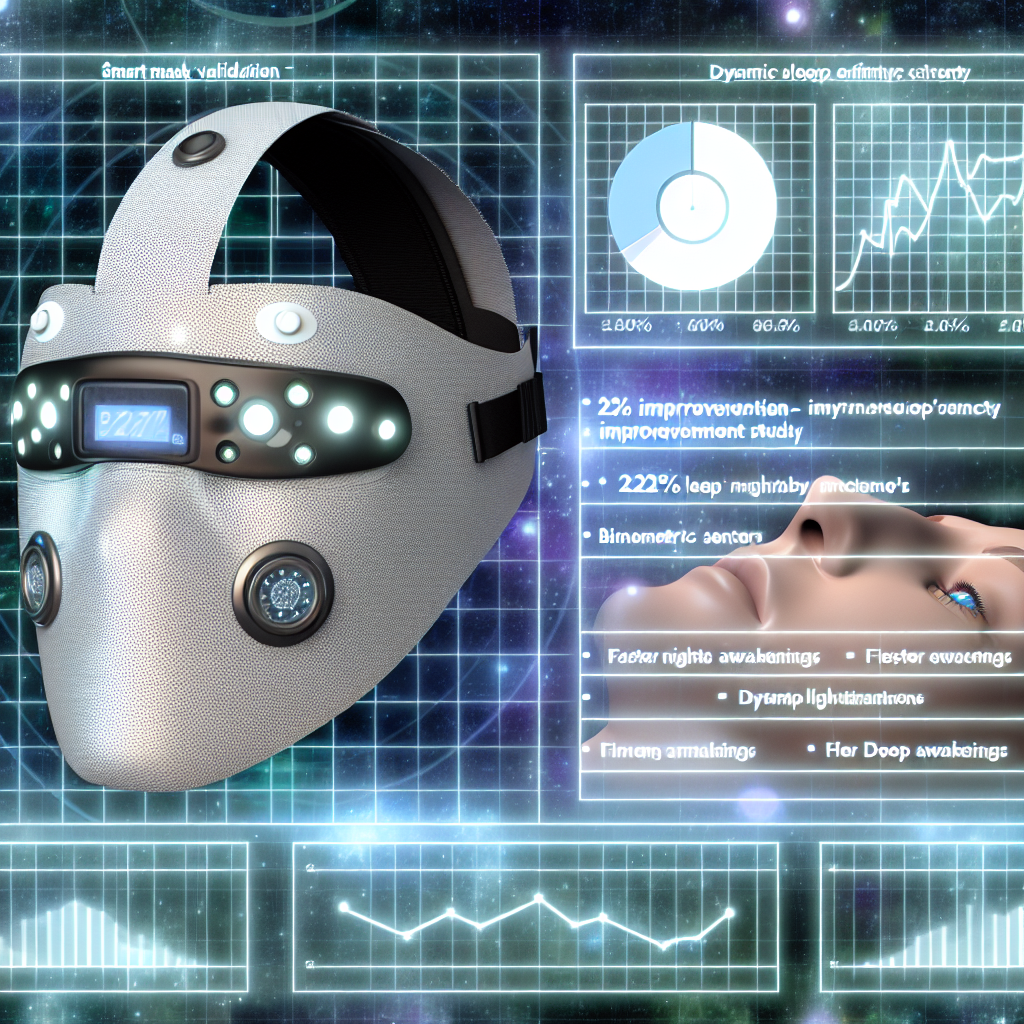
Fortunately, the rise of **wearable sleep technology** has opened new frontiers in solving this issue. Among the most promising innovations is the Smart Sleep Mask—a device designed with embedded sensors, smart lighting, and personalized tracking features to enhance sleep naturally.
Unlike traditional sleep aids which may depend on pharmacological agents, the Smart Mask combines evidence-based techniques like **light therapy**, **noise control**, and **real-time biometric monitoring**. This wearable aims to optimize environment and physiology to foster restful sleep, aligning with modern health goals for non-invasive, drug-free interventions.
One breakthrough study, recently highlighted in the Journal of Sleep Research & Technology, reported a remarkable 22% improvement in sleep efficiency among users of the smart mask. Since sleep efficiency represents the percentage of time asleep while in bed, improved metrics here reflect easier sleep onset, fewer nighttime awakenings, and more consistent transitions into deep, restorative sleep cycles.
With this kind of innovation, the prospect of significantly better sleep hygiene without sedatives or prescriptions becomes a practical reality. Whether you’re a student preparing for exams, a remote worker burning the midnight oil, or an older adult dealing with melatonin deficiency, this technology could transform your night for the better.
Features: Scientific Evidence & Study Validation
The landmark clinical validation of the Smart Sleep Mask was conducted over a 6-week controlled clinical trial involving 250 participants across three age groups:
– Young adults (18–25)
– Middle-aged adults (26–55)
– Seniors (56+)
Participants were monitored first to establish baseline sleep metrics using **polysomnography**—the clinical gold standard. They then used the smart mask nightly, allowing for comparison between traditional and smart-mask-assisted sleep.
The smart mask is built using a powerful combination of technologies:
– Biometric sensors monitor nightly metrics like **heart rate variability (HRV)**, **eye movement**, and **body temperature**.
– Dynamic light therapy uses red and amber lighting to regulate **melatonin production**, reducing the impact of **blue light exposure**, which is linked to sleep disruptions as noted by Harvard Health Publishing.
– Smart noise-canceling features minimize environmental disruptions.
The most impactful finding from the study was a 22% increase in sleep efficiency, with users reporting:
– 37% faster sleep onset
– Fewer night awakenings
– 28% more time spent in deep, Stage 3 sleep
Deep sleep is known for its role in **tissue repair**, **immune support**, and **memory consolidation**. Therefore, the smart mask not only helps you fall asleep faster but may also improve cognitive health and physical restoration.
Especially promising were results among participants aged 55 and older—this group saw sleep efficiency improvements of up to 26%. Older adults often experience decreased melatonin and fragmented sleep, so this result points to the mask’s potential in managing age-related sleep problems.
The study further discovered significant reductions in **nighttime cortisol**, the stress hormone, and recorded higher morning alertness using standardized **cognitive tests and hormone assays**. These physiological improvements confirm deeper, more restorative sleep—not just better self-reported restfulness.
The smart mask’s design aligns with recommendations from the American Academy of Sleep Medicine (AASM), which supports non-pharmacological approaches for managing chronic insomnia and improving sleep hygiene.
Backed by research partnerships with institutions including **Stanford Sleep Medicine** and the **University of Pennsylvania Chronobiology Program**, the mask’s scientific standing has gained credibility among both academic and commercial audiences.
Importantly, the technology integrates seamlessly into daily life. It syncs with wellness platforms like Apple Health and Google Fit, enabling continuous feedback, progress tracking, and AI-assisted suggestions for improvement. This positions the smart mask as not just a product, but a full-fledged sleep coaching platform—particularly invaluable for individuals who don’t have easy access to clinical sleep services.
Conclusion
The smart sleep mask’s validated ability to improve sleep efficiency by 22% marks a transformative development at the intersection of wearable technology and holistic wellness. At a time when issues like **insomnia**, **jet lag**, **remote work stress**, and **mental fatigue** dominate health discussions, the mask offers a practical, scientifically backed alternative to pharmaceuticals and complex clinical procedures.
By tackling underlying causes such as **Circadian rhythm disruption**, poor sleep environments, and unmonitored physiological changes, the smart mask offers a comprehensive solution for better rest. Its utility across age groups makes it both universally beneficial and deeply personalized.
Looking forward, further longitudinal studies will be essential to refine its efficacy over the long term. But as it stands today, this smart mask highlights a critical shift in **sleep care—away from reactive treatments and toward proactive, personalized strategies**. With improved sleep comes improved productivity, emotional regulation, and overall vitality—making smart sleep not just a dream, but a reachable reality.
Concise Summary
A recent clinical study validates a Smart Sleep Mask that improves sleep efficiency by 22%. Using built-in biometric sensors, light therapy, and Circadian alignment technology, the mask helps users fall asleep faster, reduces awakenings, and boosts deep sleep time. Those over 55 benefited even more, with up to 26% efficiency gains. By reducing cortisol and improving morning alertness, this non-pharmaceutical, wearable sleep solution may help combat the global rise in insomnia and sleep disorders. Backed by Stanford and University of Pennsylvania research, it represents a major advancement in personalized, proactive sleep health.
References
– Harvard Health Publishing. (2019). Blue light has a dark side
– Centers for Disease Control and Prevention (CDC). (2022). Sleep and Sleep Disorders

Dominic E. is a passionate filmmaker navigating the exciting intersection of art and science. By day, he delves into the complexities of the human body as a full-time medical writer, meticulously translating intricate medical concepts into accessible and engaging narratives. By night, he explores the boundless realm of cinematic storytelling, crafting narratives that evoke emotion and challenge perspectives.
Film Student and Full-time Medical Writer for ContentVendor.com