Snoring Solution – Wearable Position Trainer for Side Sleeping
Introduction
Snoring is a common and disruptive issue affecting millions of individuals and their bed partners worldwide. Characterized by noisy breathing during sleep, snoring is primarily caused by the vibration of tissues in the throat. While occasional snoring may seem harmless, habitual snoring can indicate a more serious medical condition called obstructive sleep apnea (OSA), which can lead to complications such as high blood pressure, heart disease, and impaired cognitive function.
Beyond the health risks, snoring significantly disrupts sleep quality for the snorer and their partner, leading to daytime fatigue, mood disturbances, and reduced overall quality of life. In relationships, consistent snoring can cause frustration, disturbed intimacy, and even lead to separate sleeping arrangements.
Thankfully, innovative advances in sleep medicine are offering new options. Among these, positional therapy for snoring—specifically encouraging individuals to sleep on their side—has proven to be a particularly effective and non-invasive intervention. Sleeping on your side helps keep the airway open and minimizes the collapse of the soft tissues that cause snoring.
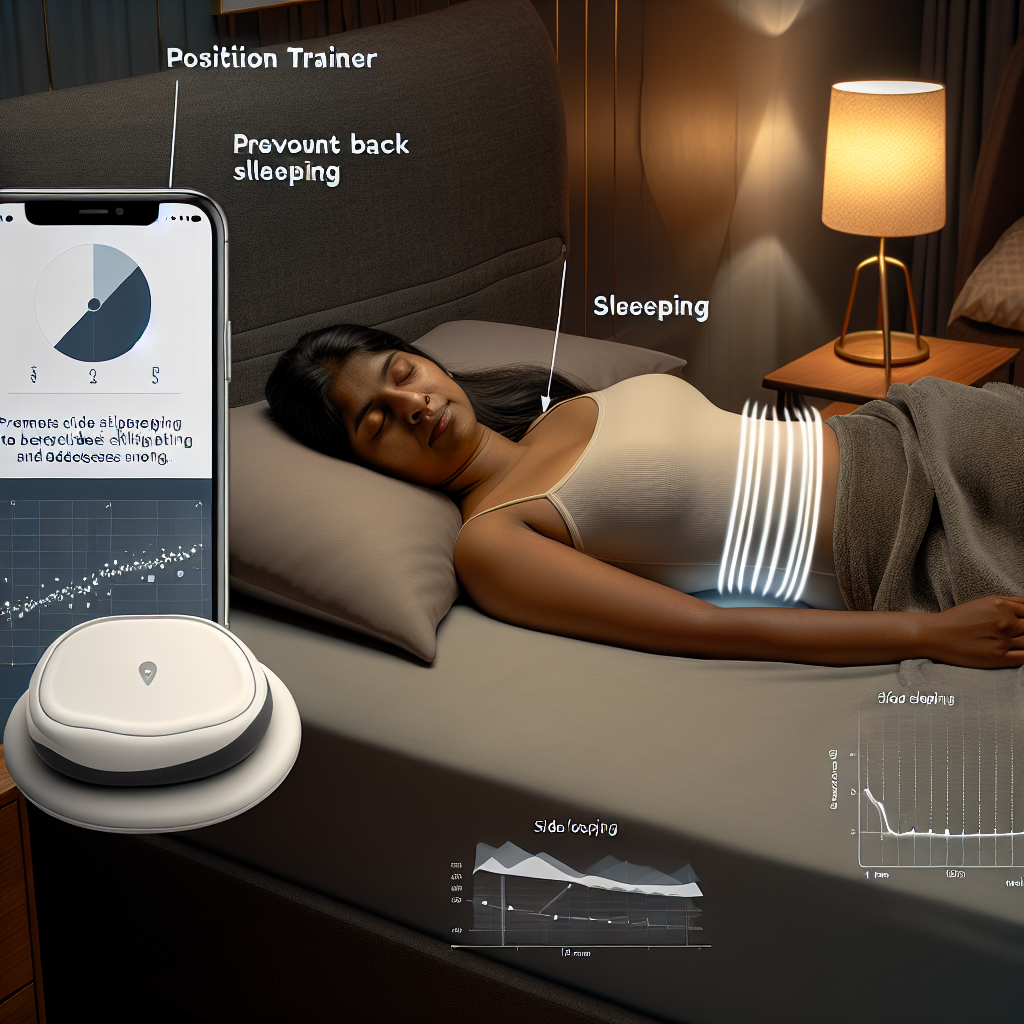
In recent years, technology has introduced wearable position trainers, designed to help users naturally maintain a side-sleeping posture. Worn around the chest or back, these smart devices emit gentle vibrations when a person rolls onto their back, encouraging a return to the side position without disrupting sleep. Over time, they help train users to instinctively adopt side sleeping, improving comfort, sleep quality, and breathing without the use of medications or bulky equipment.
This article explores the science behind this approach, details the features of modern wearable devices, and provides guidance for those seeking an accessible and research-supported snoring solution.
Features and Supporting Studies
Sleep positional therapy is a trusted method in sleep medicine for managing snoring and position-dependent OSA. Studies show that around 56% of individuals with mild to moderate OSA experience worsened symptoms when sleeping on their back, indicating the condition is highly position-sensitive. This has cemented the value of devices that discourage supine sleeping.
A 2018 study in the journal Sleep & Breathing evaluated the use of wearable position trainers in individuals with positional OSA and habitual snoring. The study found a 60% reduction in snoring frequency and improved overall sleep quality after four weeks of consistent use. Participants reported the devices to be comfortable and easy to use, making them appealing alternatives to traditional CPAP machines.
A separate 2014 study in the Journal of Clinical Sleep Medicine further confirmed the long-term efficacy of wearable positional devices. Involving 94 subjects, this randomized controlled trial showed notable improvement not only in nighttime breathing but also reduced daytime fatigue, morning headaches, and improved overall quality of life. Importantly, compliance over 12 months remained high, underlining the long-term viability of vibration-based positional therapy.
Modern devices use intelligent motion sensors and gentle vibration cues. When a user turns onto their back, the device activates a soft vibration prompting a return to the side without fully awakening them, preserving sleep integrity. Many devices sync with smartphone apps via Bluetooth, enabling users to review sleep position history, duration in each position, vibration activations, and sleep quality improvements over time.
This data-driven feedback empowers users to monitor progress and adjust their habits for greater success. Advanced models also offer battery efficiency, adjustable sensitivity settings, and silent operation that doesn’t disturb partners.
The American Academy of Sleep Medicine (AASM) recognizes positional therapy as a frontline treatment for those with mild or position-dependent OSA. In comparison to CPAP—which though effective, is often described as bulky and uncomfortable—position trainers offer a non-intrusive, more comfortable, and manageable alternative.
Consumer feedback also validates the benefits of these devices. Many users report dramatic reductions in snoring, better sleep quality, and even relationship improvement due to fewer sleep interruptions and nighttime conflicts.
Conclusion
Wearable position trainers for side sleeping represent a smart, comfortable, and scientifically validated solution for people dealing with snoring. Rooted in the principles of positional therapy and supported by robust clinical evidence, these devices offer an effective alternative to more invasive options like CPAP for those with *position-dependent snoring* or *mild obstructive sleep apnea*.
They are discreet, intuitive to use, and ideal for nightly use, helping form healthy sleep habits over time. Additionally, Bluetooth integration and sleep-tracking features give users insight into how their sleep is improving night after night.
Snoring should not be ignored, especially when it affects one’s sleep, health, and relationships. Whether you’re seeking a quieter night for your partner or aiming to address your own sleep challenges, a wearable side-sleeping trainer is worth considering. As research and technology continue to evolve, such non-invasive options are becoming not only widely available but also incredibly effective.
Those experiencing chronic snoring or symptoms of sleep apnea should consult a sleep specialist; however, wearable position trainers may be the first effective step toward better sleep and health without the need for cumbersome medical equipment.
Concise Summary
Wearable position trainers offer an innovative way to reduce snoring by prompting side sleeping. These non-invasive devices use gentle vibrations to prevent back sleeping, a major cause of snoring and position-dependent obstructive sleep apnea. Clinical studies report significant improvement in snoring and sleep quality with regular device use, and many users find them comfortable and easy to integrate into daily routines. Supported by sleep medicine guidelines, these smart, user-friendly tools present a comfortable and effective alternative to traditional treatments like CPAP. They offer a practical solution for snorers and their partners seeking better rest and long-term sleep health.
References
1. American Academy of Sleep Medicine – Positional Therapy Guidelines
4. Sleep Foundation – “Understanding Positional Sleep Apnea”
5. Mayo Clinic – Snoring and Sleep Apnea Overview

Dominic E. is a passionate filmmaker navigating the exciting intersection of art and science. By day, he delves into the complexities of the human body as a full-time medical writer, meticulously translating intricate medical concepts into accessible and engaging narratives. By night, he explores the boundless realm of cinematic storytelling, crafting narratives that evoke emotion and challenge perspectives.
Film Student and Full-time Medical Writer for ContentVendor.com