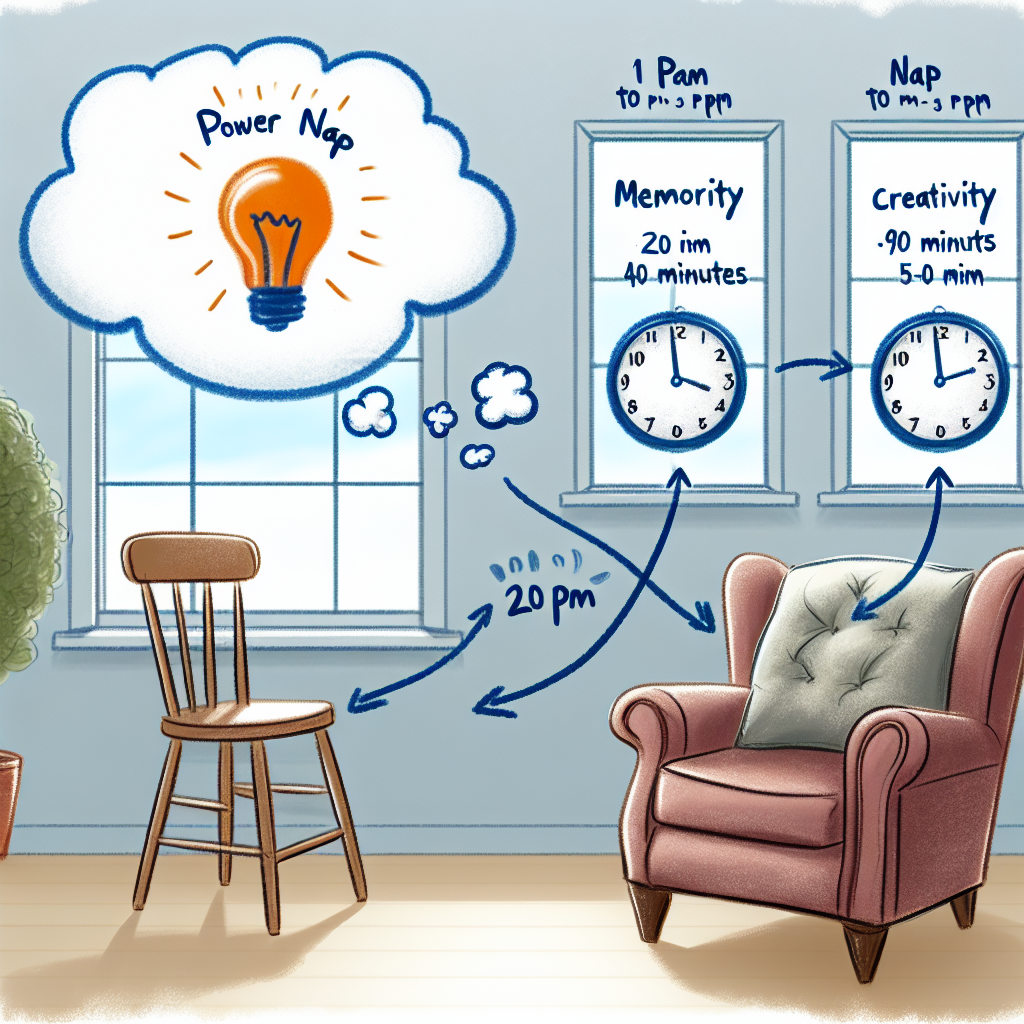
The Advanced Nap Strategy: Timing and Duration for Cognitive Recharge Without Sleep Inertia
Introduction
In our **fast-paced modern society**, the quintessential **nap** isn’t just a luxury; it’s a strategic tool for enhancing **cognitive function**, **creativity**, and overall **well-being**. While many assume that napping is purely for children or the elderly, recent studies have shown that the correct napping technique can significantly benefit individuals of all ages. However, navigating the world of napping requires more than just closing your eyes for an undetermined period of time. The challenge lies in maximizing the benefits while minimizing **sleep inertia**—the grogginess and disorientation that can accompany abrupt awakenings.
Napping, when done correctly, can serve as a cognitive refreshment, akin to hitting the reset button on our brains. This practice can provide an energy boost, enhance mood, improve memory retention, and increase alertness, positioning us to tackle the second half of the day with renewed vigor. Unlike the prolonged rest we experience overnight, a nap acts as a brief but powerful pause that, when strategically timed and expertly executed, can yield immediate cognitive dividends.
Understanding the optimal nap duration and timing is crucial for sidestepping the common problem of sleep inertia. This post-nap grogginess is particularly relevant for those who need immediate alertness after waking, such as students heading for classes or professionals preparing for meetings. Scientifically, when we nap too deeply or for too long, we risk delving into the slower waves of sleep cycles, making it harder to shake off the drowsiness upon waking.
To perfectly align with our **natural circadian rhythms**, napping should be approached with a strategy that considers both the timing and duration tailored to each individual’s unique sleep needs. For instance, timing a nap between 1 pm to 3 pm aligns with the body’s natural dip in alertness due to a slight drop in core body temperature, which occurs in the early afternoon. This scheduling taps into the body’s natural propensity for a mini-slumber, effectively dodging the risk of nighttime sleep disruption.
Features
Professional and scientific insights into napping have increasingly cemented its status as a legitimate wellness tool. A study by **Mednick et al. (2002)** published in *Nature Neuroscience* demonstrated that a 60 to 90-minute nap could produce significant improvements in cognitive function akin to those achieved with a full night’s rest. The research highlights how strategic naps can enhance memory consolidation, motor skills, and creative problem-solving, boost learning capability and increase performance.
Moreover, the relationship between nap duration and its cognitive benefits is nuanced. A brief nap of 10 to 20 minutes, often termed a **power nap**, primarily serves to enhance alertness and focus without causing sleep inertia. Its brevity ensures that the individual remains in the lighter stages of NREM (non-rapid eye movement) sleep, making it easier to wake up refreshed.
In professional environments particularly, the application of napping has shown promising results. A notable study led by **NASA** on pilots and astronauts found that short naps, averaging around 26 minutes, improved performance by 34% and alertness by 54% ([NASA Technical Reports Server](https://ntrs.nasa.gov/search.jsp?R=19960044955)). This data has profound implications not just for pilots, but also for other high-stakes professions where critical decision-making and alertness are paramount.
Another intriguing study carried out by **Harvard researchers** revealed that a 45-minute nap could improve cognitive memory function, underscoring the profound impact that midday resting can have on memory consolidation during waking hours (Tucker et al., 2006). However, it also highlighted the delicate balance needed to avoid slipping into deeper sleep states that can cause inertia. For those interested in implementing naps into their routine, tracking sleep trends might offer insights into optimal personal nap strategies.
Conclusion
Napping, far from being a simple pastime, requires a sophisticated approach to maximize cognitive and physiological benefits without succumbing to the pitfalls of sleep inertia. The science is clear: a strategic nap not only recharges the brain but also optimally supports peak performance, creativity, and learning processes. By honing the timing and duration of naps—ideally aiming for the early afternoon and keeping duration short—one can enjoy the immediate rewards of improved alertness and cognitive function, setting the scene for a more effective and balanced day.
To inscribe napping into your lifestyle, consider your personal rhythms and tailor your strategy accordingly. Whether you are a student, a working professional, or simply someone seeking better well-being, the advanced nap strategy holds the key to unlocking greater daily fulfillment. Sleep should not just be restorative but should propel us forward, renewing our minds and invigorating our pursuits.
References
– Mednick, S., Nakayama, K., & Stickgold, R. (2002). Sleep-dependent learning: A nap is as good as a night. *Nature Neuroscience*. [Nature Journal](https://www.nature.com/articles/nn1002)
– NASA. (1995). Fatigue countermeasures program. [NASA Technical Reports Server](https://ntrs.nasa.gov/search.jsp?R=19960044955)
– Tucker, M. A., Hirota, Y., Wamsley, E. J., Lau, H., Chaklader, A., & Fishbein, W. (2006). A daytime nap containing solely non-REM sleep enhances declarative but not procedural memory. *Neurobiology of Learning and Memory*. [ScienceDirect](https://www.sciencedirect.com/science/article/abs/pii/S1074742706000659)
Concise Summary
The advanced nap strategy leverages optimized timing and duration to enhance cognitive function without causing sleep inertia. Proper naps can boost mood, memory, and alertness by aligning with natural circadian rhythms. Studies affirm that short naps of 10-20 minutes improve focus, while 60-90 minute naps enhance memory akin to overnight sleep. NASA’s findings show that pilots’ naps boost performance significantly, impacting high-stakes jobs. Tailoring nap strategies per individual needs maximizes their benefits. Integrating strategic naps can rejuvenate the mind, promoting well-being and productivity across daily endeavors.

Dominic E. is a passionate filmmaker navigating the exciting intersection of art and science. By day, he delves into the complexities of the human body as a full-time medical writer, meticulously translating intricate medical concepts into accessible and engaging narratives. By night, he explores the boundless realm of cinematic storytelling, crafting narratives that evoke emotion and challenge perspectives.
Film Student and Full-time Medical Writer for ContentVendor.com