The Sleep Banking Protocol for First Responders – Strategic Rest Accumulation Before Demanding Shifts
Introduction
Navigating the challenging and often unpredictable world of **first responders** requires not only physical agility and mental alertness but also excellent health. **Sleep**, a pillar of both physical and cognitive health, is often compromised due to the irregular and demanding schedules of first responders. **Police officers**, **firefighters**, **emergency medical technicians**, and other frontline personnel are frequently called upon to perform under high-stress conditions, making their reliance on effective sleep strategies critical for **optimal functioning** and **wellbeing**.
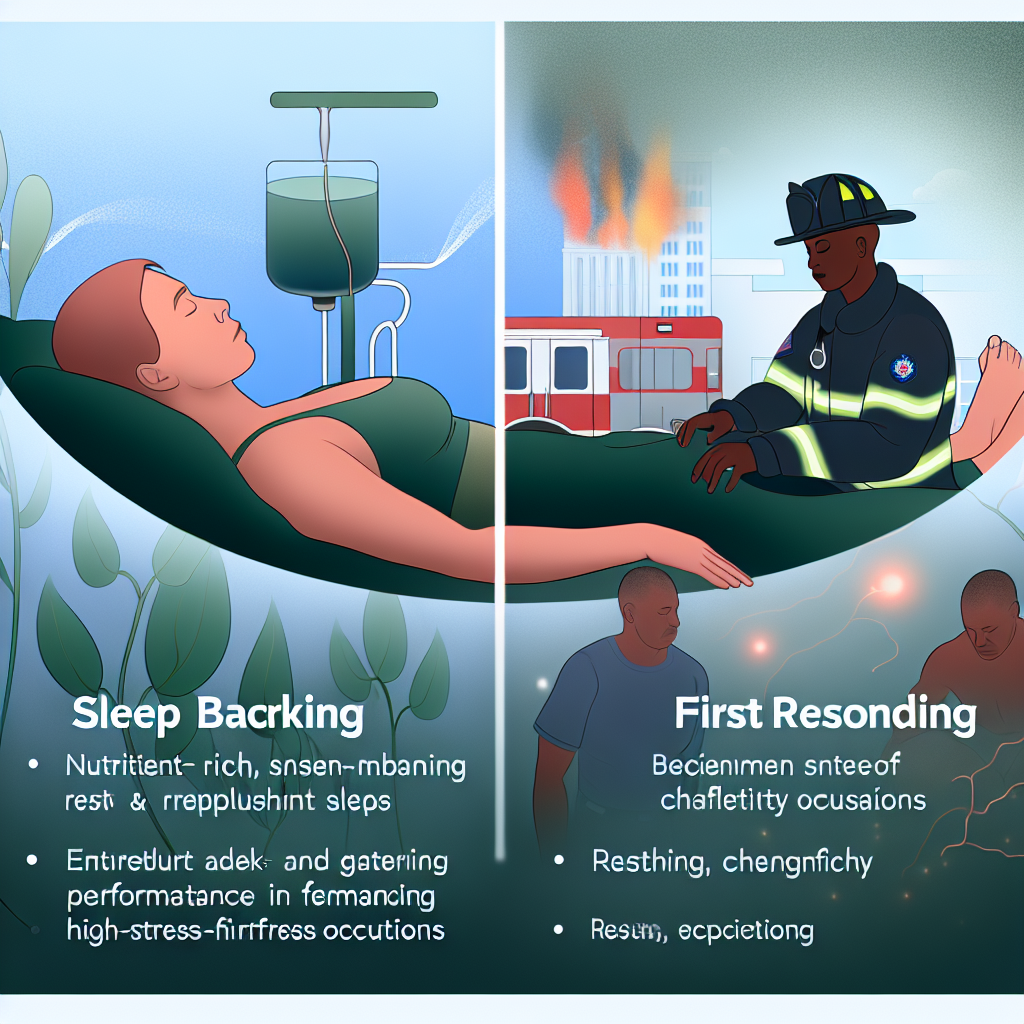
Enter the concept of **”sleep banking”** – a **proactive technique** that involves deliberately amassing additional sleep hours in anticipation of periods when rest will be limited. This concept parallels **financial banking**: accumulating reserves to draw upon during lean times. For first responders, mastering sleep banking can serve as a crucial strategy to mitigate the effects of **sleep deprivation** that naturally accrues during long or demanding shifts.
The biologically restorative benefits of sleep include **muscle repair**, **memory consolidation**, and **mood regulation**. Lack of sleep can lead to **cognitive impairments**, decreased reaction times, and emotional instability—none of which is beneficial or acceptable when split-second decision making can mean the difference between life and death.
**Traditional advice** often focuses on the necessity of maintaining consistent sleep schedules and obtaining seven to nine hours of sleep each night. However, given the unpredictable nature of **emergency response** work, such recommendations are not always feasible. Hence, **sleep banking** presents a viable alternative by focusing on increasing **sleep reserves** voluntarily. This practice can potentially buffer the adverse effects of sleep loss, helping first responders maintain **peak performance**, enhance safety, and prevent **chronic health conditions** that are exacerbated by long-term sleep deprivation.
Features
The concept of **sleep banking** is gaining traction in sleep research and practice due to its potential benefits in situations where sleep deprivation is unavoidable. A landmark study by Rupp et al. (2009) published in the journal *SLEEP* explored the effectiveness of sleep banking through a controlled experiment involving participants who engaged in **sleep extension** before a period of sleep deprivation. The study concluded that those who banked sleep showed better **cognitive function** and mood levels compared to those who did not engage in sleep extension.
**Medical professionals** and **sleep researchers** are recognizing sleep banking as an anticipatory coping mechanism. According to a review published in the *Journal of Sleep Research*, sleep banking could be particularly beneficial in improving performance and mood for **high-stress occupations** such as first responders. The notion is simple yet profound – adding an extra hour or two of sleep each night in the days leading up to a demanding shift can act as a buffer, mitigating potential negative impacts when individuals face subsequent sleep deprivation.
Moreover, the application of **sleep banking** has shown promise in **military settings**, which share similar characteristics with emergency response careers, including high stakes and unpredictability. Studies involving military personnel have demonstrated that sleep extension can improve **vigilance**, **reaction times**, and mood stability during extended operations, offering insights and relevance for first responders.
By embracing the principles of strategic rest accumulation through sleep banking, first responders can potentially reduce the risks associated with sleep deprivation, contributing to improved safety and effectiveness on the job. While more research is necessary to fully understand sleep banking’s long-term effects, current findings underscore its promise as a **preventive strategy** for **occupational stress** and fatigue in high-demand professions.
Conclusion
In the high-pressure environment where **first responders** operate, maintaining peak cognitive and physical performance is non-negotiable. **Sleep banking** emerges as a practical, evidence-based approach that can help mitigate the inevitable challenges of irregular and demanding schedules faced by those on the frontlines. By strategically accumulating rest, first responders can better safeguard their health, sharpen their decision-making abilities, and enhance overall workplace safety.
As awareness of the essential role of sleep in health and performance continues to grow, integrating sleep banking into pre-shift routines might not only be beneficial but imperative. Further research may continue to illuminate the specific benefits and optimal strategies for implementing sleep banking, but its current contributions to the well-being and operational efficiency of first responders make it a worthy consideration in modern occupational health practices.
**References**
1. [Rupp, T. L., Wesensten, N. J., Bliese, P. D., & Balkin, T. J. (2009). Banking Sleep: Realization of Benefits During Subsequent Sleep Restriction and Recovery. *SLEEP*, 32(3), 311–321.](https://academic.oup.com/sleep/article/32/3/311/2454094)
2. [Tucker, P., & Dinges, D. F. (2007). Sleep Demand and Sleep Banking: Background, Impact, and Consequences. *Journal of Sleep Research*, 16(1), 8–10.](https://onlinelibrary.wiley.com/doi/10.1111/j.1365-2869.2007.00585.x)
**Concise Summary**
**Sleep banking** is a proactive technique beneficial for **first responders**, enabling them to accumulate extra sleep before demanding shifts. This approach enhances cognitive function and mood during sleep-deprived periods, as evidenced by research. Comparable to financial banking, it mitigates the downsides of sleep loss, especially in high-stress and unpredictable occupations like emergency response and military services. Adoption of sleep banking can lead to improved safety, performance, and long-term health, making it a crucial strategy for managing the demands of such careers.

Dominic E. is a passionate filmmaker navigating the exciting intersection of art and science. By day, he delves into the complexities of the human body as a full-time medical writer, meticulously translating intricate medical concepts into accessible and engaging narratives. By night, he explores the boundless realm of cinematic storytelling, crafting narratives that evoke emotion and challenge perspectives.
Film Student and Full-time Medical Writer for ContentVendor.com