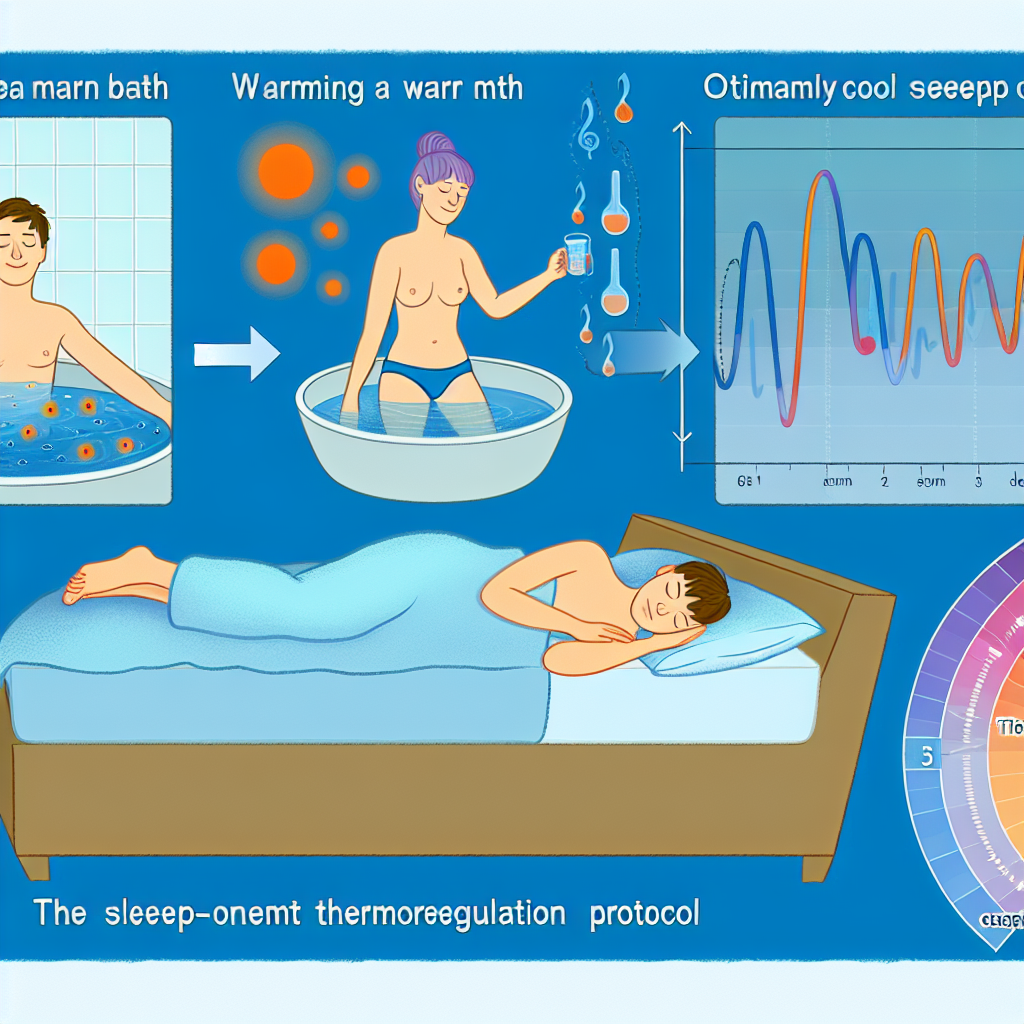
The Sleep-Onset Thermoregulation Protocol – Using Timed Temperature Drop to Trigger Drowsiness
Introduction
In today’s world of relentless pace and digital overstimulation, achieving quality sleep can be challenging. Millions experience difficulty falling asleep or maintaining restful slumber through the night. While many contributors affect sleep quality—such as stress, screen time, and caffeine intake—one often-overlooked factor is the body’s ability to regulate temperature.
Emerging from recent physiological and sleep research is the evidence-based method known as the Sleep-Onset Thermoregulation Protocol (SOTP). Rooted in the science of circadian rhythms and body temperature regulation, this protocol utilizes the **natural decline in core body temperature** at night to trigger drowsiness and improve the onset and quality of sleep.
As evening approaches, our body prepares for sleep by redistributing heat from the core to our extremities, a process that generates a cooling signal to the brain. This thermoregulatory activity is essential to the body’s internal clock and functions as a biological “sleep switch.” People with sleep difficulties, such as insomnia, often have impaired or delayed heat dissipation—a disruption that directly affects their ability to fall asleep.
The Sleep-Onset Thermoregulation Protocol leverages this physiological mechanism using simple, non-invasive strategies such as timed warm baths, environmental cooling, bedtime foot warming, and a consistent nighttime routine. Safe and adaptable for all ages, this holistic approach offers a promising, drug-free alternative for enhancing sleep health.
Features and Scientific Evidence
An expanding body of scientific literature supports the use of temperature management to facilitate sleep onset. The physics of heat transfer in the body is directly linked to **circadian cues for sleep initiation**, and several key studies have reinforced the connection.
One pivotal study, published in Sleep Medicine Reviews by Van Someren et al., explains that individuals with insomnia often lack efficient heat loss from their core due to inadequate vasodilation in the hands and feet. This reduced thermoregulatory response delays sleep onset. Interventions that enhance peripheral heat loss (e.g., warming limbs followed by environmental cooling) provide measurable improvements in **sleep latency**.
Supporting this, a study in Nature found that pre-sleep warming of hands and feet led to faster sleep onset in participants. Warm water, socks, or warming wraps induced vasodilation, increasing **distal skin temperature** and cueing the body that it’s time to rest. These techniques also contributed to longer sleep time and improved continuity throughout the night.
A significant clinical review by researchers at the University of Texas, published in Sleep Medicine Reviews (2019), revealed that taking a warm shower or bath approximately 1 to 2 hours before bedtime consistently accelerates drowsiness. The optimal water temperature falls between 104–109°F (40–43°C). Notably, the cooling period that follows the bath is just as critical, as it mimics the body’s natural thermoregulatory descent into sleep.
These temperature-based techniques are increasingly being used in clinical and wellness settings. For example:
– Pediatricians now incorporate bathing and room temperature adjustments in **infant sleep training**.
– Geriatricians recommend thermoregulated routines to elderly clients who experience delayed or fragmented sleep due to age-related shifts in **circadian thermoregulation**.
– Athletes and high-performance professionals use temperature manipulation to recover faster via deeper non-REM sleep.
To integrate the protocol effectively, individuals should adopt the following daily routines:
- Take a warm bath or shower 90 minutes before bedtime.
- Focus warmth on peripheral areas—hands and feet—using warm socks or a foot soak.
- Lower bedroom temperature to between 65–70°F (18–21°C).
- Invest in breathable, cooling bedsheets or mattresses to support nighttime heat dissipation.
- Establish a consistent bedtime and wake-up schedule to strengthen circadian alignment.
These combined strategies not only help you fall asleep faster, but they also promote deeper, higher-quality sleep—particularly important for restoring brain and body function during the night.
Conclusion
Implementing the Sleep-Onset Thermoregulation Protocol helps sync a person’s body temperature patterns with their natural circadian rhythms. By initiating a timed, controlled drop in core body temperature through peripheral heating and environmental cooling, you biologically signal the brain to begin winding down for rest. This enhances sleep onset, efficiency, and overall sleep quality.
The strength of this protocol lies in its scientific foundation and ease of use. It’s a **non-pharmaceutical**, holistic sleep aid that works with the body’s existing processes rather than against them. Whether you’re struggling with occasional sleeplessness or chronic insomnia, or simply want to optimize the quality of your nights, SOTP offers an effective path towards restful and rejuvenating sleep.
Sleep affects every domain of health—from cognition and mood to immunity and longevity. By making small, intentional adjustments guided by thermoregulation science, you empower your body to sleep more naturally and wake up restored.
Concise Summary
The Sleep-Onset Thermoregulation Protocol is a science-backed method that uses temperature adjustments—like warm baths and cooler bedroom environments—to help the body fall asleep faster. By encouraging natural heat loss from the core to the limbs, it aligns with the body’s circadian rhythm and activates sleep signals in the brain. This non-invasive, holistic approach improves sleep onset and quality across age groups and is supported by leading sleep studies. Anyone seeking drug-free sleep solutions can benefit by adopting SOTP techniques into a consistent nighttime routine.
References
- Van Someren, E.J.W. (2006). “Mechanisms and functions of coupling between sleep and temperature rhythms.” Sleep Medicine Reviews.
- Haghayegh, S. et al. (2019). “The effects of a warm shower or foot bath on the body temperature and sleep quality.” Sleep Medicine Reviews.
- Kräuchi, K. et al. (2000). “Warm feet promote the rapid onset of sleep.” Nature.
- Raymann, R.J.E.M. et al. (2008). “Skin deep: enhanced sleep depth by cutaneous temperature manipulation.” Brain.
- American Sleep Association. “Body Temperature and Sleep.”
For more sleep science resources, visit Medoze Sleep Solutions.

Dominic E. is a passionate filmmaker navigating the exciting intersection of art and science. By day, he delves into the complexities of the human body as a full-time medical writer, meticulously translating intricate medical concepts into accessible and engaging narratives. By night, he explores the boundless realm of cinematic storytelling, crafting narratives that evoke emotion and challenge perspectives.
Film Student and Full-time Medical Writer for ContentVendor.com