Could Poor Sleep Be the Hidden Culprit Behind 30% of Misdiagnosed Chronic Illnesses?
Introduction
In the modern hustle and bustle of daily life, **sleep** often takes a backseat. **Work schedules** are demanding, **social lives** are bustling, and **digital distractions** are endless. Yet, this essential component of **health** is frequently overlooked. The average adult requires between seven to nine hours of sleep per night to function optimally, but a significant portion of the population fails to meet this benchmark. Emerging research suggests that **poor sleep** might not merely lead to the typical complaints of fatigue or irritability. It could potentially be a silent driver behind the **misdiagnosis** of **chronic illnesses**, affecting nearly 30% of such cases. But how can sleep—or the lack thereof—be so influential?
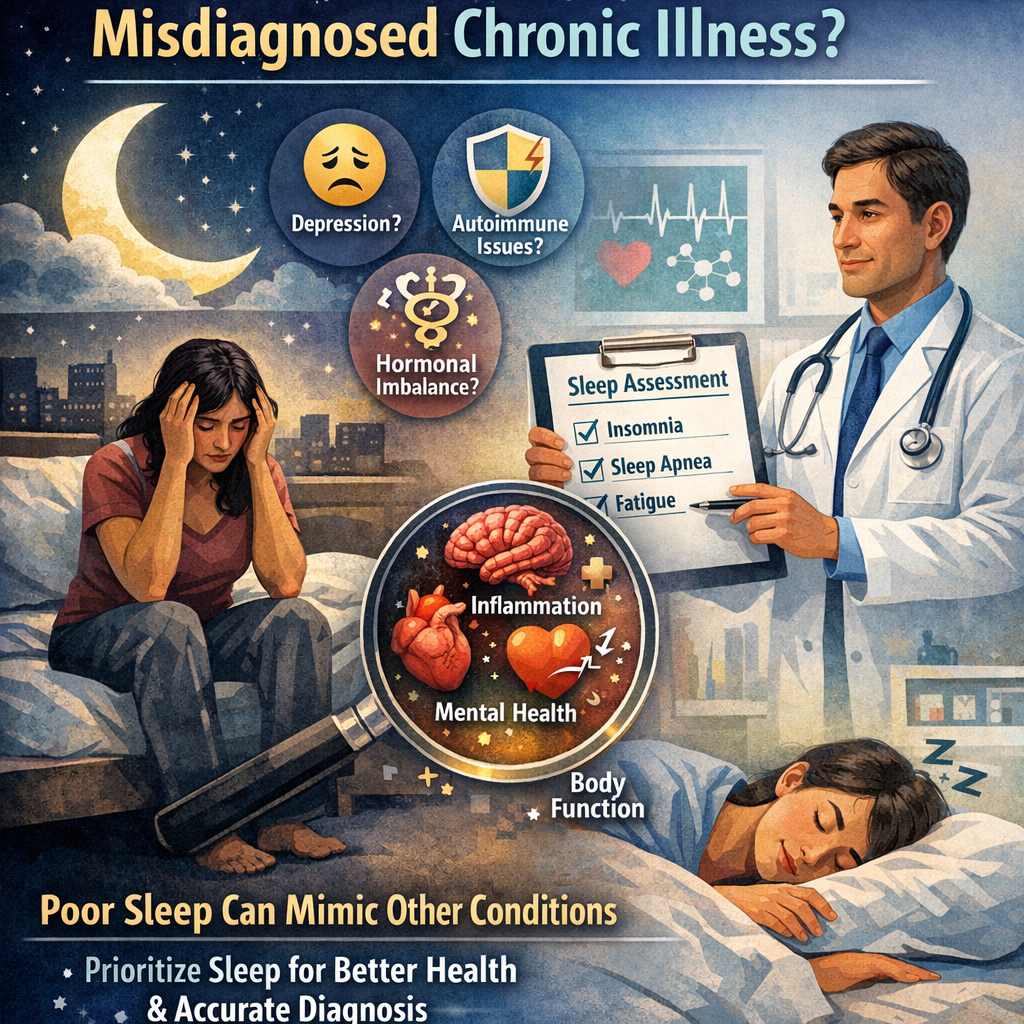
**Sleep** is the time when our body repairs and rejuvenates itself. It affects numerous **physiological systems**, from **brain function** to **immune responses**. During deep sleep stages, the body undergoes critical repair processes, including **cellular repair** and **detoxification**. When this cycle is disrupted, it can lead to a cascade of health issues that mimic or exacerbate symptoms of chronic diseases. For instance, insufficient sleep can lead to **inflammation**, often mistaken for **autoimmune conditions**, or influence **mood** and **mental health**, resembling **depression** or **anxiety disorders**. Sleep disturbances can affect **heart health**, **endocrine function**, and even **metabolism**, symptoms of which overlap with various chronic ailments.
The question arises: why are **sleep disorders** or poor sleep quality frequently overlooked in **clinical diagnostics**? Part of the issue may lie in the fact that patients often underreport sleep problems because they do not realize the critical impact sleep has on their overall well-being. Moreover, **medical professionals** might not always probe deeply into a patient’s sleep habits during consultations, focusing instead on more immediately apparent symptoms. This oversight creates a cycle where the underlying sleep issues go unaddressed, and patients suffer prolonged periods without appropriate treatment.
Recent studies underline the potential link between **sleep quality** and misdiagnosed health conditions. For instance, **sleep apnea**—a condition characterized by pauses in breathing during sleep—is commonly misdiagnosed as such ailments as depression or **chronic fatigue syndrome** due to symptom overlap. Because its symptoms develop slowly over time, sleep apnea often remains undiagnosed, exacerbating the patient’s condition. It is crucial for both healthcare providers and patients to recognize the importance of quality sleep in order to improve diagnostic accuracy and overall health outcomes.
Features
Several key studies have highlighted the link between **sleep disturbances** and chronic illness misdiagnoses. An impactful study published in the [Journal of Clinical Sleep Medicine](https://jcsm.aasm.org) explored how undiagnosed sleep apnea could mimic or contribute to the severity of other chronic illnesses, such as **cardiovascular diseases** and **mental health disorders**. The study concluded that incorporating sleep assessments into routine medical evaluations could significantly reduce diagnostic errors and improve patient outcomes.
According to research from the **American Academy of Sleep Medicine**, poor sleep quality has been associated with **hormonal imbalances** that can mimic **thyroid disorders**. The link between sleep and hormone regulation is so strong that disrupted sleep can lead to disrupted levels of **cortisol**, the hormone responsible for stress responses. When cortisol levels are out of balance, symptoms such as fatigue, weight gain, and mood swings can occur, creating a false impression of thyroid dysfunction or other endocrine disorders.
A study in [Psychosomatic Medicine](https://journals.lww.com/psychosomaticmedicine) found that **chronic insomnia** is often misdiagnosed as an anxiety disorder. While insomnia can be a symptom of anxiety, it is also a standalone condition that can severely affect mental health. This misdiagnosis is especially prevalent in teenagers and young adults who often experience high levels of stress and irregular sleep patterns. Addressing the insomnia directly can lead to significant improvements in mental health without the need for anxiety-targeted interventions.
Furthermore, inadequate sleep has been strongly linked to increased **inflammation**, a common factor in chronic diseases such as **arthritis** and **diabetes**. A study in the [Journal of Sleep Research](https://onlinelibrary.wiley.com/journal/13652869) demonstrated that even a few nights of poor sleep can elevate levels of **C-reactive protein**, a **marker of inflammation** in the body. This acute phase response is a potential reason why some patients are incorrectly diagnosed with inflammatory diseases when sleep is the underlying issue.
Collectively, these studies emphasize the importance of considering sleep health as a vital aspect of the diagnostic process for chronic illnesses. Implementing routine sleep assessments in health evaluations could potentially reduce the 30% of misdiagnosed cases, improving both treatment efficacy and patient health.
Conclusion
The relationship between **sleep** and overall health cannot be overstated. As emerging research sheds light on the profound impact of sleep on chronic disease diagnosis, it becomes imperative for both medical professionals and patients to prioritize sleep assessments as part of routine health evaluations. By focusing more attention on sleep, the medical community can uncover root causes of health issues previously misdiagnosed. As individuals, being proactive about sleep hygiene is equally critical. Prioritizing strategies like maintaining a consistent sleep schedule, creating a restful sleep environment, and addressing sleep disorders promptly can significantly enhance quality of life.
Ultimately, improving sleep can lead to better health outcomes and a decrease in the misdiagnosis of chronic illnesses, which fundamentally improves patient care. Embracing these practices can help unravel the mystery of ambiguous symptoms and redefine the approach to health and wellness. For more insights into the importance of sleep and health, visit the [National Sleep Foundation](https://www.sleepfoundation.org/) and consult with healthcare professionals to tailor your sleep strategy for optimal health results.
**Summary**
Poor sleep quality is increasingly linked to the misdiagnosis of chronic illnesses, affecting up to 30% of cases. Vital for bodily repair, sleep helps manage inflammation and hormonal regulation. Insufficient sleep can masquerade as autoimmune conditions, anxiety disorders, or thyroid dysfunction. The medical community often overlooks this due to underreporting and lack of focus on sleep during consultations. Incorporating sleep assessments could enhance diagnostic accuracy and treatment efficacy. Improved sleep hygiene—like maintaining a steady sleep schedule and a restful environment—could lower misdiagnosis rates, thus improving healthcare outcomes significantly.

Dominic E. is a passionate filmmaker navigating the exciting intersection of art and science. By day, he delves into the complexities of the human body as a full-time medical writer, meticulously translating intricate medical concepts into accessible and engaging narratives. By night, he explores the boundless realm of cinematic storytelling, crafting narratives that evoke emotion and challenge perspectives.
Film Student and Full-time Medical Writer for ContentVendor.com