**
Can AI Bots Diagnose Sleep Apnea Better Than Doctors? Insights From the Latest Tech Trials
**
**
Introduction
**
**Sleep apnea** is a common yet serious **sleep disorder** that affects millions worldwide. It causes repetitive interruptions in breathing during sleep, leading to health issues like cardiovascular problems, daytime fatigue, and cognitive impairment. Traditionally, diagnosing sleep apnea requires overnight monitoring in a clinic, which is resource-intensive and expensive. This has led to a demand for more accessible and efficient diagnostic methods.
**Artificial Intelligence (AI)** offers promising solutions in healthcare. Its role in diagnosing **sleep apnea** is particularly compelling. **AI-driven technologies** can analyze vast amounts of physiological data more quickly and accurately than traditional methods. The latest tech trials reveal that AI can process data from wearable devices, home-based tests, and traditional **polysomnography** effectively. By identifying abnormal patterns that might be missed by traditional methods, AI stands to revolutionize sleep medicine. But the question remains—**can AI diagnose sleep apnea better than doctors**, or should it be seen as a complementary tool?
**
Features
**
Recent studies highlight AI’s role in revolutionizing the diagnosis of **sleep apnea**. A study by the **MIT-IBM Watson AI Lab** explored using AI to analyze data from smartwatch sensors. This AI model was trained to detect subtle variations in **sleep patterns**, proving nearly as effective as conventional methods while offering more convenience and accessibility.
A groundbreaking study in “**Sleep Medicine**” used a **neural network model** to evaluate data from polysomnography. This model showed a high degree of accuracy, indicating AI could enhance the diagnostic process significantly, reducing time to identify cases and allowing quicker interventions.
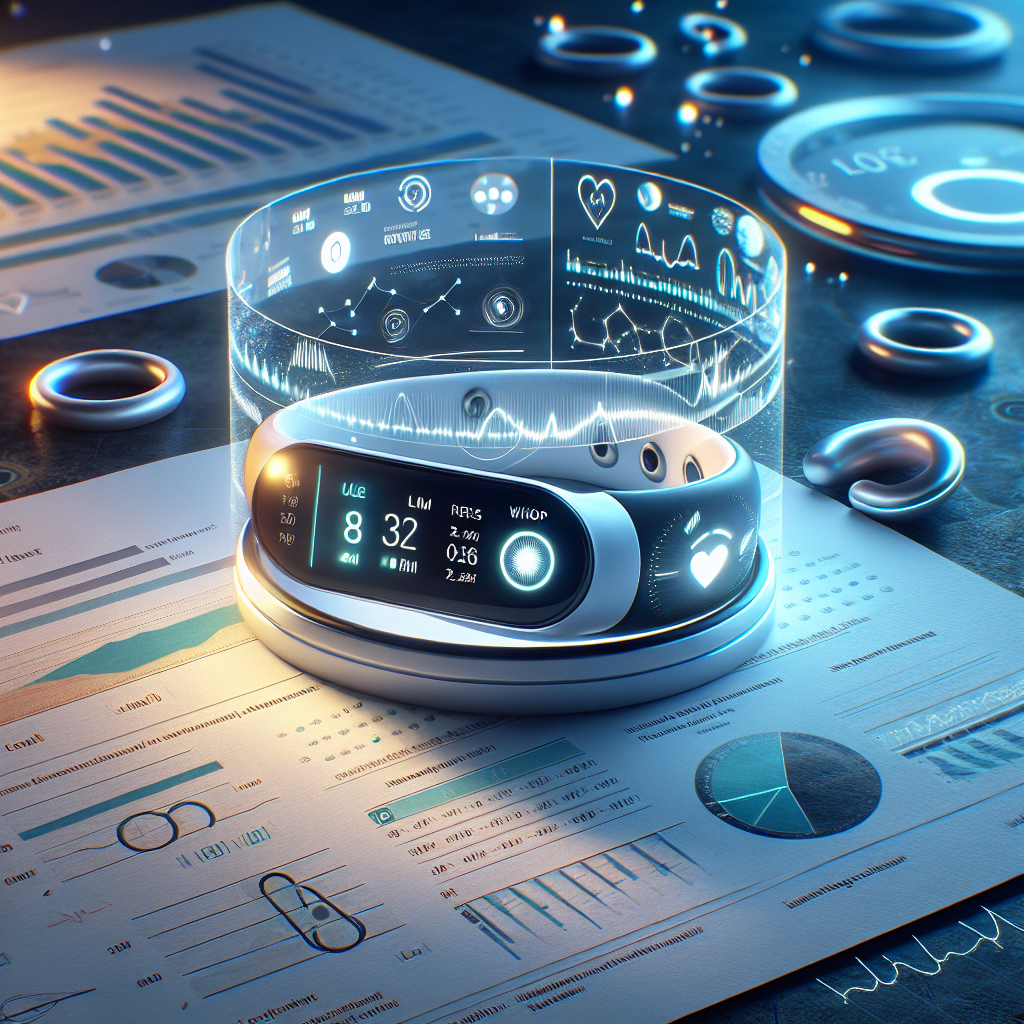
**AI-powered portable devices** are also gaining traction. A trial by the **European Sleep Research Society** used AI algorithms on data from home-based studies, diagnosing sleep apnea severity levels on par with clinical settings. Wearable devices equipped with AI-driven sensors are expanding access, especially for those with geographic or financial constraints.
A study from the **University of California, San Francisco** investigated AI in real-time monitoring and diagnostic assistance. AI potentially provides immediate analysis of sleep data, offering improved speed and precision over traditional assessment methods.
These promising developments suggest AI may match or surpass some traditional diagnostic methods. However, it’s crucial to consider these tools as enhancements to, not replacements for, the expertise of healthcare professionals.
**
Conclusion
**
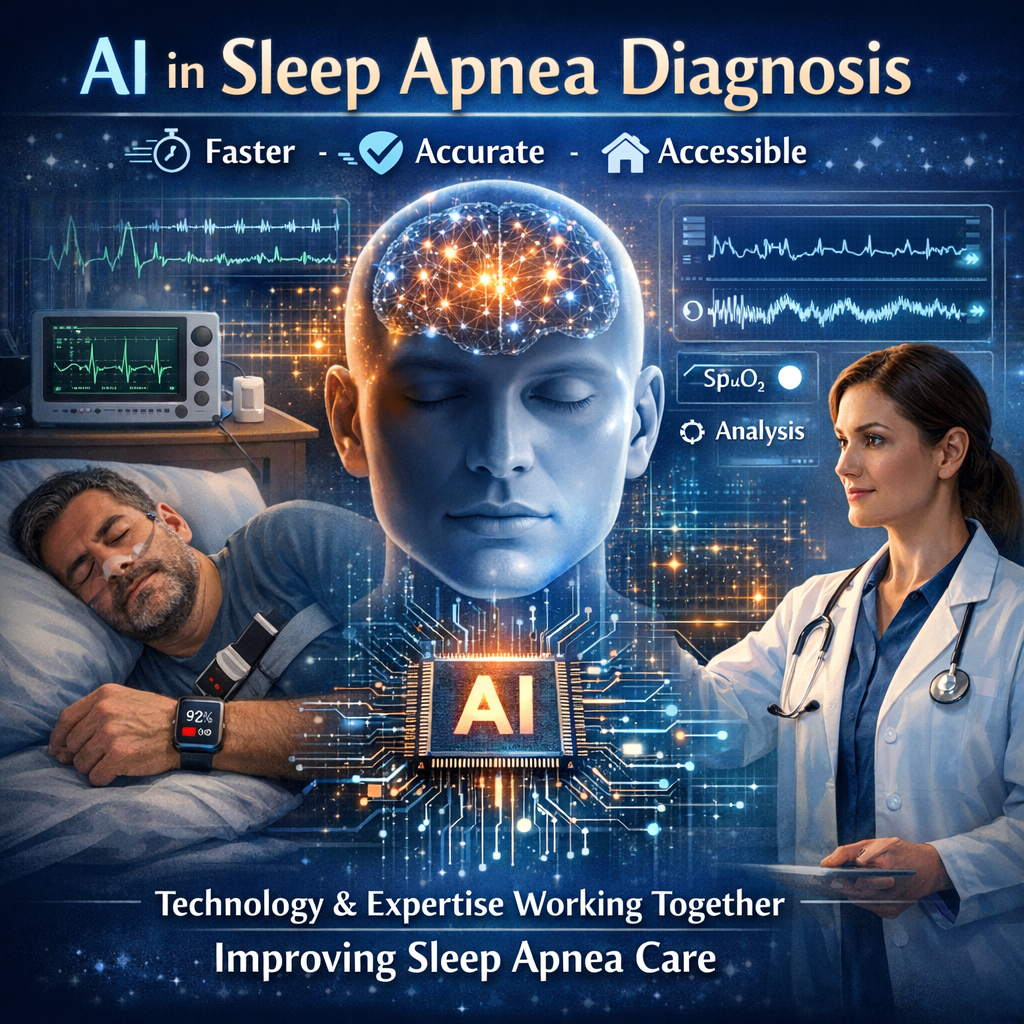
**Artificial intelligence** is transforming medical diagnostics, including **sleep medicine**. AI’s ability to analyze large data sets quickly and accurately makes it invaluable in addressing **sleep apnea**. Recent trials highlight AI’s potential to improve access, accuracy, and speed of diagnosis. However, AI integration should be approached with care, acknowledging the irreplaceable human element in medicine. AI should augment healthcare professionals’ capabilities, ensuring a comprehensive diagnostic and management approach. The future of sleep medicine will likely include a merge of human expertise and AI-driven technology for improved patient care.
**Concise Summary**
AI is promising in diagnosing **sleep apnea**, potentially offering quicker and more accurate solutions than traditional methods. Recent studies show AI-driven technologies analyzing data from wearables and traditional tests effectively. While AI shows potential to match or exceed traditional methods, it is best considered as a complementary tool to healthcare professionals. The integration of AI into **sleep medicine** could enhance diagnostic precision, access, and speed, benefiting patient care through a collaborative human-AI approach.
**References**
1. [MIT-IBM Watson AI Lab](https://www.research.ibm.com)
2. [Sleep Medicine Journal](https://www.sleep-journal.org)
3. [European Sleep Research Society](https://www.esrs.eu)
4. [University of California, San Francisco](https://www.ucsf.edu/research)

Dominic E. is a passionate filmmaker navigating the exciting intersection of art and science. By day, he delves into the complexities of the human body as a full-time medical writer, meticulously translating intricate medical concepts into accessible and engaging narratives. By night, he explores the boundless realm of cinematic storytelling, crafting narratives that evoke emotion and challenge perspectives.
Film Student and Full-time Medical Writer for ContentVendor.com