Breath-Tuning: The Future of Personalized Sleep Medicine in Preventing Chronic Diseases
The quest for a **good night’s sleep** has been an age-old endeavor, yet in today’s **contemporary world** of ceaseless activity and elevated stress levels, it is increasingly elusive. **Sleep** is not merely a cessation of wakeful activity, but a vital **component of health**, much like **nutrition** and **exercise**. With ample evidence linking **quality sleep** to overall well-being, the focus is now shifting towards novel approaches, like **breath-tuning**, to enhance **sleep quality** and, consequently, avert **chronic diseases**.
Approximately 30% of the global population suffers from **insomnia**, according to the [World Sleep Society](https://worldsleepsociety.org/). **Sleep apnea**, characterized by interrupted breathing during sleep, affects around 100 million people worldwide. These disturbances don’t just result in daytime sleepiness; they are precursors to severe health conditions such as **cardiovascular disease**, **diabetes**, and **depression**.
**Breath-tuning** emerges at the nexus of traditional wisdom and modern science, promoting a **personalized approach** to sleep through controlled **breathing techniques**. Rooted in practices like **Pranayama** from yoga, this method emphasizes regulating the breath to achieve a calm state before sleep. The principle is based on understanding how **breathing patterns** influence physiological and psychological states, offering a transformative tool for **sleep therapy**.
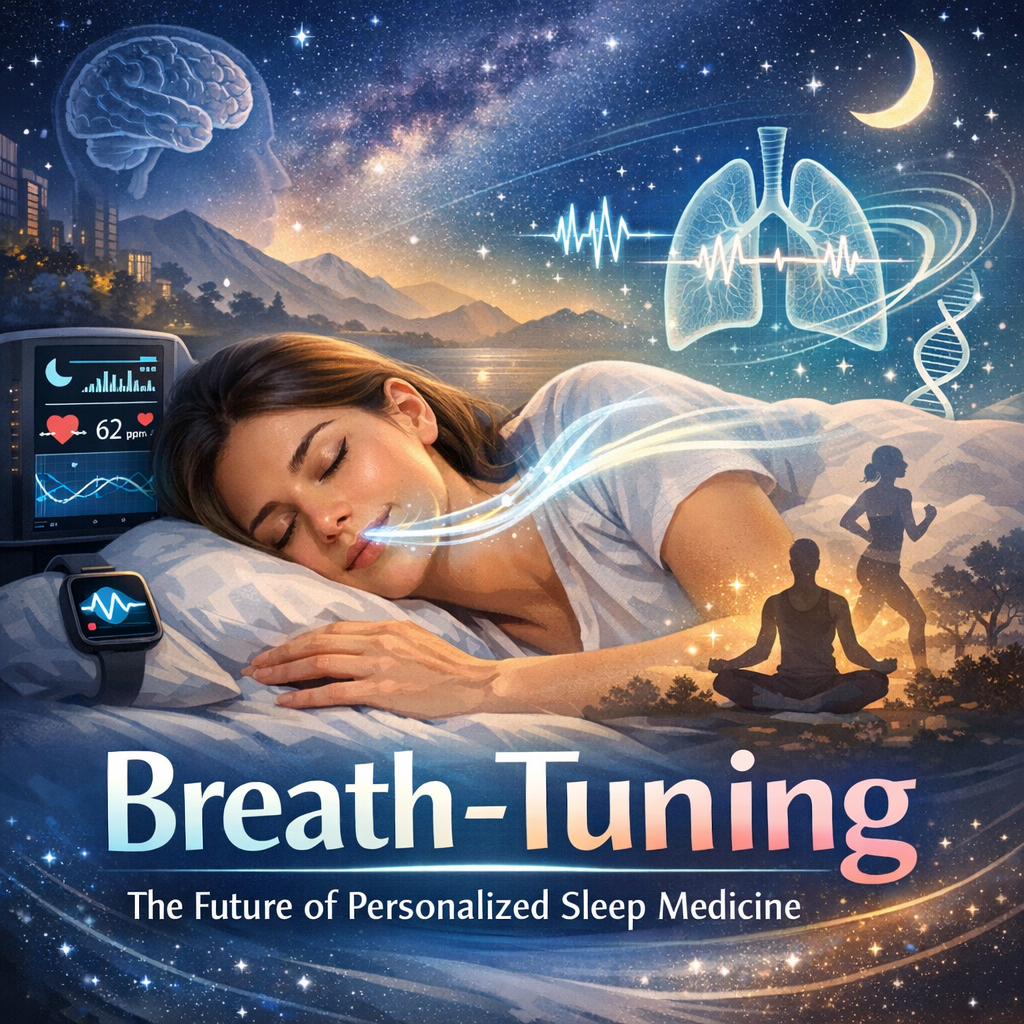
The practice involves deliberate control over **inhalation** and **exhalation** patterns to elicit a relaxation response from the autonomic nervous system. This method aids in modulating stress hormones, stabilizing heart rate, and blood pressure, which are crucial in preventing chronic diseases. With the expansion of **wearable technologies**, individuals can receive in-depth feedback on their sleep quality and understand their personal respiratory patterns, enabling customized interventions tailored to their specific needs.
Features: Breath-Tuning in the Scope of Current Research
Recent studies have honed in on the science of breathing and its pivotal role in enhancing sleep quality and overall health. A study highlighted in the [Journal of Clinical Sleep Medicine](https://jcsm.aasm.org/) pointed out the effectiveness of **respiratory biofeedback** as a non-pharmacological intervention for insomnia. Subjects practicing regulated breathing experienced significant improvements in sleep onset latency and experienced deeper REM cycles. This underscores the potential of **breath-tuning** as a personalized sleep medicine tool, extending its benefits to managing chronic disease risk factors by improving sleep architecture and reducing stress levels.
Furthermore, a study published in [Sleep Medicine Reviews](https://www.smrv-journal.com/) analyzed the impact of **slow breathing exercises** on anxiety and depression. Participants engaging in structured breathing techniques saw considerable enhancements in their mental health, breaking the vicious cycle where poor mental health adversely affects sleep, and vice versa. The emphasis on breath awareness and control exhibits profound neurophysiological impacts, vital for restoring sleep balance while mitigating the onset of diseases aggravated by stress and sleep deprivation.
Another prominent area of research is the integration of breath-tuning with modern technology. Devices equipped with sensors that monitor respiratory patterns in real-time allow for continuous assessment and fine-tuning of breathing exercises. These innovations facilitate a deeper personal engagement with breath-tuning, fostering individualized therapies informed by data-driven insights.
Conclusion: Charting a New Course in Sleep Medicine
Incorporating breath-tuning exercises into daily sleep routines signifies an evolution in personalized sleep medicine. By embracing this therapeutic approach, individuals harness the power of mindful respiration to rectify sleep disturbances and empower their bodies against chronic illnesses. The accessibility and adaptability of breath-tuning make it an outstanding resource in the self-management toolkit for sleep health.
As scientific research elucidates the key interactions between breath control, sleep quality, and chronic disease prevention, it becomes clear that breathing is more than just an involuntary function. It is the rhythm of life, an accessible yet profound instrument that, when finely tuned, can redefine sleep health paradigms. In a world where personalized health care is becoming the norm, breath-tuning offers a promising conduit to not only improved sleep but a healthier, more resilient life.
**Summary:**
Breath-tuning is a burgeoning approach in personalized sleep medicine, aiming to enhance sleep quality and prevent chronic diseases. Rooted in practices like Pranayama, it employs controlled breathing techniques to induce relaxation and optimize physiological functions. Recent studies validate its efficacy in treating insomnia, anxiety, and depression, with technology enhancing its personalized potential. This method, accessible and adaptable, could redefine sleep health by integrating mindful respiration into daily routines, offering a holistic tool against chronic illnesses and contributing to overall well-being. Breath-tuning thus holds promise as an integral part of future health paradigms.

Dominic E. is a passionate filmmaker navigating the exciting intersection of art and science. By day, he delves into the complexities of the human body as a full-time medical writer, meticulously translating intricate medical concepts into accessible and engaging narratives. By night, he explores the boundless realm of cinematic storytelling, crafting narratives that evoke emotion and challenge perspectives.
Film Student and Full-time Medical Writer for ContentVendor.com