Unlocking the Secrets of Sleep-Driven Epigenetics: How Nightly Patterns Could Reshape Your Health Future
Topic Introduction
In the quest to understand how our **sleep patterns** influence overall health, scientists have delved deep into the world of **epigenetics**. Epigenetics, in simple terms, is the study of how external factors can cause changes in **gene expression** without altering the **DNA sequence** itself. These changes are dynamic and can be influenced by a myriad of factors, including diet, stress, environment, and most intriguingly, sleep. The concept of sleep-driven epigenetics offers a new frontier, suggesting that the way we sleep could potentially rewrite the fate encoded in our DNA.
Every night, our bodies undertake a series of restorative processes that are crucial for maintaining health and well-being. During sleep, the body repairs tissues, consolidates memories, and regulates hormones. However, beyond these physical and neurological tasks, sleep also plays a pivotal role in **epigenetic modifications**. This is particularly compelling because it implies that our everyday habits, particularly our sleep patterns, might have more profound consequences on our health than previously thought.
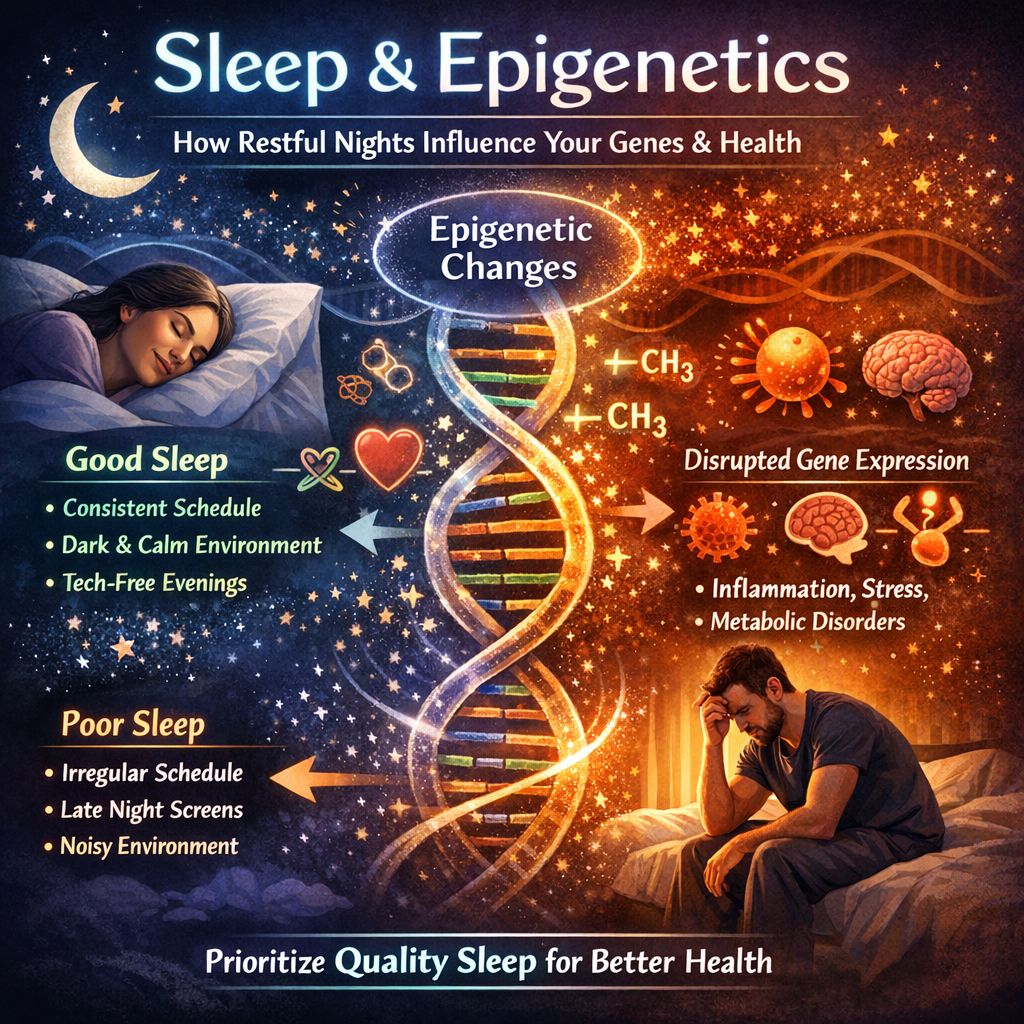
Understanding how sleep influences epigenetic changes can unlock the potential to prevent, treat, or even reverse the course of various diseases linked to genetic predispositions. For example, poor sleep hygiene has been associated with negative epigenetic modifications connected to chronic conditions such as **obesity**, **diabetes**, and **cardiovascular diseases**. Conversely, quality sleep can reinforce positive epigenetic expressions, promoting longevity and reducing the risk of age-related diseases.
The science behind sleep-driven epigenetics is still in its nascent stages, yet early studies suggest that sleep may be one of the most potent lifestyle factors affecting our epigenome. By adjusting our sleep patterns, we might be able to modulate these reversible epigenetic markers, potentially exerting control over how our genes manifest in the spectrum of health and disease. This burgeoning area of research opens up opportunities for innovative therapeutic interventions and personalized medicine approaches, further emphasizing the importance of quality sleep for a healthy future.
Features
Recent studies have begun to unravel the complex interplay between sleep and epigenetic mechanisms, shedding light on how our nightly rest can sculpt our genetic expressions. One ground-breaking study conducted by the **University of Chicago** explored the impact of sleep deprivation on the epigenome. Researchers found that insufficient sleep led to significant adverse changes in **DNA methylation**, an epigenetic modification that influences gene expression. These changes were linked to increased inflammation and insulin resistance, both risk factors for metabolic disorders such as **type 2 diabetes**. [Link to study](https://www.sciencedirect.com/science/article/pii/S1550413119300657).
Another compelling study by the **University of Surrey** focused on the sleep-wake cycle’s effect on the epigenome. Participants who experienced disrupted sleep showed alterations in their **circadian clock genes**, which regulate various physiological processes. These disruptions were associated with reduced cognitive function and increased stress levels. Intriguingly, these effects were reversible once normal sleep patterns were restored, emphasizing the plasticity of epigenetic changes triggered by sleep. [Link to study](https://academic.oup.com/sleep/article/36/1/1/2610115).
Furthermore, research from the **Harvard T.H. Chan School of Public Health** has highlighted the potential of sleep interventions in reversing negative epigenetic changes. This study demonstrated that participants who improved their **sleep hygiene**, including consistent sleep schedules and creating a conducive sleep environment, showed positive shifts in gene expression linked to immune function and stress response. These findings suggest that simple adjustments to sleep habits could serve as a non-invasive therapeutic strategy to support overall health through epigenetic modulation. [Link to study](https://www.health.harvard.edu/newsletter_article/sleep-and-health).
These studies underscore the profound connection between how we sleep and how our genes express themselves, driving home the importance of placing sleep quality at the forefront of health optimization. As scientists continue to explore this fascinating intersection of sleep and epigenetics, we can anticipate even more insights into how our nightly rest can be harnessed for better health outcomes.
Conclusion
The exploration of sleep-driven epigenetics offers an intriguing glimpse into the future of personalized health management. As research continues to uncover the nuanced relationships between sleep, epigenetic modifications, and long-term health outcomes, it becomes increasingly clear that prioritizing high-quality sleep might be one of the most effective lifestyle changes we can make. By understanding and leveraging these sleep-related epigenetic changes, we gain the potential to mitigate genetic risks and promote resilience against chronic diseases.
Implementing simple yet effective strategies to enhance sleep, such as maintaining a consistent sleep schedule, limiting exposure to artificial light before bedtime, and creating a comfortable sleep environment, could yield significant benefits. These practices not only contribute to immediate sleep quality but also offer long-term health dividends by positively influencing our epigenome.
As more knowledge emerges from this exciting field, individuals, healthcare providers, and policymakers alike are presented with opportunities to advocate for interventions and guidelines that harness the power of sleep for a healthier tomorrow. Understanding and adopting the principles of sleep-driven epigenetics can equip each of us with the tools needed to reshape our health futures, turning restful nights into a cornerstone of comprehensive wellness strategies.
**Concise Summary:**
Exploring **sleep-driven epigenetics** reveals the profound impact of sleep on **epigenetic modifications**, affecting health and disease outcomes. Recent studies highlight how sleep influences **DNA methylation**, **circadian clock genes**, and gene expression tied to metabolic, cognitive, and immune functions. Implementing quality sleep strategies, such as consistent schedules and conducive environments, can serve as potent non-invasive interventions. This burgeoning field underscores the significance of sleep quality in promoting longevity and reducing chronic disease risk, positioning it as a cornerstone in personalized health management and future wellness strategies.

Dominic E. is a passionate filmmaker navigating the exciting intersection of art and science. By day, he delves into the complexities of the human body as a full-time medical writer, meticulously translating intricate medical concepts into accessible and engaging narratives. By night, he explores the boundless realm of cinematic storytelling, crafting narratives that evoke emotion and challenge perspectives.
Film Student and Full-time Medical Writer for ContentVendor.com