The Sleep Medicine Revolution: How AI is Redefining Diagnosis and Treatment in Clinical Sleep Health
Introduction:
In recent decades, **sleep medicine** has undergone a dramatic transformation, evolving from a peripheral branch of medical science into a cornerstone of holistic health care. Today, the revolution in sleep medicine is being fueled by the stunning advancements in **artificial intelligence (AI)**. From understanding **sleep disorders** more intricately to implementing precise, individualized treatment strategies, AI technology is providing unprecedented insights and approaches to clinical sleep health.
**Sleep** is a foundational element of health, impacting cognitive, physical, and emotional well-being. Yet, sleep disorders such as **insomnia**, **sleep apnea**, and **restless leg syndrome** affect millions of people worldwide. These disorders not only decrease quality of life but can also exacerbate other health issues like **hypertension**, **obesity**, and **cardiovascular disease**. Advances in AI are now offering novel solutions to these challenges by leveraging vast amounts of data to rethink how sleep disorders are diagnosed and treated.
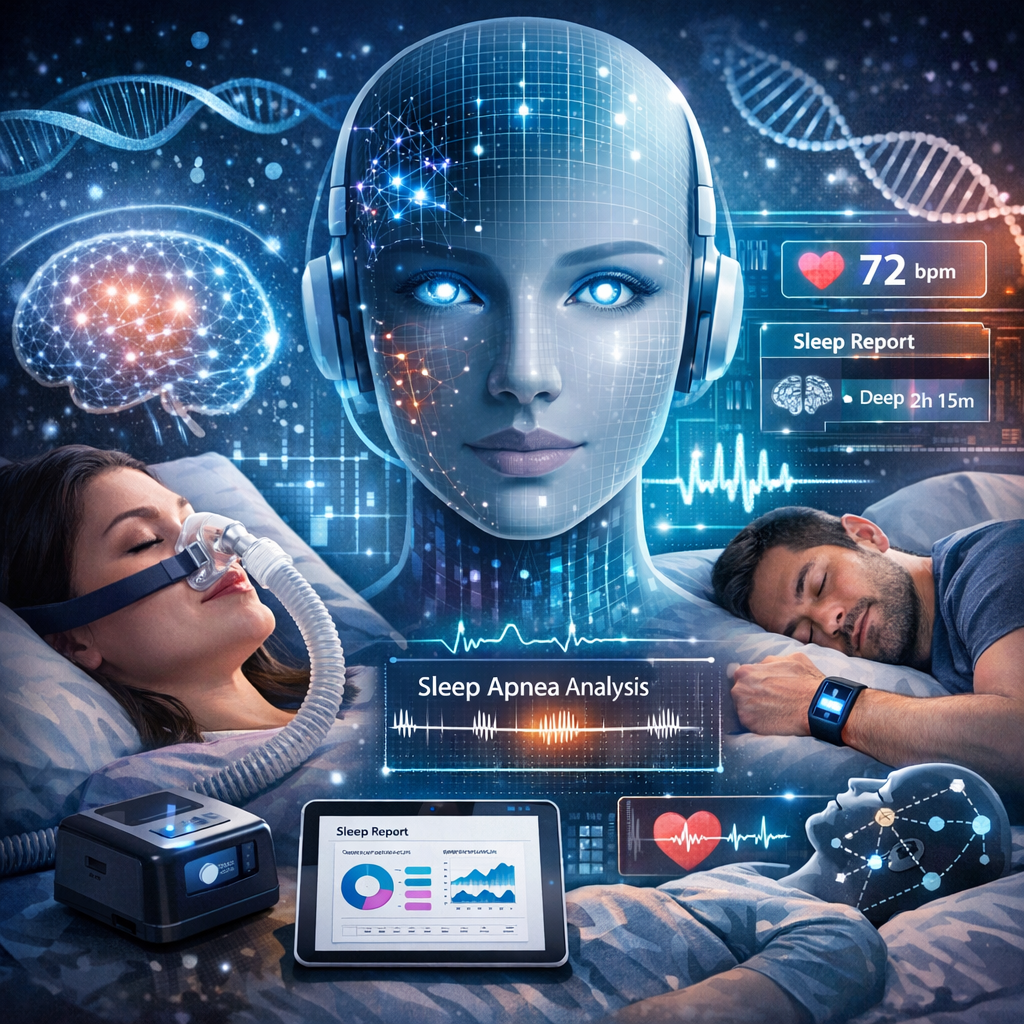
AI’s integration into sleep medicine is multifaceted. **Machine learning algorithms**, a key component of AI, are being utilized to analyze vast datasets, including **polysomnography (PSG)** results, wearable device data, and patient health records. These algorithms can identify patterns and make predictions with a speed and accuracy that surpasses traditional methods. This is particularly significant for diagnosing complex sleep disorders, which often require comprehensive data analysis. AI’s capabilities allow for more accurate diagnosis by minimizing human error and offering a more detailed understanding of a person’s sleep architecture.
Furthermore, AI is playing a crucial role in personalizing treatment for sleep disorders. By analyzing data from diverse populations, AI algorithms can discern which treatments are most effective for specific demographics or even tailor therapies to individual patients. This shift towards **personalized medicine** ensures that therapeutic interventions are more effective and have higher compliance rates, thereby enhancing overall patient outcomes.
Features:
Exciting developments and professional studies underscore the transformative impact of AI in sleep medicine. A pivotal study published in the journal [**Nature and Science of Sleep**](https://www.dovepress.com/the-use-of-artificial-intelligence-in-diagnosing-sleep-apnea-peer-reviewed-article-NSS) demonstrated AI’s ability to improve the accuracy and efficiency of diagnosing **sleep apnea**. Researchers employed a machine learning algorithm trained on thousands of PSG data points, achieving diagnostic accuracy comparable to that of sleep specialists. This study illustrates how AI can streamline diagnostic processes, allowing for more timely and accurate identification of sleep disorders, which is critical for effective intervention.
Another significant application of AI is the development of **smart wearable devices**. These devices are equipped with sensors that collect data on sleep patterns, heart rate, and other physiological metrics. A study in the [**Journal of Clinical Sleep Medicine**](https://jcsm.aasm.org/doi/10.5664/jcsm.8000) highlighted how AI algorithms could analyze these data to provide real-time feedback and recommendations for improving sleep quality. The real-world applicability of this research underscores the potential for AI to empower individuals to take an active role in managing their sleep health through user-friendly technology.
Clinical trials are also paving the way for AI-driven personalized treatment plans. For instance, a study published in the [**American Journal of Respiratory and Critical Care Medicine**](https://www.atsjournals.org/doi/full/10.1164/rccm.202009-3606OC) explored an AI system designed to customize **CPAP (Continuous Positive Airway Pressure)** therapy settings for patients with sleep apnea. The AI system analyzed diverse patient profiles and optimized treatment settings leading to better adherence rates and improved sleep quality.
These studies collectively highlight AI’s capacity to revolutionize sleep medicine by improving **diagnostic precision**, offering **personalized treatment options**, and enhancing patient engagement through technology. As AI continues to evolve, its integration into sleep medicine is expected to expand, further transforming how sleep disorders are managed and treated.
Conclusion:
The potential of AI to revolutionize sleep medicine is undeniable. By enhancing diagnostic precision, personalizing treatment plans, and offering real-time data insights, AI is setting a new standard for clinical sleep health. The seamless integration of AI technologies into sleep medicine not only promises better health outcomes but also fosters a greater understanding of this critical aspect of human health. As research and technology continue to progress, AI holds promise to bridge existing gaps in **sleep disorder management**, offering hope and improved quality of life for millions of individuals worldwide. The journey from traditional to tech-driven methodologies marks a significant milestone in the quest for comprehensive and compassionate sleep health care.
Concise Summary
**AI** is revolutionizing **sleep medicine** by improving diagnostic precision and offering personalized treatment strategies for sleep disorders such as **insomnia** and **sleep apnea**. AI algorithms analyze data from **polysomnography** and **wearable devices**, enabling efficient diagnostics and individualized therapies. Key studies have shown AI’s efficacy in enhancing treatment outcomes and patient compliance, marking a shift towards **personalized medicine**. As AI technology evolves, it will continue transforming how sleep disorders are managed, bridging gaps for improved quality of life.

Dominic E. is a passionate filmmaker navigating the exciting intersection of art and science. By day, he delves into the complexities of the human body as a full-time medical writer, meticulously translating intricate medical concepts into accessible and engaging narratives. By night, he explores the boundless realm of cinematic storytelling, crafting narratives that evoke emotion and challenge perspectives.
Film Student and Full-time Medical Writer for ContentVendor.com