The Hidden Link: How Sleep Apnea May Be Sabotaging Your Metabolism and What Science Says You Can Do About It
Introduction
In the modern world of endless tasks and responsibilities, **sleep** often ranks low on our list of priorities. Yet, its importance cannot be overstated, as it serves as the cornerstone of overall health and vitality. Among the many **sleep disorders**, **sleep apnea** emerges as both widespread and frequently undiagnosed. While snoring forms the most recognizable hallmark of this condition, sleep apnea’s impact stealthily weaves into various aspects of health, with the **metabolism** acting as its unsuspecting victim.
Sleep apnea is characterized by repeated interruptions in breathing during sleep, caused by either a blocked airway (obstructive sleep apnea) or the brain’s failure to signal the muscles to breathe (central sleep apnea). These interruptions lead to fragmented sleep, reducing the quality and quantity of restorative rest. Sleep is a crucial period where the body performs essential functions, including the regulation of metabolism. Metabolism, simply put, refers to the complex biochemical processes that occur within living organisms to sustain life, involving the conversion of food into energy and maintenance of cellular functions.
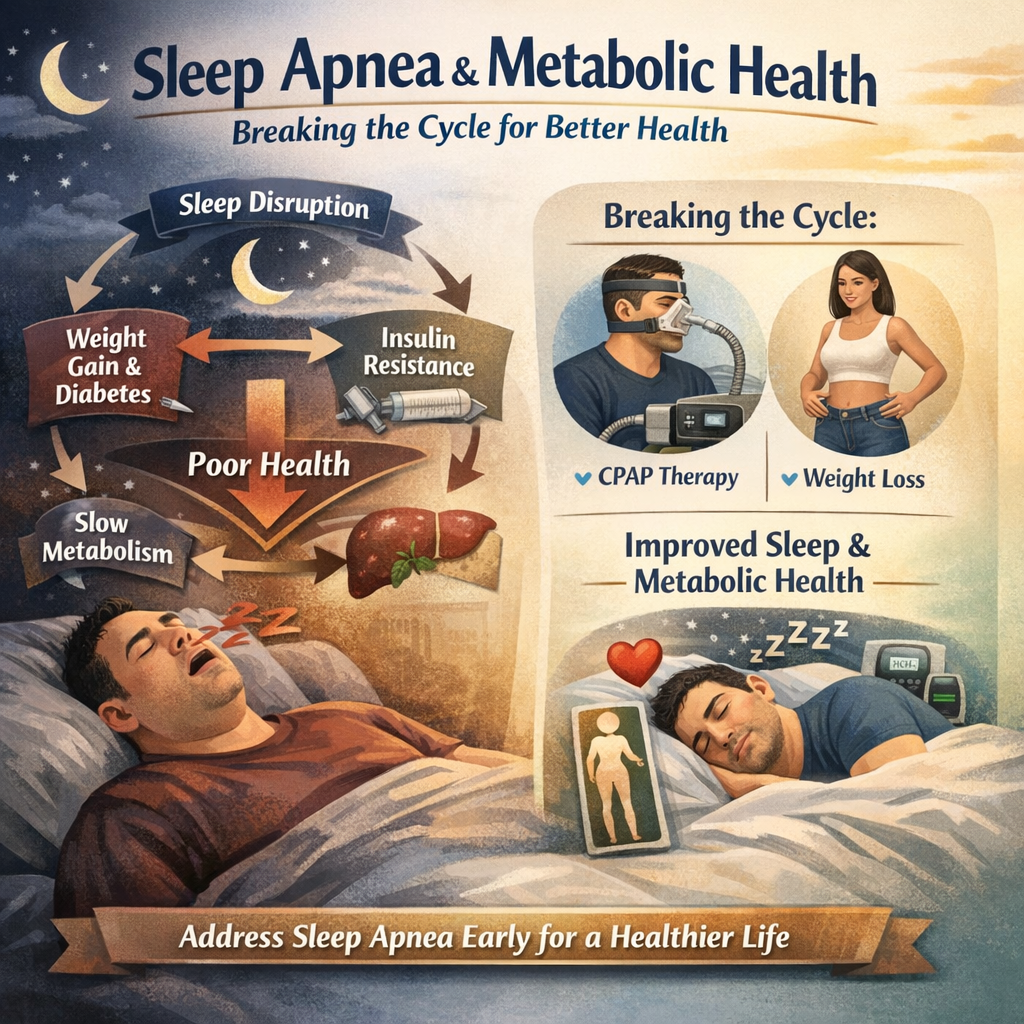
Emerging research indicates that sleep apnea may disrupt metabolic processes, thereby affecting **weight management**, **glucose metabolism**, and overall energy levels. The connection between sleep apnea and metabolic dysfunction creates a vicious cycle; untreated sleep apnea may lead to weight gain, which, in turn, exacerbates the severity of the sleep disorder. This interconnection is critical to understanding, given the rising prevalence of metabolic disorders, including **obesity** and **type 2 diabetes**.
The implications of untreated sleep apnea extend beyond metabolic concerns, encompassing **cardiovascular health**, **mental well-being**, and daily performance. Therefore, addressing sleep apnea not only promises enhanced sleep quality but also paves the way for improved metabolic health. By understanding the scientific underpinnings of this relationship, individuals can take informed steps toward diagnosing and treating sleep apnea, with the potential to transform their health landscape significantly.
Features
Scientific exploration into the relationship between **sleep apnea** and **metabolism** has yielded compelling insights. Several studies have highlighted the metabolic disturbances induced by the **intermittent hypoxia** (repeated episodes of low oxygen levels) and fragmented sleep inherent in sleep apnea.
A study published in [“Diabetes Care”](https://diabetesjournals.org/care/article/32/1/5/27387/Sleep-Apnea-and-Cardiovascular-Disease-An) demonstrated that individuals with sleep apnea tend to exhibit **insulin resistance**, a hallmark of type 2 diabetes, even after adjusting for obesity. The researchers identified that the **sympathetic nervous system activation** associated with sleep apnea significantly contributes to impaired glucose metabolism.
Furthermore, a pivotal investigation published in the [“American Journal of Respiratory and Critical Care Medicine”](https://www.atsjournals.org/doi/full/10.1164/rccm.201408-1490OC) explored the impact of **continuous positive airway pressure (CPAP) therapy** on metabolic function in individuals with sleep apnea. The study found that CPAP effectively improved **insulin sensitivity** and reduced circulating glucose levels, underscoring the importance of treating sleep apnea in mitigating metabolic disturbances.
The interplay between **obesity** and sleep apnea also prompts significant attention. **Body mass index (BMI)** is a major risk factor for developing sleep apnea, and weight loss has proven effective in reducing the severity of the disorder. A study featured in the [“Journal of Clinical Sleep Medicine”](https://jcsm.aasm.org/doi/full/10.5664/jcsm.2650) confirmed that moderate **weight loss** significantly decreases **apnea-hypopnea index (AHI)**, which measures the severity of sleep apnea, and improves metabolic parameters. This reinforces the potential for lifestyle interventions to positively influence both sleep and metabolic health.
Moreover, **inflammatory markers**, often elevated in individuals with sleep apnea, have been linked to metabolic dysfunction. Research suggests that effective management of sleep apnea can reduce **systemic inflammation**, subsequently improving metabolic outcomes.
Conclusion
The intricate link between sleep apnea and metabolism unveils a realm of opportunity for improving health and well-being. As scientific evidence continues to illuminate this connection, the importance of early diagnosis and intervention becomes increasingly apparent. Addressing sleep apnea through both medical treatments such as **CPAP** and lifestyle modifications like **weight management** holds the potential not only to alleviate the symptoms of the sleep disorder but also to enhance metabolic function and overall health.
While sleep apnea often goes unnoticed, its repercussions on metabolism and associated health conditions necessitate vigilant attention. By fostering awareness and encouraging proactive health measures, individuals can break free from the cycle of compromised sleep and metabolic dysfunction. Integrating holistic approaches to sleep health will serve as a vital stride toward reclaiming quality sleep and fostering a vibrant, balanced life. Embrace the science-backed solutions and take the first step toward uncovering the hidden link between sleep apnea and metabolism. Prioritize sleep as the foundation of metabolic vitality and holistic well-being.
Concise Summary
Sleep apnea, often undiagnosed and marked by disrupted breathing, significantly impacts metabolism by altering glucose levels and increasing insulin resistance, thus linking to obesity and type 2 diabetes. Scientific studies highlight how treatments like CPAP can improve metabolic functions and mitigate these effects. Recognizing the connection between sleep apnea, metabolic disorders, and broader health issues underlines the necessity for early diagnosis and treatment, potentially transforming overall health. By addressing sleep apnea through medical and lifestyle interventions, individuals can improve both sleep quality and metabolic health, embracing a more vibrant and balanced life.

Dominic E. is a passionate filmmaker navigating the exciting intersection of art and science. By day, he delves into the complexities of the human body as a full-time medical writer, meticulously translating intricate medical concepts into accessible and engaging narratives. By night, he explores the boundless realm of cinematic storytelling, crafting narratives that evoke emotion and challenge perspectives.
Film Student and Full-time Medical Writer for ContentVendor.com