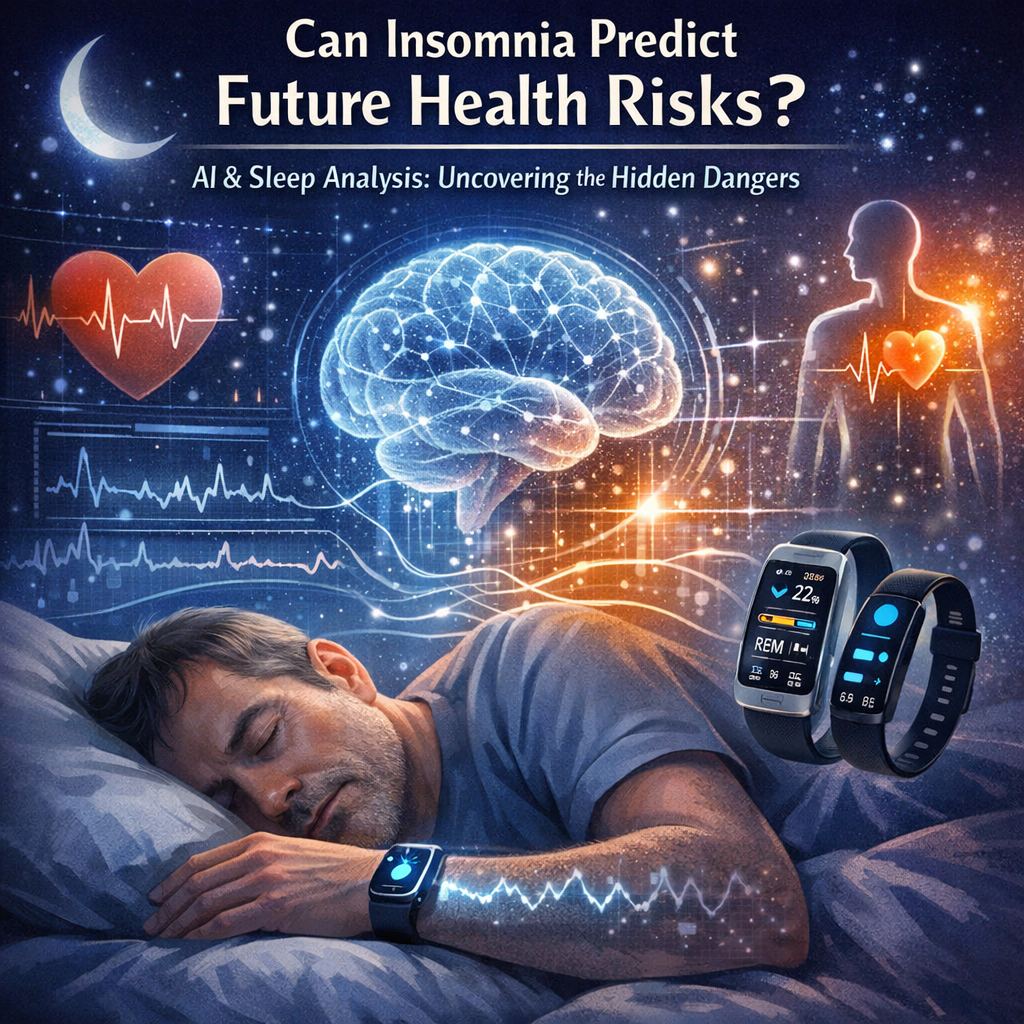
Is Your Insomnia a Warning Sign? Using AI to Predict Future Health Risks Through Sleep Patterns
Introduction
In today’s fast-paced world, **insomnia** is becoming an increasingly common problem. Many view it as a mere inconvenience or a side effect of stress. However, could **insomnia** be more than just a **sleep disorder**? Recent advancements in **artificial intelligence (AI)** suggest that our **sleep patterns** might be more telling than ever before, potentially offering insights into future health risks. This emerging field of research explores how **AI technologies** can analyze **sleep data** to not only understand the root causes of **insomnia** but also predict long-term health concerns.
**Insomnia**, characterized by difficulty in falling or staying asleep, affects millions of people worldwide. Traditionally, treatments have focused on symptomatic relief rather than addressing potential underlying causes. However, with the integration of **AI**, there’s a paradigm shift towards interpreting sleep as a window to overall health. **AI systems** can analyze vast volumes of data from wearables and digital sleep trackers to identify patterns and anomalies that are often impossible for humans to detect.
**Sleep scientists** have recognized that deviations in sleep architecture—such as changes in **REM cycles** or frequent awakenings—can be indicators of more serious health conditions. For instance, sleep disturbances have been linked to **mood disorders**, **cardiovascular diseases**, and even the early onset of **neurodegenerative diseases** like **Alzheimer’s**. **AI** can help in predicting such conditions by assessing anomalies in **sleep patterns** over time, offering a proactive approach to health management.
Integrating **AI** in sleep studies doesn’t just stop at the detection stage. The predictive power of **AI** can potentially revolutionize preventive healthcare. By leveraging **machine learning algorithms**, researchers aim to provide personalized insights into an individual’s health, paving the way for customized interventions. As more individuals embrace wearable tech, the collection of **sleep data** becomes more robust, offering invaluable resources for **AI systems** to learn and adapt.
Features
Several professional studies have explored the potential of **AI** in predicting health outcomes based on **sleep patterns**. One notable study from the [University of California, San Diego](https://health.ucsd.edu/news/releases/2023/03/machine-learning-could-help-predict-depression-via-sleep-patterns.aspx), highlighted how **machine learning algorithms** could accurately forecast the onset of **depression** by analyzing **sleep patterns**. The research demonstrated that specific alterations in sleep architecture, like shortened **REM sleep**, were significant predictors of depressive episodes. This study underscores the profound implications of utilizing **AI** to detect **mental health disorders** through **sleep data**.
Moreover, a collaborative study between [MIT and Harvard Medical School](https://news.mit.edu/2023/ai-predicts-cardiovascular-risk-from-sleep-patterns-0301) investigated the relationship between **sleep patterns** and **cardiovascular health**. By analyzing the sleep data of more than 5,000 participants, researchers found that irregular **sleep patterns** were closely linked to an increased risk of **hypertension** and other cardiovascular conditions. The study employed **deep learning techniques** to identify key parameters like **sleep duration variability** and **sleep onset latency**, enriching the understanding of how **AI** can predict cardiovascular risks.
**AI’s role in neurodegenerative disease prediction** cannot be overstated either. Researchers at [Stanford University](https://med.stanford.edu/news/all-news/2023/04/sleep-patterns-alzheimers-detection.html) published a paper in the “Journal of Sleep Research,” demonstrating that deviations in sleep structure could serve as early indicators of diseases like Alzheimer’s. The study utilized **AI-driven analysis** of polysomnography data, effectively identifying biomarkers associated with **cognitive decline**.
These examples highlight the transformative capabilities of **AI** in predictive healthcare. By delving into the nuances of **sleep patterns**, **AI** can uncover latent health issues that would otherwise remain undetected. Such studies not only strengthen the validity of using **AI** in diagnostic procedures but also emphasize the importance of considering comprehensive **sleep health** as a critical component of preventive medicine.
Conclusion
As **AI** continues to evolve, its applications in healthcare expand significantly, with sleep analysis standing out as a particularly promising area. **Insomnia**, once viewed merely as a nuisance, is now being reconsidered as a potential forewarning of deeper health issues. By harnessing the capabilities of **AI**, researchers and healthcare professionals are better equipped to interpret **sleep data**, leading to early intervention and personalized care strategies.
In a world that increasingly values wellness and preventive healthcare, integrating **AI** into sleep studies is not just beneficial; it’s essential. The potential to anticipate health risks through **sleep patterns** offers a glimpse into a future where proactive health management is within reach for everyone. While ethical considerations and data privacy remain crucial, the promise of **AI** in revolutionizing sleep medicine and preventive healthcare is undeniable. As we move forward, it’s essential for individuals to embrace technological advancements and consider their **sleep patterns** as integral indicators of their overall health.
References
1. [University of California, San Diego Study on AI and Depression](https://health.ucsd.edu/news/releases/2023/03/machine-learning-could-help-predict-depression-via-sleep-patterns.aspx)
2. [MIT and Harvard Study on Sleep and Cardiovascular Risks](https://news.mit.edu/2023/ai-predicts-cardiovascular-risk-from-sleep-patterns-0301)
3. [Stanford University Research on Sleep Patterns and Alzheimer’s](https://med.stanford.edu/news/all-news/2023/04/sleep-patterns-alzheimers-detection.html)
**Concise Summary:**
The article explores how **insomnia** may indicate underlying health issues, with advancements in **AI** allowing for in-depth analysis of **sleep patterns**. Studies from **leading institutions** have shown **AI**’s potential in predicting conditions like **depression**, **cardiovascular diseases**, and **neurodegenerative diseases** by examining sleep anomalies. This suggests a shift in healthcare from treating symptoms to proactive disease prevention. As more people use wearable tech, AI’s predictive power will grow, offering personalized healthcare solutions. Ethical considerations remain, but the potential for AI to revolutionize **sleep medicine** and **preventive healthcare** is significant.

Dominic E. is a passionate filmmaker navigating the exciting intersection of art and science. By day, he delves into the complexities of the human body as a full-time medical writer, meticulously translating intricate medical concepts into accessible and engaging narratives. By night, he explores the boundless realm of cinematic storytelling, crafting narratives that evoke emotion and challenge perspectives.
Film Student and Full-time Medical Writer for ContentVendor.com