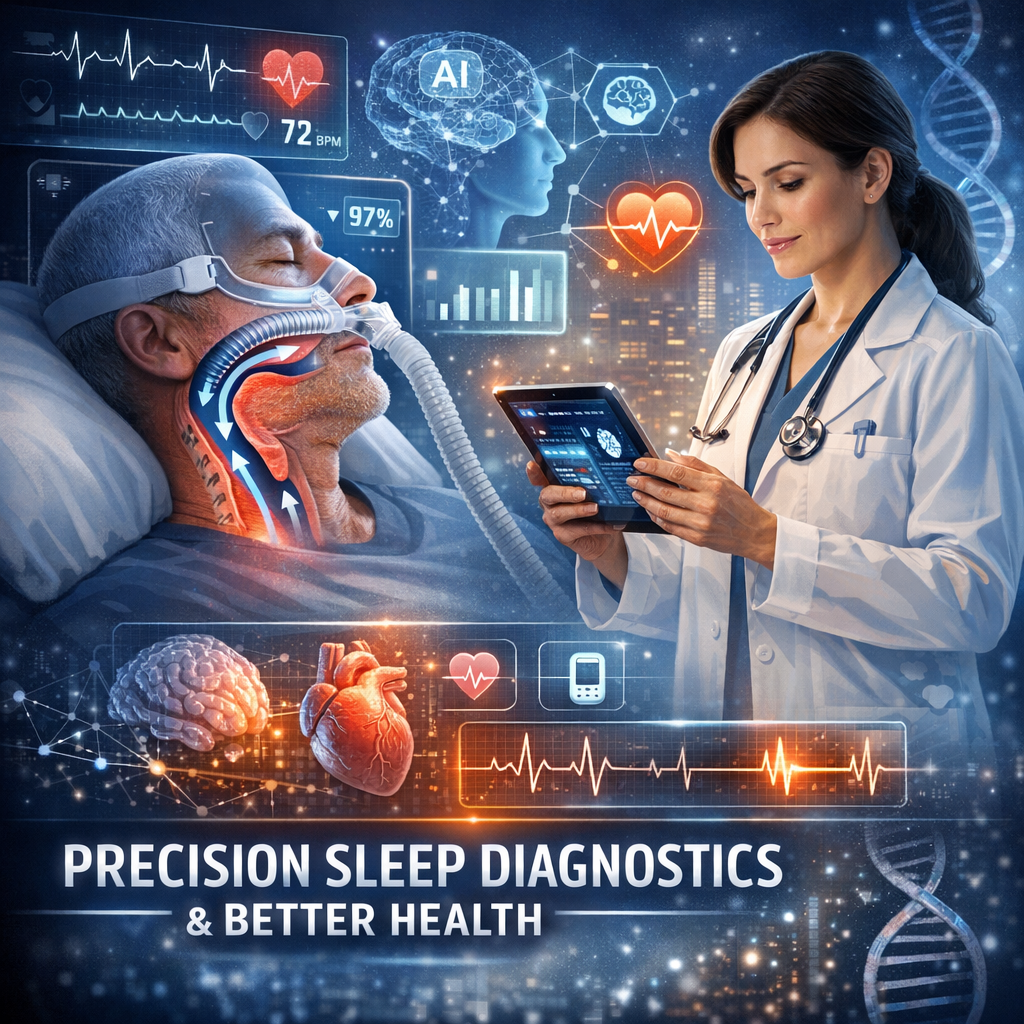
Sleep as Medicine: Revolutionizing Chronic Disease Prevention through Precision Airway Diagnostics
Introduction
In the intricate tapestry of human health, **sleep** finds itself holding an underestimated yet profound position. For years, scientists, health professionals, and sleep experts have sung its praises, acknowledging its critical role in ensuring overall well-being. However, as we continue to delve deeper into sleep science, a fascinating revelation emerges — the use of sleep as a powerful tool for **chronic disease** prevention. The cornerstone of this breakthrough is the innovative field of **precision airway diagnostics**, reshaping our understanding of **sleep-related breathing disorders** and their far-reaching implications on chronic ailments.
**Sleep** is far more than a pause at the end of our daily routines. It is an active, complex process that orchestrates an abundance of bodily functions, from cellular repair and hormonal balance to cognitive processing and emotional regulation. Disturbances in sleep patterns or quality not only lead to immediate repercussions like daytime sleepiness and irritability but also heightened risks for chronic diseases such as **hypertension**, **diabetes**, and cardiovascular disease. Recently, the focus has shifted towards understanding the role of the airway in sleep health and how precision diagnostics can uncover underlying issues that contribute to these chronic conditions.
**Precision airway diagnostics** is a cutting-edge approach that zeroes in on the specificities of an individual’s airway behavior during sleep. Instead of a one-size-fits-all solution, this method employs a tailored diagnosis and treatment strategy, focusing on the distinct patterns of airway obstruction that could potentially lead to **sleep apnea** or other sleep disorders. **Obstructive sleep apnea (OSA)**, characterized by repeated interruptions in breathing during sleep, is a well-documented precursor to several chronic illnesses. By employing advanced diagnostics to detect airway obstructions with pinpoint accuracy, healthcare providers can create individualized treatment plans that address the root causes of sleep disturbances.
Studies have illuminated profound connections between untreated OSA and increased risks of chronic diseases. Personalized interventions based on precision diagnostics have shown promise in breaking this chain, potentially mitigating the dangers posed to patients who remain undiagnosed or inadequately treated. As the healthcare sector advances with these developments, it is increasingly recognized that harnessing sleep’s restorative power can serve as a formidable ally in chronic disease prevention.
Features and Studies
Recent medical studies bolster this revolutionary perception of sleep as a tool in chronic disease prevention through precision airway diagnostics. **Sleep apnea**, for example, affects millions globally and often goes undiagnosed, its symptoms masked by more conspicuous health issues. A pivotal study published in *The Lancet* indicated that untreated sleep apnea is associated with an increased risk of hypertension, myocardial infarction, stroke, and diabetes.
**Precision airway diagnostics** utilizes state-of-the-art technology, including polysomnography, home sleep apnea testing, and three-dimensional airway imaging, to accurately diagnose and quantify the severity of OSA. Further exploration by researchers at the *American Thoracic Society* showed that precise measurement of airway collapse metrics significantly improved the accuracy of diagnosis and treatment efficacy.
This ability to diagnose sleep disorders accurately has profound implications for chronic disease management. For instance, customized therapies following a precision diagnosis, such as **continuous positive airway pressure (CPAP)** tailored to specific airway obstruction patterns, have been proven to markedly reduce the incidence of cardiovascular episodes in patients with sleep apnea. Complementary studies have demonstrated that managing sleep apnea with precision airway diagnostics and effective interventions can improve glycemic control in diabetic patients and lower blood pressure in patients with resistant hypertension.
Moreover, the integration of wearable technology and **artificial intelligence** is further refining the precision of these diagnostics. AI algorithms are now capable of analyzing complex sleep data to identify even subtle signs of airway disruptions that could contribute to poor sleep quality and chronic disease development. A study conducted by *Nature Medicine* reported that AI-powered sleep monitoring could predict potential health risks with unprecedented accuracy, paving the way for preemptive healthcare measures.
Conclusion
The evolving landscape of sleep science heralds a transformative era in health care, where the age-old adage “sleep is the best medicine” resonates with newfound scientific vigor. As evidenced by research and clinical advancements, precision airway diagnostics offers a significant leap forward in understanding the intricate connection between sleep and chronic disease prevention. Providing tailored interventions and leveraging advanced technologies allow us to unlock the full potential of sleep as a cornerstone of health.
In the quest for enhancing public health, prioritizing sleep quality through individualized analyses marks a future where chronic diseases can be effectively curtailed through innovative sleep diagnostics. As we continue this journey, ongoing research and technological advancements promise to illuminate new paths in our understanding of sleep, reinforcing its crucial role as a preventative powerhouse in modern medicine. Harnessing sleep’s restorative capabilities not only transforms individual health outcomes but also alleviates the growing burden of chronic diseases globally. Embracing sleep as medicine opens the door to a healthier, more balanced future.
**Concise Summary:**
Sleep plays a more significant role in chronic disease prevention than previously understood. The innovative field of **precision airway diagnostics** helps identify sleep-related breathing disorders that pose heightened risks for chronic diseases like **hypertension** and **diabetes**. By employing advanced diagnostics and **AI technologies**, tailored interventions can be created to manage conditions like **obstructive sleep apnea**, reducing the incidence of associated chronic illnesses. As research progresses, these methodologies promise to revolutionize healthcare, emphasizing sleep’s restorative power as a crucial component in chronic disease management and prevention.

Dominic E. is a passionate filmmaker navigating the exciting intersection of art and science. By day, he delves into the complexities of the human body as a full-time medical writer, meticulously translating intricate medical concepts into accessible and engaging narratives. By night, he explores the boundless realm of cinematic storytelling, crafting narratives that evoke emotion and challenge perspectives.
Film Student and Full-time Medical Writer for ContentVendor.com