**
The Future of Sleep: AI-Driven Personalized Treatment Plans for Complex Sleep Disorders
**
**Introduction**
Sleep is an essential component of our health and well-being, impacting everything from our cognitive abilities to our emotional regulation and physical health. However, for millions of people around the globe, achieving restful and restorative sleep remains a significant challenge due to complex **sleep disorders**. Conditions such as **insomnia**, **sleep apnea**, **restless leg syndrome**, and **narcolepsy** disrupt sleep patterns and can severely impact daily functioning and quality of life. Traditional treatment approaches often involve a one-size-fits-all strategy, relying on medication, general sleep hygiene advice, or behavioral therapies that may not effectively address individual needs.
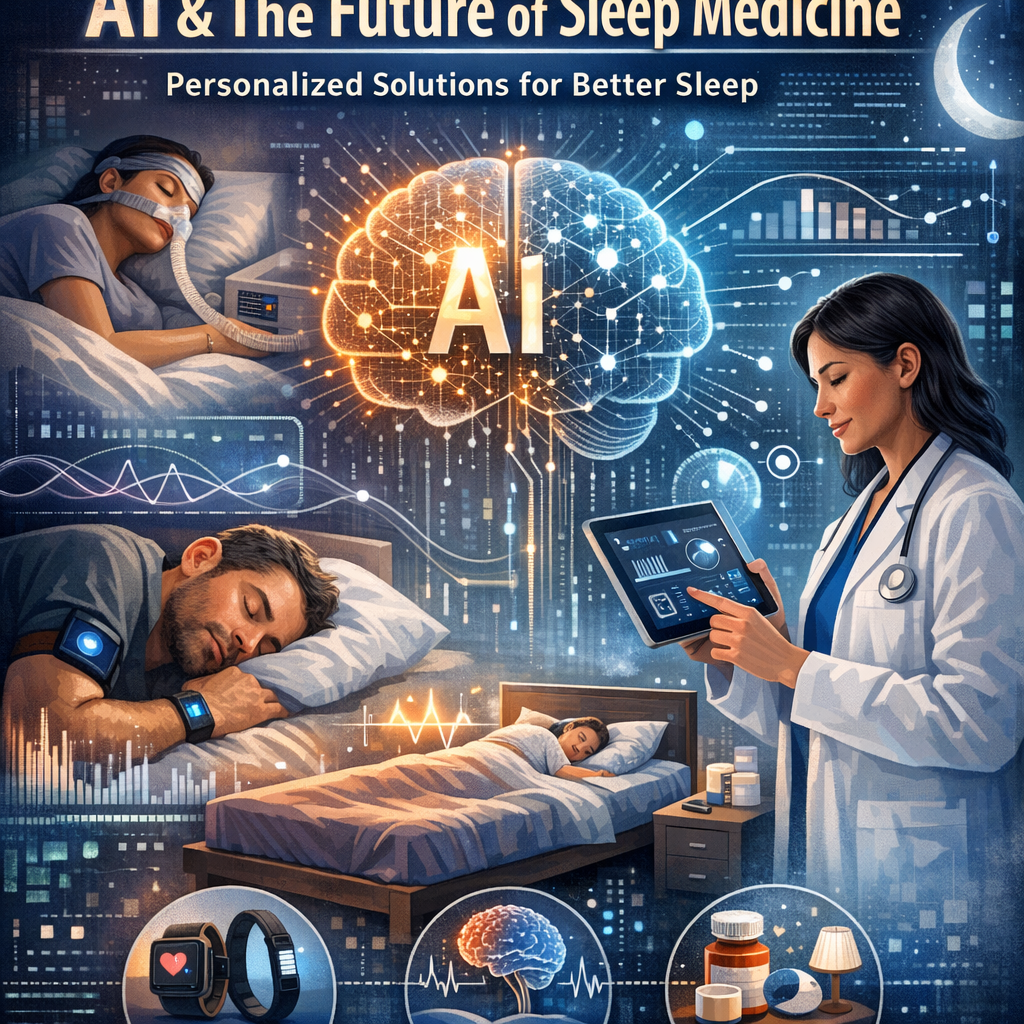
In recent years, advancements in **artificial intelligence (AI)** have transformed many areas of healthcare, offering new tools and methodologies for personalized medicine, and **sleep medicine** is no exception. By leveraging vast amounts of data and sophisticated algorithms, AI technology holds the promise of revolutionizing the way complex sleep disorders are diagnosed and treated. These AI-driven **personalized treatment plans** could adapt to the unique characteristics of each individual, offering precise interventions that can enhance treatment outcomes and lead to significantly improved sleep health.
The advent of wearable technology, remote monitoring devices, and digital health apps has further facilitated the integration of AI in sleep medicine. These devices gather detailed information about an individual’s **sleep patterns**, body movements, heart rate, and even environmental factors like room temperature and noise levels. AI algorithms can analyze this data, identifying patterns and correlations that might be invisible to human clinicians, to recommend personalized treatment strategies. Such approaches could optimize the timing and dosage of medications, target specific behavioral interventions, or suggest environmental modifications tailored to the individual’s sleep profile.
As the prevalence of sleep disorders continues to rise, driven by factors such as increased stress, screen time, and lifestyle changes, the need for innovative and effective treatment solutions is more pressing than ever. AI-driven personalized treatment plans could represent a paradigm shift in sleep medicine, offering hope to those who have struggled with inadequate sleep and its cascading effects on health. In this article, we will explore how AI is being used to create individualized treatment plans for sleep disorders, its advantages, and the potential challenges this technology faces in transforming the future of sleep health.
**
Features
**
The application of AI in sleep disorder treatment is supported by a growing body of research and clinical studies that highlight its potential benefits and efficacy. A notable study published in the [Journal of Clinical Sleep Medicine](https://jcsm.aasm.org) discussed the use of machine learning algorithms to predict optimal **CPAP (Continuous Positive Airway Pressure)** settings for patients with **obstructive sleep apnea**, greatly improving their treatment compliance and effectiveness. By analyzing data from past CPAP sessions, these algorithms identify trends and make precise adjustments to treatment parameters, reducing apnea events and improving overall sleep quality.
Another research study conducted by a team at [Stanford University](https://www.nature.com/articles/s41746-018-0022-y) explored the use of AI to diagnose sleep disorders through pattern recognition in **polysomnography data**, a traditional method of measuring sleep parameters such as brain waves, oxygen levels in the blood, heart rate, and eye and leg movements. The study found that AI could accurately diagnose sleep disorders with a level of precision comparable to or even surpassing that of experienced sleep specialists. This finding underscores the potential of AI not only to enhance the accuracy of diagnosis but also to reduce the time and costs associated with traditional diagnostic procedures.
Moreover, AI-driven applications in **behavioral sleep medicine** are evolving rapidly. **Cognitive Behavioral Therapy for Insomnia (CBT-I)**, a standard non-pharmacological treatment, is being enhanced with AI tools that personalize the therapy process. For instance, **AI-powered chatbots** can offer real-time therapy sessions and adjust the cognitive and behavioral interventions based on the user’s responses and interaction patterns, boosting engagement and treatment efficacy [source](https://jamanetwork.com/journals/jamapsychiatry/fullarticle/2765732).
While these advancements are promising, the integration of AI in sleep medicine also presents challenges such as data privacy concerns, the need for extensive data validation, and potential algorithmic biases that must be addressed as part of the ongoing development and implementation of AI technologies in clinical settings.
**Conclusion**
The future of sleep medicine is poised for a significant transformation with the incorporation of AI-driven personalized treatment plans for complex sleep disorders. By leveraging vast datasets and intelligent algorithms, AI provides unprecedented opportunities to tailor treatments specifically to individual needs, potentially improving effectiveness and patient satisfaction. As we continue to navigate the challenges of data security, algorithmic improvement, and ethical considerations, the healthcare community, technology developers, and policymakers must collaborate to ensure these innovative solutions are both accessible and equitable. As AI technologies advance, there is real hope for millions suffering from sleep disorders, promising a future where everyone can enjoy the restorative benefits of a good night’s sleep.
**Concise Summary**
The integration of AI in sleep medicine offers transformative potential, moving away from generic treatment plans to personalized solutions for complex sleep disorders like insomnia and sleep apnea. With advancements in wearable tech and AI analytics, customized treatment strategies can optimize medication, behavioral interventions, and environmental changes. This innovative approach promises to enhance treatment outcomes, although challenges like data privacy and algorithmic bias need addressing. As AI technology matures, it holds the promise of delivering effective sleep health solutions for millions, offering a brighter, better-rested future.

Dominic E. is a passionate filmmaker navigating the exciting intersection of art and science. By day, he delves into the complexities of the human body as a full-time medical writer, meticulously translating intricate medical concepts into accessible and engaging narratives. By night, he explores the boundless realm of cinematic storytelling, crafting narratives that evoke emotion and challenge perspectives.
Film Student and Full-time Medical Writer for ContentVendor.com