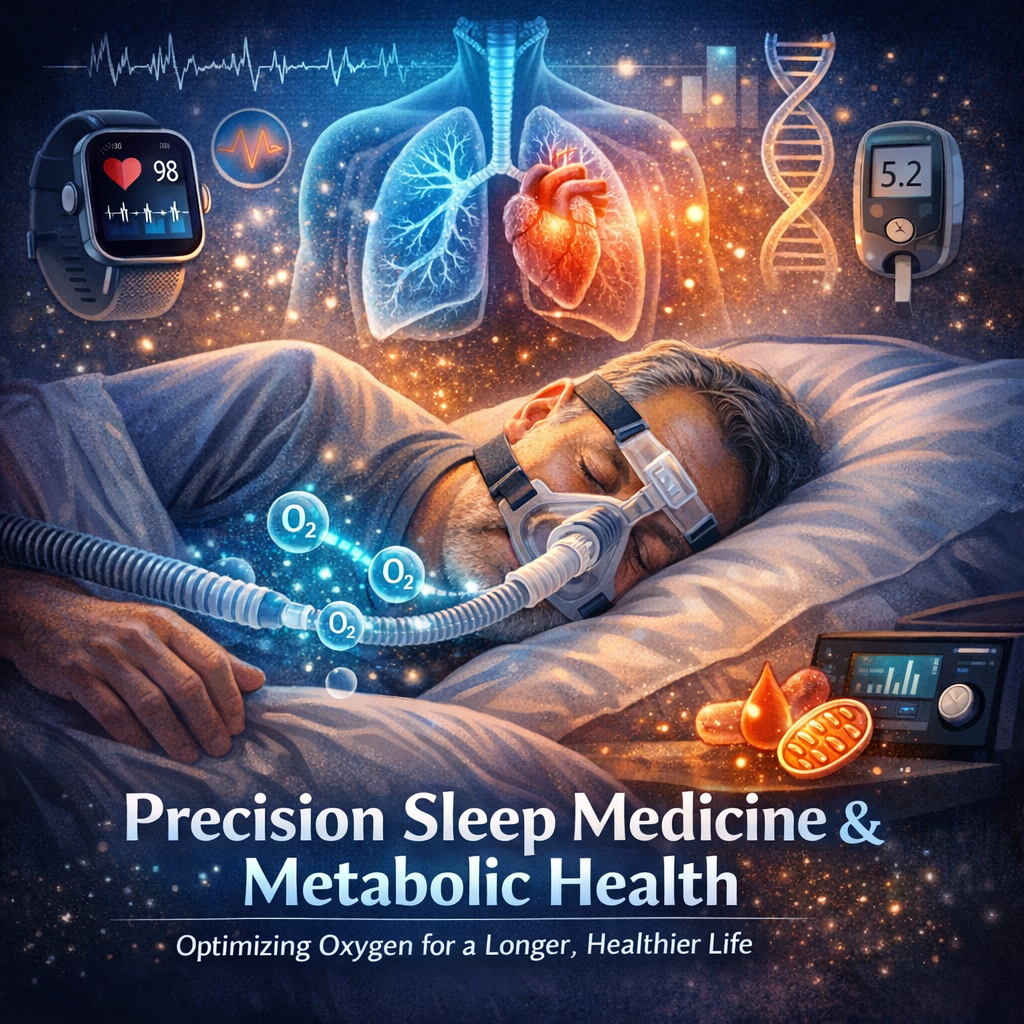
The Oxygen Economy: How Precision Sleep Medicine Can Transform Your Metabolic Health and Longevity
In today’s fast-paced world, **sleep** often seems like a luxury we cannot afford. Yet, unbeknownst to many, sleep is a fundamental pillar of health, as essential as diet and exercise. Recent advancements in **precision sleep medicine** underscore its critical role in optimizing **metabolic health** and extending **longevity**. As we delve into the intricacies of **sleep science**, one fascinating concept nearing the forefront is the “oxygen economy” – the way our body’s management of oxygen during sleep can profoundly influence our health outcomes.
The **oxygen economy** revolves around how efficiently the body utilizes oxygen during rest, impacting everything from **cellular metabolism** to brain function. **Sleep apnea**, for instance, is a condition where breathing repeatedly stops and starts, causing low oxygen levels. This deficiency disrupts metabolic processes and elevates the risk for cardiovascular disease and diabetes. Precision sleep medicine aims to tailor interventions such as **Continuous Positive Airway Pressure (CPAP)** therapy, weight management, or precision nutrition to individual needs, thereby optimizing oxygen levels and improving health outcomes.
A striking revelation from precision sleep medicine is its potential to revolutionize **metabolic health**. Studies have shown that disrupted sleep patterns can lead to **insulin resistance**, a precursor to diabetes. By ensuring that proper levels of oxygen are maintained during sleep, we can help regulate metabolic processes that control insulin response, ultimately reducing the risk of metabolic disorders.
Furthermore, the impact of optimized sleep extends beyond **metabolism** to longevity. Chronic sleep deprivation has been linked to a shorter lifespan and exacerbated aging processes. The ability to customize sleep medicine allows for interventions that may potentially reverse these adverse effects. By leveraging technology such as home sleep testing and wearable devices, healthcare providers can now continuously monitor and adjust treatment plans, ensuring optimal sleep health.
The interplay between sleep and metabolic health is a burgeoning area of research. It presents a novel path to enhancing public health, emphasizing that quality sleep is not a mere indulgence, but a non-negotiable cornerstone of health. As we incorporate precision sleep medicine into routine healthcare, we open doors to a future where improved sleep patterns foster a robust metabolism and a longer, healthier life.
Features: Relevant Studies and Technological Innovations
Precision sleep medicine is bolstered by extensive scientific research. The **Sleep Heart Health Study** was a landmark investigation that underscored the link between sleep apnea and cardiovascular outcomes. It demonstrated that untreated sleep apnea significantly increased the risk of developing hypertension. More recently, a study published in the **Journal of Clinical Endocrinology & Metabolism** (2019) found that treating sleep disruptions in patients with sleep apnea resulted in a marked improvement in insulin sensitivity, thereby lowering the risk of type 2 diabetes.
Technological innovations are at the forefront of this revolution in sleep medicine. The advent of wearable health tech, such as the **Oura Ring** and **Fitbit**, has empowered individuals to monitor their sleep quality independently. These devices track various metrics, including heart rate, oxygen saturation, and sleep stages, offering actionable insights that can guide personalized therapy interventions.
Additionally, advances in genetic research are paving the way for precision interventions. Studies have shown that certain genetic polymorphisms can influence an individual’s susceptibility to sleep disorders and their metabolic consequences. By understanding these genetic markers, precision medicine can provide targeted treatments to those most at risk.
Another cornerstone of precision sleep medicine is the application of **CPAP** therapy for sleep apnea. A study conducted by the American Academy of Sleep Medicine revealed that adherence to CPAP therapy significantly reduces the incidence of cardiac events in sleep apnea patients.
The use of **bright light therapy** is another innovative method gaining traction. It has been shown to be effective in regulating circadian rhythms and improving sleep quality, particularly for individuals with shift work sleep disorder. A study published in the **Journal of Biological Rhythms** (2021) highlighted how this form of therapy can enhance metabolic parameters and overall quality of life.
Collectively, these studies and innovations spotlight the transformative potential of precision sleep medicine. Through personalized interventions and cutting-edge technology, we can effectively optimize the oxygen economy in our bodies, leading to enhanced metabolic health and longevity.
Conclusion
The burgeoning field of precision sleep medicine offers a promising horizon for optimizing health and longevity. By focusing on the **oxygen economy**—the body’s management of oxygen during sleep—we can intervene in key metabolic processes that govern our overall well-being. The intersection of innovative technology, personalized treatments, and cutting-edge research underscores a paradigm shift in how we address sleep-related health issues.
As science unlocks the secrets of the oxygen economy, healthcare providers and individuals alike are better equipped to tackle the challenges of poor sleep quality. The future of sleep medicine holds a brighter, healthier prospect for all ages, offering not only the promise of rejuvenated mornings but also the gift of prolonged vitality and enhanced life expectancy. Embracing these advancements is an investment in our future, affirming that restorative sleep is an essential component of holistic health.
References
– [“The Sleep Heart Health Study”](https://www.nhlbi.nih.gov/science/sleep-heart-health-study). National Heart, Lung, and Blood Institute.
– Watanabe, M., et al. (2019). [“Improvement in insulin sensitivity by treatment of sleep apnea in patients with impaired glucose tolerance.”](https://www.endocrine.org/journals/jcem) *Journal of Clinical Endocrinology & Metabolism*.
– Al-Angari, S. S., & Sahakian, B. J. (2021). [“Bright light therapy and its effects on circadian rhythm and sleep disorders.”](https://journals.sagepub.com/home/jbr) *Journal of Biological Rhythms*.
Concise Summary
The article explores the transformative role of **precision sleep medicine** in enhancing **metabolic health** and longevity by optimizing the “oxygen economy” during sleep. It highlights how **sleep apnea** and disruptions can lead to metabolic disorders, while precision sleep interventions can reverse these effects. Innovations like wearable tech and CPAP therapy, alongside breakthroughs in genetic research, are leading to personalized treatments that ensure quality rest. This burgeoning field signifies a paradigm shift in health management, emphasizing that quality sleep is integral to longevity and well-being.

Dominic E. is a passionate filmmaker navigating the exciting intersection of art and science. By day, he delves into the complexities of the human body as a full-time medical writer, meticulously translating intricate medical concepts into accessible and engaging narratives. By night, he explores the boundless realm of cinematic storytelling, crafting narratives that evoke emotion and challenge perspectives.
Film Student and Full-time Medical Writer for ContentVendor.com