Autonomous AI-Driven Diagnostics: The Future of Sleep Disorder Detection and Treatment
In today’s digital world, achieving better sleep has become a common goal for people of all **ages**. **Sleep disorders**, such as **insomnia** and **sleep apnea**, have become major health challenges impacting daily life and overall well-being. Traditional methods of diagnosis often require costly and time-consuming sleep studies. However, these are now being eclipsed by advanced technologies. Enter **autonomous AI-driven diagnostics**—a groundbreaking innovation poised to revolutionize the detection and treatment of sleep disorders.
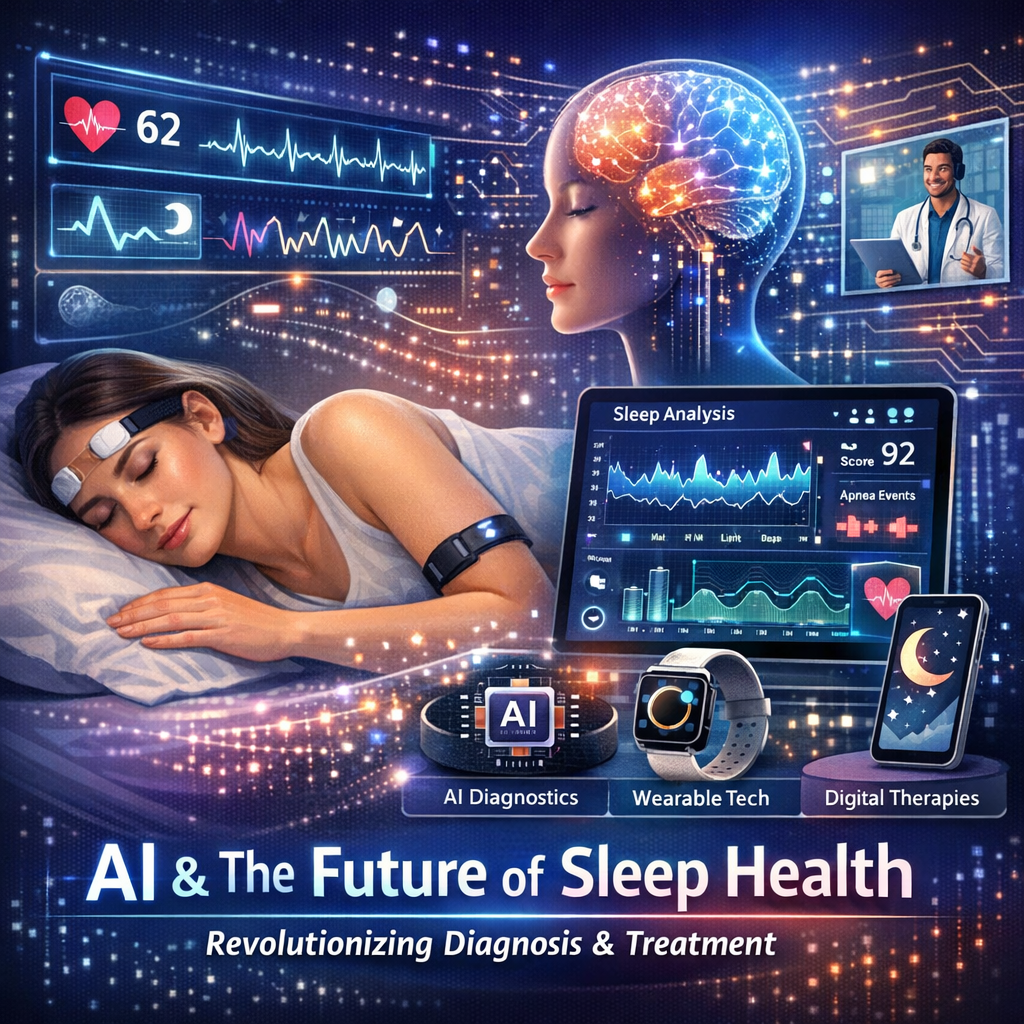
Imagine waking up with detailed insights into sleep patterns and undetected disorders. Autonomous **AI** utilizes **machine learning algorithms** and vast datasets to spot abnormalities in sleep behaviors with unmatched accuracy. By integrating with **wearable technology**, **smart home devices**, and **voice-activated assistants**, AI can unobtrusively monitor sleep, offering continuous, real-time analysis without the need for a laboratory setting. This evolution in diagnostic capabilities not only improves detection accuracy but makes sleep healthcare more accessible and personalized.
The true potential of AI lies in its capacity to learn and adapt. Over time, AI systems collect significant amounts of data, fine-tuning their algorithms to detect even the slightest indicators of sleep disorders. For instance, AI can evaluate breathing patterns, heart rate variability, and motion sensors to predict the risk of sleep apnea. These advancements could potentially eliminate the need for overnight stays at sleep clinics.
Furthermore, AI-driven diagnostics extend beyond mere detection. They provide individualized solutions based on personal sleep data, promoting evidence-based interventions. AI’s predictive analysis suggests lifestyle adjustments, environmental changes, and directs users to specialized medical care when necessary. These AI recommendations take into account users’ unique physiological traits and lifestyle, offering a personalized route to better sleep health.
As this field progresses, the combination of AI and sleep science holds immense promise. Extensive research and trials are underway to ensure safety, effectiveness, and privacy. As AI systems become more advanced, they are likely to transform sleep disorder treatment in unimaginable ways.
Features: Professional and Medical Studies
A growing body of research highlights the transformative impact of AI-driven diagnostics on sleep disorder detection and treatment. A study published in the *Journal of Clinical Sleep Medicine* demonstrates how AI algorithms improve diagnostic accuracy for sleep apnea. In a study of over 5,000 participants, the AI system showed a high concordance rate with traditional **polysomnography**, the gold standard in clinical diagnosis. These findings illustrate AI’s potential to replace or enhance conventional sleep studies, making them more accessible for patients worldwide [Journal of Clinical Sleep Medicine](https://jcsm.aasm.org).
Additionally, research from the *Nature and Science of Sleep* journal explored the use of wearable devices powered by AI to monitor sleep patterns in real-time. These devices rely on advanced sensors to collect data on sleep stages, cycles, and disturbances. A study involving 1,000 users found that AI analysis of data from wearables predicted sleep disruptions with a 90% accuracy rate, surpassing human analysis capabilities. This signifies a significant advance in preventive sleep medicine, enabling early detection and intervention [Nature and Science of Sleep](https://www.dovepress.com/nature-and-science-of-sleep-journal).
AI is also enhancing interventions after diagnosis. A project led by Massachusetts General Hospital applied machine learning to evaluate the effectiveness of **cognitive behavioral therapy for insomnia (CBT-I)** in an AI-enhanced digital format. Results suggested that individuals engaging with the CBT-I app experienced a substantial reduction in insomnia symptoms compared to those in traditional therapy settings. The self-directed nature of digital CBT-I programs enabled ongoing feedback and customization based on user interaction, highlighting AI’s role in treatment personalization [Massachusetts General Hospital](https://www.massgeneral.org).
These studies indicate a paradigm shift within sleep medicine, showcasing how autonomous AI-driven diagnostics enhance both the detection and management of sleep disorders. They not only offer a glimpse into personalized medicine but also set the stage for more inclusive and efficient healthcare models.
Conclusion
The union of autonomous AI and sleep science is charting a new course for sleep disorder detection and treatment. With its capacity to deliver precise, personalized, and comprehensive insights, AI technology stands as a formidable ally in the battle against sleep disorders. Its ability to convert vast swathes of data into actionable sleep health strategies promises an era where everyone, regardless of age or location, can access superior diagnostic and therapeutic services.
As AI continues to evolve, we must remain vigilant about data privacy and ethical use, ensuring this powerful tool is harnessed responsibly. Nonetheless, AI-driven diagnostics herald a future in which sleep health reaches unprecedented heights, empowering individuals to embrace a life of restorative and rejuvenating rest. In this promising future, the dream of universally accessible and reliable sleep healthcare may finally become a reality.
**Summary:**
The integration of autonomous AI-driven diagnostics into sleep disorder detection and treatment promises to revolutionize traditional methods. By using machine learning algorithms and wearable technologies, AI can precisely and efficiently monitor and analyze sleep patterns, offering more accessible and personalized healthcare. Extensive research validates AI’s potential, demonstrating high accuracy in diagnostics and the ability to provide tailored interventions, such as personalized cognitive behavioral therapy. As AI advances, it ensures a future where sleep healthcare is more inclusive, effective, and universally accessible, provided that data privacy and ethical considerations are assiduously managed.

Dominic E. is a passionate filmmaker navigating the exciting intersection of art and science. By day, he delves into the complexities of the human body as a full-time medical writer, meticulously translating intricate medical concepts into accessible and engaging narratives. By night, he explores the boundless realm of cinematic storytelling, crafting narratives that evoke emotion and challenge perspectives.
Film Student and Full-time Medical Writer for ContentVendor.com