**
Why Sleep Apnea’s Little-Known Connection to PTSD Could Redefine Treatments Forever
**
**Introduction**
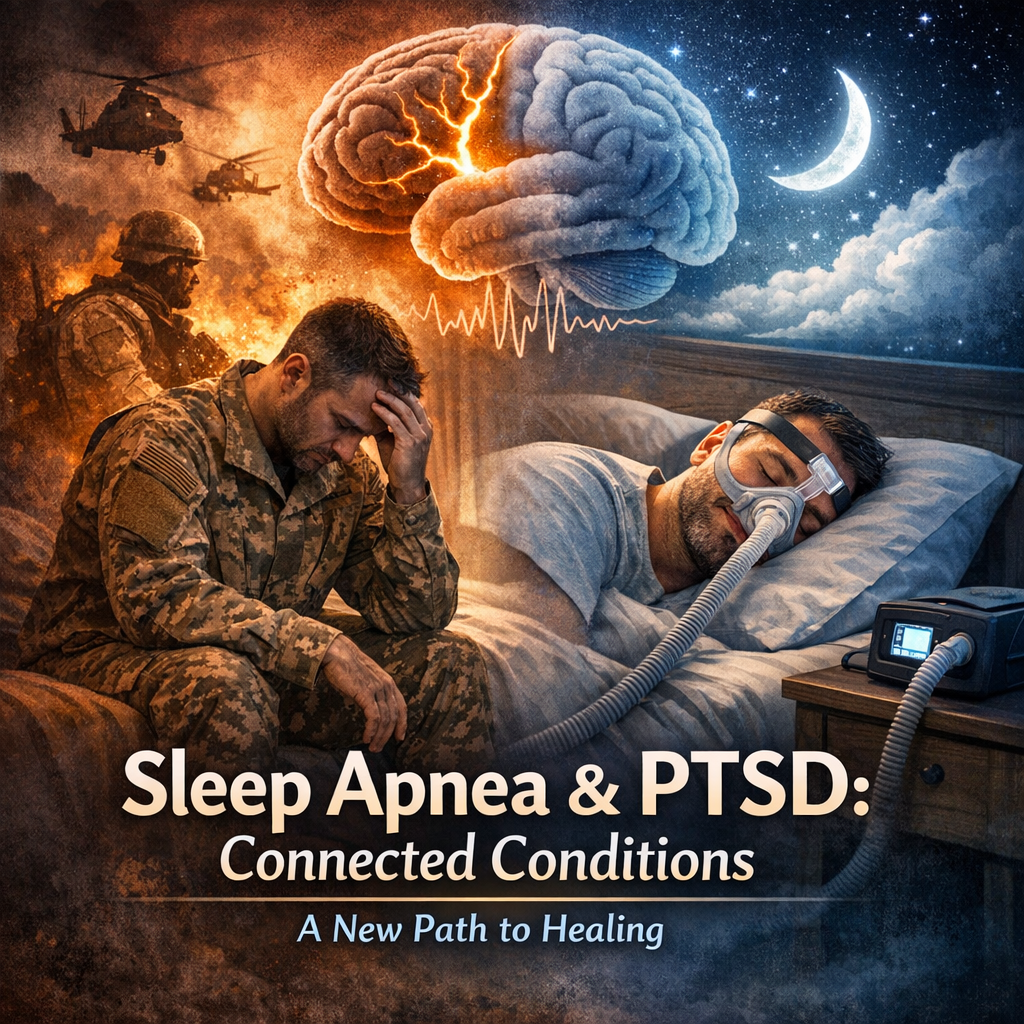
In the serene embrace of the night, where dreams take flight and the world whispers its quiet song, countless individuals struggle with the debilitating conditions of **sleep apnea** and **post-traumatic stress disorder (PTSD)**. On the surface, these two disorders seem worlds apart: **sleep apnea**, a physical condition characterized by interruptions in breathing during sleep, and **PTSD**, a mental health disorder that emerges after experiencing or witnessing a traumatic event. However, burgeoning research suggests that these seemingly disparate conditions could be more interconnected than previously thought, leading to revolutionary advancements in treatment strategies.
**Sleep apnea** affects over 22 million Americans, many of whom remain undiagnosed. The condition can lead to various health issues, including fatigue, cardiovascular problems, and impaired daily functioning. Meanwhile, **PTSD** looms as a chronic mental health condition impacting millions worldwide, often resulting in flashbacks, nightmares, and severe anxiety. Historically, these conditions have been treated in isolation; however, recent studies propose a significant overlap, with **sleep apnea** potentially exacerbating the symptoms of **PTSD** and vice versa. Understanding this relationship not only provides a more holistic view of patient health but also paves the way for integrated treatment protocols that could offer relief to sufferers of both conditions.
Research into the neurological and physiological correlation between **sleep apnea** and **PTSD** reveals that individuals with untreated **obstructive sleep apnea (OSA)** often experience heightened levels of stress and anxiety—symptoms that are strikingly similar to those with **PTSD**. It is within this symbiosis that new **therapeutic** avenues begin to emerge, reshaping the future landscape of psychological and sleep medicine. Establishing a comprehensive treatment module that addresses both sleep disturbances and stress-induced mental health conditions could significantly enhance patient outcomes, offering a beacon of hope to millions whose lives are shadowed by exhausted days and troubled nights.
**
Features
**
Recent scientific explorations have provided intriguing insights into the interconnectedness of **sleep apnea** and **PTSD**. A pivotal study conducted by the [American Academy of Sleep Medicine (AASM)](https://aasm.org/) highlights that up to 90% of **PTSD** patients report sleep disturbances, including insomnia and frequent awakenings. The research also reveals that undiagnosed **sleep apnea** may further worsen these sleep disturbances, creating a vicious cycle that complicates mental health recovery.
A significant finding from a 2020 study published in the [Journal of Clinical Sleep Medicine (JCSM)](https://jcsm.aasm.org) proposes that individuals with concurrent **sleep apnea** and **PTSD** exhibit more severe PTSD symptoms compared to those without **sleep apnea**. This discovery underscores the need for comprehensive screening and treatment strategies for individuals with **PTSD**, particularly those exhibiting signs of **sleep apnea**.
Additionally, the Veterans Affairs Medical Center conducted a study where over 500 veteran participants, diagnosed with **PTSD**, were monitored for sleep disturbances. The findings indicated a substantial prevalence of **sleep apnea** among participants, suggesting an underrecognized yet profound relationship between OSA and **PTSD**.
These studies collectively emphasize the potential benefits of integrating **Continuous Positive Airway Pressure (CPAP) therapy**—a common treatment for **sleep apnea**—into treatment plans for **PTSD** patients. Previous trials have shown that **CPAP** not only mitigates the physical symptoms associated with **sleep apnea** but also contributes to improved mental health outcomes by reducing the intensity of nightmares and enhancing overall sleep quality.
This emerging body of research advocates for a paradigm shift in how we approach treatment for **PTSD**, recognizing **sleep quality** as a fundamental component of mental health. The evolving understanding of these conditions challenges the healthcare community to expand its diagnostic criteria and treatment protocols, potentially revolutionizing therapeutic approaches and, ultimately, patient recovery experiences.
**Conclusion**
The evolving understanding of the intricate relationship between **sleep apnea** and **PTSD** has the potential to redefine treatment approaches forever. By acknowledging the overlapping symptoms and interconnected nature of these conditions, healthcare practitioners can develop more comprehensive and effective strategies for diagnosis and treatment. This prompts a holistic view of health that encompasses both mental and physical well-being, addressing the root causes of sleep disturbances and their psychological counterparts.
While the journey towards redefining treatments is ongoing, the strides made thus far offer hope for improved quality of life for millions affected by these conditions. With further research and a dedication to integrated care, the future looks promising for individuals battling the dual challenges of **PTSD** and **sleep apnea**. This newly discovered connection not only paves the way for innovative therapeutic options but also shines a light on the importance of sleep health in comprehensive wellness and recovery strategies.
**Concise Summary**
Emerging research underscores a significant connection between sleep apnea and PTSD, revealing that untreated sleep apnea can exacerbate PTSD symptoms and vice versa. With approximately 22 million Americans affected by sleep apnea and countless individuals experiencing PTSD worldwide, the potential for integrated, comprehensive treatment strategies is promising. Studies suggest that therapies like CPAP not only address sleep apnea symptoms but may also alleviate PTSD symptoms, offering a holistic approach to mental and physical health. This evolving understanding could revolutionize treatment protocols and significantly enhance the quality of life for those battling these dual challenges.
**References**
1. [American Academy of Sleep Medicine. Understanding Sleep Apnea.](https://aasm.org/)
2. [Journal of Clinical Sleep Medicine. The Association Between PTSD, Sleep Apnea, and Sleep Quality: A Study.](https://jcsm.aasm.org)
3. [Harvard Health Publishing. Sleep and Mental Health.](https://www.health.harvard.edu)

Dominic E. is a passionate filmmaker navigating the exciting intersection of art and science. By day, he delves into the complexities of the human body as a full-time medical writer, meticulously translating intricate medical concepts into accessible and engaging narratives. By night, he explores the boundless realm of cinematic storytelling, crafting narratives that evoke emotion and challenge perspectives.
Film Student and Full-time Medical Writer for ContentVendor.com