Beyond CPAP: The Future of AI-Driven Sleep Apnea Diagnostics and Treatment
**Sleep apnea**, a **global health issue** affecting millions, is characterized by interruptions in breathing during sleep, leading to poor sleep quality and adverse health effects. Traditionally, **Continuous Positive Airway Pressure (CPAP) therapy** has been the cornerstone of treatment for **obstructive sleep apnea (OSA)**. However, the advance of **artificial intelligence (AI)** is revolutionizing how we diagnose and treat this condition, offering hope for enhanced patient outcomes and satisfaction.
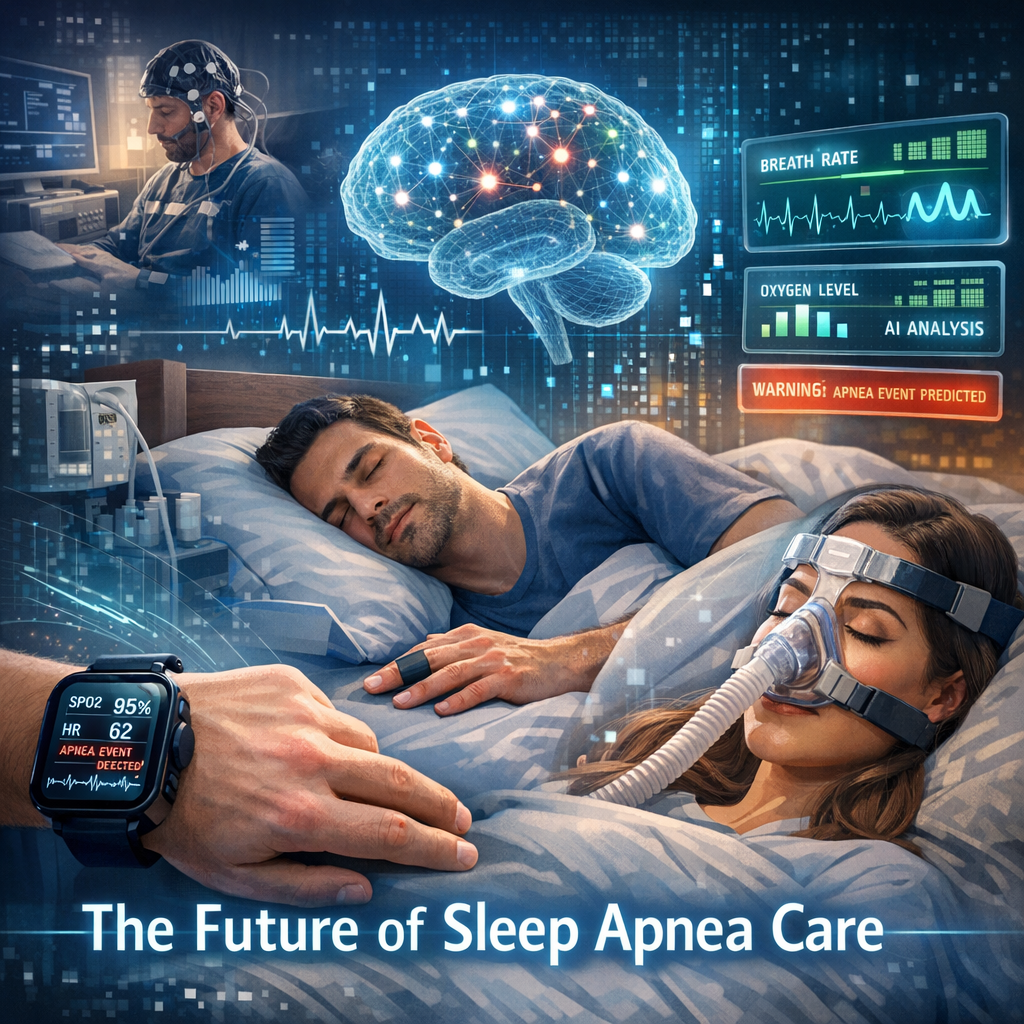
The conventional diagnosis of sleep apnea often involves an overnight stay at a sleep center for **polysomnography**, a method that, while comprehensive, is inconvenient and costly. Given these challenges, **AI-driven solutions** are being developed to provide more accessible, efficient, and accurate diagnostics. With AI, **home sleep tests** can be conducted with **wearable devices** that monitor physiological parameters such as oxygen levels, heart rate, and movement. These devices, when paired with advanced algorithms, can analyze vast amounts of data to detect patterns indicative of sleep apnea.
Beyond diagnostics, AI is employed to optimize and personalize treatment. AI-powered applications can adjust therapeutic settings in real-time, catering to individual patient needs. This personalization is crucial, as CPAP compliance remains a significant issue for many patients due to discomfort or inefficacy of uniform settings across diverse populations. These AI systems learn from the user’s data, adjusting pressure levels or suggesting alternative therapies, improving adherence and overall outcomes.
Moreover, AI’s potential extends to predicting sleep apnea events and triggering preventive interventions even before an apnea occurs. Research is underway to explore neural networks capable of predicting sleep cycles and interruptions, potentially alerting devices to mitigate apneic events.
As we delve into the future of sleep apnea management, AI not only represents an exciting leap forward in diagnostics and therapy but also provides an opportunity to understand sleep disorders better. These innovations promise a future where sleep apnea is managed more holistically, significantly improving patient quality of life.
Features of AI-Driven Sleep Apnea Diagnostics and Treatment
AI’s promising role in revolutionizing sleep apnea diagnostics is supported by burgeoning research. A study published in the [**Journal of Clinical Sleep Medicine**](https://jcsm.aasm.org) highlights the effectiveness of AI algorithms in analyzing data from wearable devices. The study found these algorithms had comparable accuracy to traditional polysomnography in diagnosing OSA, a breakthrough that paves the way for widespread home diagnostics.
Another research initiative, conducted by the [**American Academy of Sleep Medicine**](https://aasm.org), explored AI’s role in sleep pattern analysis. Their findings demonstrated that AI could not only diagnose sleep apnea but also differentiate between obstructive and central sleep apnea with greater precision, allowing for more targeted therapies.
The treatment landscape is equally transforming, as evidenced by projects utilizing AI to enhance CPAP therapy. One such example is a study in the [**Nature and Science of Sleep**](https://nature.com), where adaptive algorithms were applied to CPAP machines to tailor therapy to patient-specific patterns. This personalization improved compliance rates significantly, illustrating how AI can address one of the therapy’s significant limitations.
In terms of **predictive capabilities**, research published in the [**Sleep Medicine Reviews**](https://sciencedirect.com) validates the use of deep learning models to predict apnea events. These models, through ongoing data analysis, can learn patient-specific patterns and potentially trigger real-time therapeutic interventions to prevent apneic episodes, showcasing AI’s potential not just in managing but actively preventing adverse events.
These studies underscore the transformative power of AI in sleep medicine, suggesting a future where sleep apnea management is not only more convenient and cost-effective but also aligned with personalized health care approaches.
Conclusion
The future of **sleep apnea diagnostics and treatment** looks increasingly bright, thanks to the integration of **AI technologies**. As the capabilities of AI continue to expand, they offer solutions that are markedly more accessible and tailored to individual needs than traditional methods. This evolution is crucial, considering the global burden of sleep apnea and its associated health risks. AI-driven diagnostics provide patients the convenience of home-based assessments with the reliability and comprehensiveness of traditional testing methods. Meanwhile, AI-enabled treatment personalization fosters higher adherence rates and improved therapeutic outcomes. Looking ahead, ongoing research and technological advancements hold the promise of even more precise predictive capabilities, potentially transforming not only how we treat sleep apnea but also our fundamental understanding of sleep disorders. With this, AI becomes not just an aid but a cornerstone of future sleep health strategies, offering new hope to millions seeking restful, restorative sleep.
**Concise Summary:**
AI is transforming the diagnosis and treatment of sleep apnea by enabling home-based diagnostics with wearable devices and personalized treatment plans. Research shows that AI algorithms provide diagnostic accuracy similar to traditional methods, allowing more efficient and convenient home testing. AI also optimizes treatments by adjusting settings based on individual needs, enhancing compliance, and offering real-time prevention of apneic events. This advancement presents a future where sleep apnea is managed more effectively, improving patient outcomes and quality of life.

Dominic E. is a passionate filmmaker navigating the exciting intersection of art and science. By day, he delves into the complexities of the human body as a full-time medical writer, meticulously translating intricate medical concepts into accessible and engaging narratives. By night, he explores the boundless realm of cinematic storytelling, crafting narratives that evoke emotion and challenge perspectives.
Film Student and Full-time Medical Writer for ContentVendor.com