Biohacking Sleep Apnea: Unconventional Methods to Optimize Airway Health and Boost Longevity
Introduction
**Sleep apnea** is more than a simple disruption of sleep; it is a complex condition that affects the quality of life and longevity of millions globally. Characterized by repeated interruptions in breathing during sleep, **sleep apnea** can lead to various health complications, including **cardiovascular diseases**, **insulin resistance**, and **cognitive impairment**. Traditional treatments like **Continuous Positive Airway Pressure (CPAP)** have been the standard for managing this condition. However, the **biohacking** community is increasingly exploring alternative methods to optimize **airway health** and enhance overall well-being.
Biohacking involves making incremental changes to one’s lifestyle to enhance physical and mental performance. When applied to **sleep apnea**, it incorporates a range of unconventional techniques to bolster **airway health** and boost longevity. Embracing these approaches suggests a paradigm shift from relying solely on medical interventions to a more holistic view of managing **sleep apnea**. These methods, often rooted in science yet outside conventional medicinal approaches, target the underlying causes of the condition rather than just alleviating its symptoms.
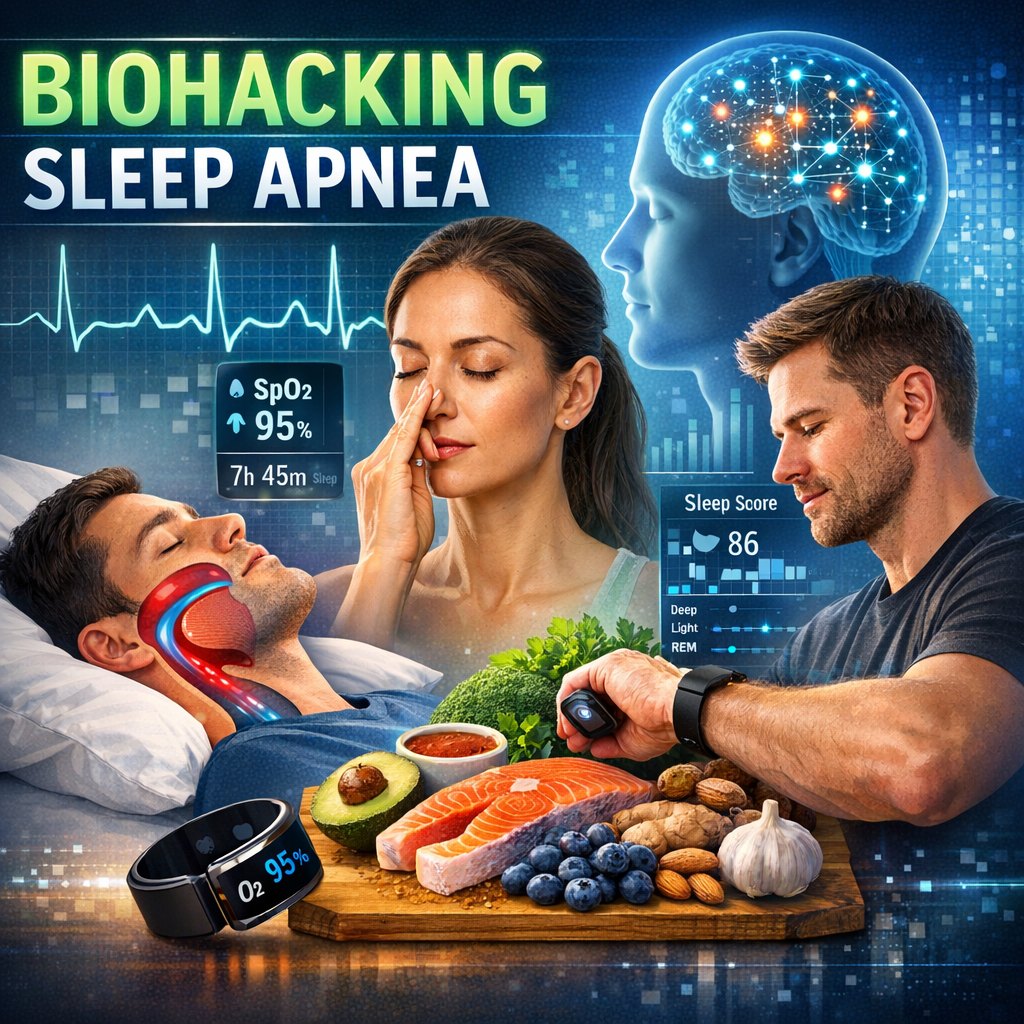
One emerging technique involves enhancing **sleep posture**. Traditionally, a **supine (back) sleeping position** is linked with exacerbated **sleep apnea** symptoms; by biohacking sleep position to encourage side sleeping or using positional therapy devices, one can reduce **airway collapse**, leading to better quality sleep. Furthermore, incorporating **breathing exercises**, such as **Buteyko breathing techniques**, may significantly improve airway function and oxygen saturation during sleep.
**Dietary interventions** also provide a promising avenue for biohackers targeting **sleep apnea**. **Anti-inflammatory diets** rich in **omega-3 fatty acids**, antioxidants, and low in processed sugars can reduce systemic inflammation and contribute to improved **airway health**. Emerging research on **intermittent fasting** suggests it might enhance **metabolic health**, thereby indirectly benefiting those with **sleep apnea**.
The advent of **wearable technology** enables tracking and optimization of sleep patterns in real-time. Devices that monitor oxygen levels, heart rate variability, and sleep stages can provide actionable insights to individualize and refine biohacking strategies effectively.
Features
Several professional studies underline the benefits of unconventional methods for managing **sleep apnea**. Research published in the *American Journal of Respiratory and Critical Care Medicine* elucidates the potential benefits of **positional therapy**. It highlights that individuals avoiding supine sleeping positions experienced a reduction in the apnea-hypopnea index (AHI), which is used to assess the severity of **sleep apnea**. This approach can be especially beneficial for those with **positional obstructive sleep apnea**, demonstrating that posture plays a critical role in **airway management**. [Read more](https://www.atsjournals.org/doi/full/10.1164/rccm.202003-0767ED)
**Breathing exercises**, specifically the **Buteyko method**, have gained attention for their efficacy as a supplementary intervention. A study in the *Journal of Clinical Sleep Medicine* found that participants practicing controlled breathing techniques saw improvements in daytime functioning and reduced apnea episodes. These exercises work by encouraging nasal breathing and increasing carbon dioxide tolerance, which can alleviate airway resistance during sleep. [Read more](https://jcsm.aasm.org/doi/10.5664/jcsm.8240)
In exploring dietary impacts, a study from the *Nutrients* journal emphasizes that individuals following an **anti-inflammatory diet** experienced reductions in the severity of **sleep apnea** symptoms. This aligns with the broader understanding that systemic inflammation is a contributor to various **obstructive sleep apnea** cases. [Read more](https://www.mdpi.com/journal/nutrients)
**Wearable technology** injects a data-driven approach to biohacking **sleep apnea**, with devices like the **Oura Ring** or **Fitbit** being used to monitor sleep parameters robustly. These gadgets provide insights into sleep stages, oxygen levels, and movement, which inform personalized adjustments and facilitate real-time feedback on interventions.
Conclusion
**Biohacking** presents a promising frontier in the management of **sleep apnea**, encompassing a multitude of non-conventional methods aimed at promoting **airway health** and longevity. Through positional changes, targeted breathing exercises, dietary modifications, and leveraging **wearable technology**, individuals can take proactive steps to manage their condition more holistically. While traditional medical interventions like **CPAP** remain essential for many, integrating biohacking strategies can empower those dealing with **sleep apnea** to optimize their sleep quality and overall health actively.
The exploration of these methods is an invitation to question and expand our understanding of **sleep apnea** beyond established treatments, emphasizing personalized and innovative paths to well-being. As always, patients should discuss any new approaches with healthcare providers to ensure safety and efficacy, but biohacking offers a compelling supplement in the journey to better sleep.
Concise Summary
Biohacking offers innovative strategies for managing sleep apnea, emphasizing approaches outside conventional medicine like enhancing sleep posture, breathing exercises, and dietary changes. Integrating anti-inflammatory diets and intermittent fasting can bolster airway health. Advanced wearable technology provides real-time data for optimizing sleep. Studies show the benefits of these methods in reducing sleep apnea severity. While CPAP remains crucial, combining traditional and unconventional methods provides a holistic management strategy. These personalized methods empower individuals to improve sleep quality and overall well-being while consulting healthcare professionals for safety and efficacy remains essential.

Dominic E. is a passionate filmmaker navigating the exciting intersection of art and science. By day, he delves into the complexities of the human body as a full-time medical writer, meticulously translating intricate medical concepts into accessible and engaging narratives. By night, he explores the boundless realm of cinematic storytelling, crafting narratives that evoke emotion and challenge perspectives.
Film Student and Full-time Medical Writer for ContentVendor.com