The Future of Sleep: Precision Medicine Takes on Sleep Apnea with AI-Driven Diagnosis
Introduction
**Sleep** is a cornerstone of good **health**, essential for physical, mental, and emotional well-being. Yet, millions worldwide suffer from **sleep disorders** that disrupt this fundamental process, leading to various health issues. One of the most prevalent sleep disorders is **sleep apnea**, a condition characterized by repeated interruptions in breathing during sleep. This disorder doesn’t discriminate and affects individuals of all ages, leading to fragmented sleep, daytime fatigue, and, if untreated, long-term **cardiovascular** and **metabolic** consequences.
Traditionally, **sleep apnea** has been diagnosed using ***polysomnography***—a comprehensive recording conducted overnight in a sleep laboratory. While polysomnography is effective, it is also costly, cumbersome, and inaccessible to many. As the understanding of **sleep apnea** evolves, so do the methods for identifying and treating it. The role of **technology**, particularly **artificial intelligence (AI)**, has steadily increased, offering promising new pathways for diagnosis and management.
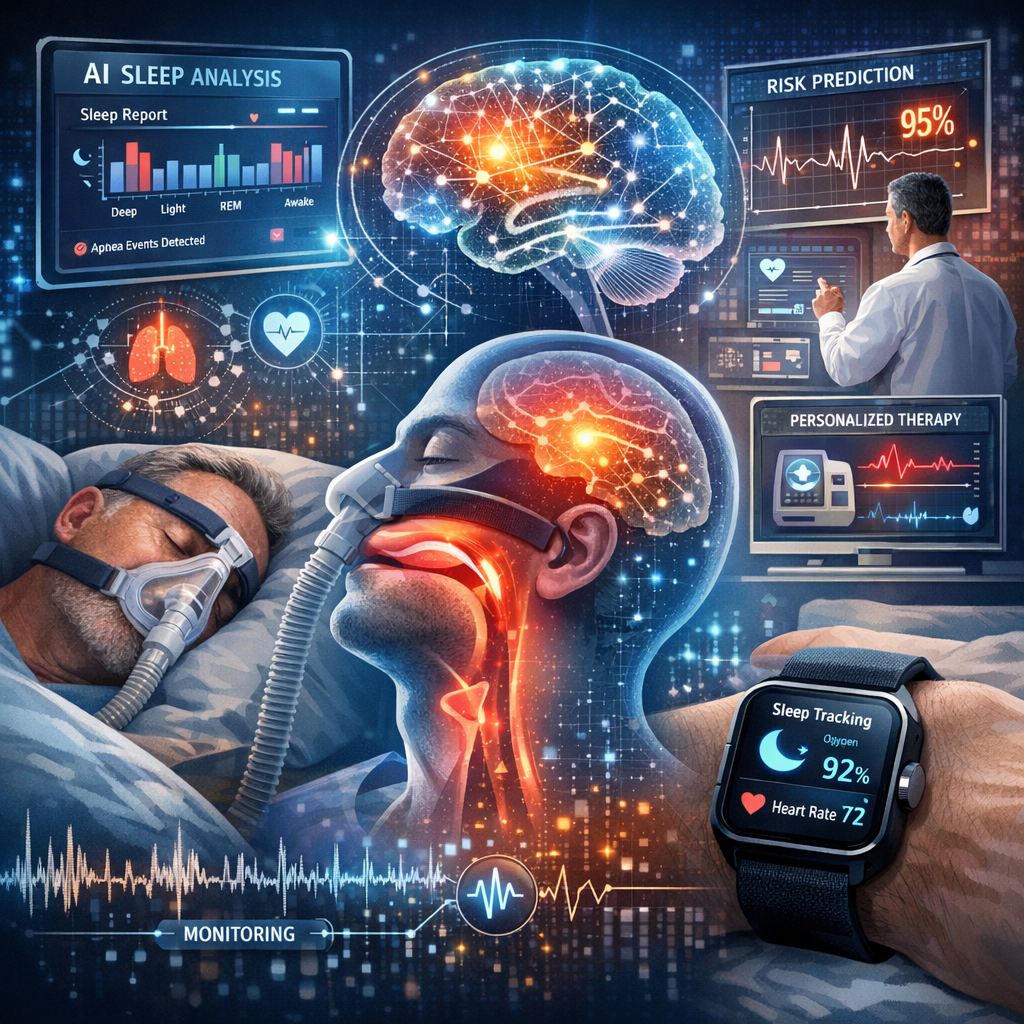
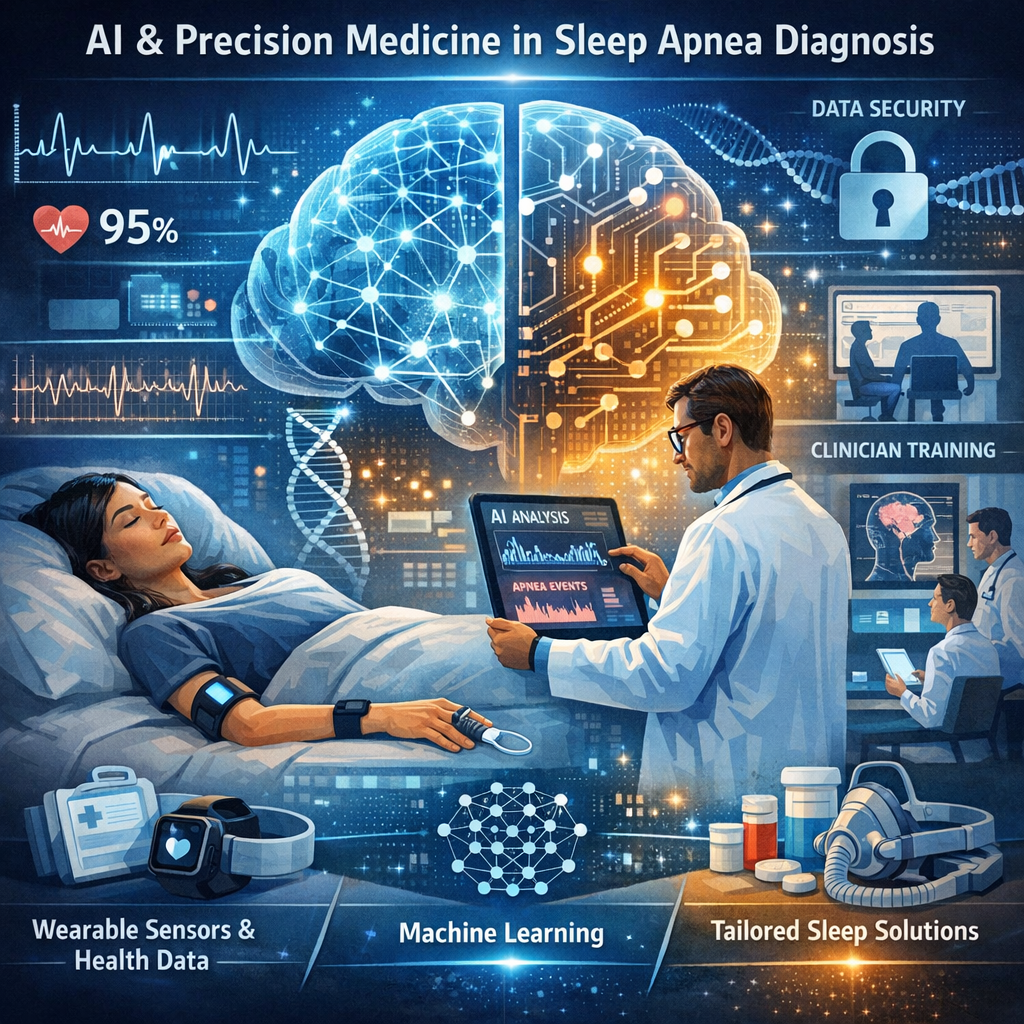
**AI-driven diagnostic tools** are at the forefront of these advancements, leveraging **machine learning algorithms** to analyze data more quickly and accurately than traditional methods. These tools can sift through vast datasets derived from **wearable devices**, at-home sleep monitors, and electronic health records to identify patterns indicative of **sleep apnea**. The integration of AI into **precision medicine** allows for more personalized treatment plans, ensuring that those diagnosed receive care tailored to their individual needs and genetic profiles.
The convergence of AI and precision medicine in **sleep health** marks a significant shift in how sleep disorders like sleep apnea are addressed. This transformation holds the potential to improve diagnostic accuracy, widen accessibility, and ultimately enhance patient outcomes. As we stand on the brink of these innovations, it’s crucial to explore how **AI** can be effectively integrated into medical practice, the **research** supporting its use, and the future implications for **sleep health**.
Features
Recent studies have significantly emphasized the potential of **AI** in enhancing the diagnosis of **sleep apnea**. For instance, a study published in *Nature Medicine* examined the efficacy of AI algorithms in diagnosing sleep apnea using data from **wearable devices**. The study demonstrated that AI could accurately predict **obstructive sleep apnea (OSA)** with a sensitivity and specificity comparable to traditional polysomnography, while being far more accessible and cost-effective. [Nature Medicine Study](https://www.nature.com/articles/s41591-019-0676-2)
Moreover, a clinical trial published in the *Journal of Clinical Sleep Medicine* explored the impact of **AI** on personalized treatment plans for sleep apnea patients. By utilizing AI to assess genetic, lifestyle, and health record data, healthcare providers could tailor interventions more specifically to individual patient profiles, leading to improved adherence to treatment and better overall outcomes. [Journal of Clinical Sleep Medicine](https://jcsm.aasm.org/doi/abs/10.5664/jcsm.9034)
Further research by **Stanford University’s Center for Sleep Sciences and Medicine** has shown that AI algorithms are capable of monitoring sleep patterns in real-time, predicting apnea events before they occur, and advising interventions that could preemptively alter the patient’s sleeping position or initiate **Continuous Positive Airway Pressure (CPAP)** therapy, significantly reducing the frequency of apnea episodes. [Stanford University Study](https://med.stanford.edu/sleepsciences.html)
These studies underscore the potential for **AI** to reformulate the diagnostic landscape of **sleep apnea** by making it more efficient, individualized, and accessible. However, as with any emerging technology, integrating AI into clinical practice comes with hurdles. These include ensuring **data privacy**, overcoming resistance to adopting new technologies within the medical community, and requiring thorough training for clinicians to interpret AI outputs effectively.
Conclusion
The fusion of **AI** with **precision medicine** opens promising avenues for tackling **sleep apnea**, offering more personalized, efficient, and accurate diagnostic and treatment options. By harnessing the power of **AI**, healthcare providers can move beyond the limitations of traditional diagnostic tools, making quality sleep health more accessible to everyone.
While the journey towards fully integrating **AI** in **sleep medicine** is still unfolding, the strides already made illustrate a future where sleep health can be continually optimized through technology. As we advance, it will be essential to address challenges like **data privacy** and training within the healthcare workforce to ensure these innovations deliver their full promise. The ongoing research and development in this field will likely continue to reshape how we understand, diagnose, and treat sleep disorders, ushering in a new era of personalized sleep medicine.
As we embrace these technologies, the ultimate goal remains: to provide better sleep to those who need it, paving the way for healthier, more fulfilling lives.
References
1. [Nature Medicine Study](https://www.nature.com/articles/s41591-019-0676-2)
2. [Journal of Clinical Sleep Medicine](https://jcsm.aasm.org/doi/abs/10.5664/jcsm.9034)
3. [Stanford University Study](https://med.stanford.edu/sleepsciences.html)
Concise Summary
The integration of **AI** into **precision medicine** is revolutionizing the way we diagnose and treat **sleep apnea**. By utilizing **AI-driven diagnostic tools**, healthcare providers can access more personalized and accurate treatment options. Recent studies highlight AI’s ability to analyze data from various sources, offering cost-effective and accessible alternatives to traditional methods. However, challenges such as data privacy and training must be addressed to ensure full integration into clinical practice. As the field evolves, AI is poised to enhance **sleep health**, ultimately providing better sleep quality and healthier lives.

Dominic E. is a passionate filmmaker navigating the exciting intersection of art and science. By day, he delves into the complexities of the human body as a full-time medical writer, meticulously translating intricate medical concepts into accessible and engaging narratives. By night, he explores the boundless realm of cinematic storytelling, crafting narratives that evoke emotion and challenge perspectives.
Film Student and Full-time Medical Writer for ContentVendor.com