The Untapped Market: How Sleep Apnea Awareness Can Revolutionize Employee Health Programs
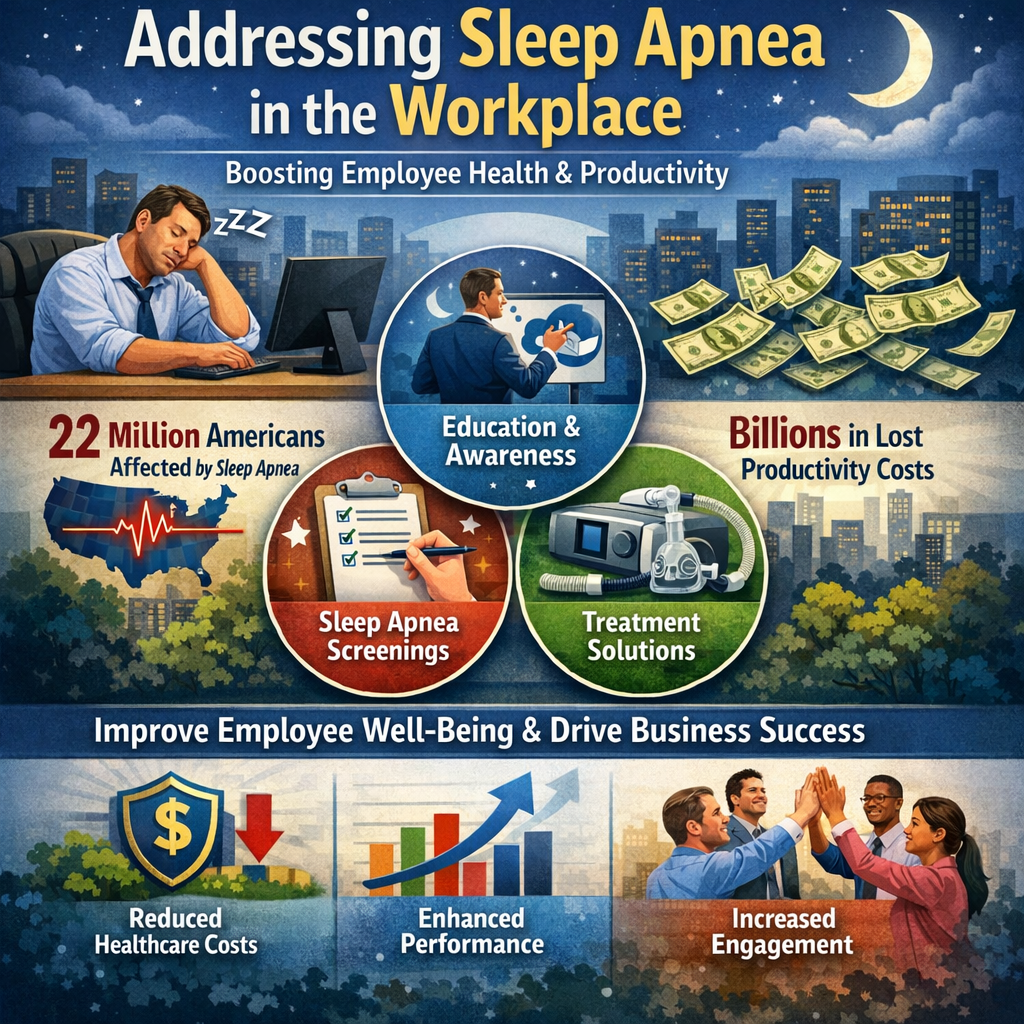
In the fast-paced world of corporate life, **employee well-being** is often overshadowed by the constant demand for productivity and efficiency. Yet, an integral component of healthy living—**sleep**—remains woefully neglected in many workplace wellness programs. While many companies have adopted strategies to encourage physical activity and nutrition education, **sleep health**, particularly awareness of sleep disorders such as **sleep apnea**, tends to be overlooked. Sleep apnea, a potentially serious condition where breathing repeatedly stops and starts during sleep, affects approximately 22 million Americans, with 80% of moderate to severe cases undiagnosed. [American Sleep Apnea Association](https://www.sleepapnea.org/learn/sleep-apnea/)
For employers, this can have significant implications. Employees who suffer from untreated sleep apnea experience chronic fatigue, reduced cognitive function, and a higher risk of accidents, leading to decreased productivity and increased healthcare costs. Understanding and addressing sleep apnea can not only improve the health and quality of life for employees but also lead to tangible benefits for businesses. According to the National Safety Council, fatigue-related productivity losses in the US cost employers $136 billion annually, pointing to a significant opportunity for improvement. [National Safety Council](https://www.nsc.org/workplace/safety-topics/fatigue)
Introducing sleep apnea awareness into **employee health programs** can serve as a game-changer. By incorporating strategies such as in-office screenings, educational seminars, and access to treatment, companies can create a supportive environment that fosters healthy sleep habits. Further expanding **employee education programs** and promoting **healthy sleep habits** can lead to a stronger commitment from employees to prioritize well-being. This, in turn, can lead to a more engaged, efficient workforce. Moreover, these initiatives can reduce long-term healthcare costs by addressing sleep apnea before it leads to more serious health issues, such as cardiovascular disease or diabetes.
As businesses seek innovative ways to enhance employee well-being, a focus on sleep health and sleep apnea awareness is not just a proactive step—it’s a necessary evolution in employee health programs. Creating a culture that prioritizes sleep can revolutionize workplace wellness, contributing to the overall success and sustainability of a company.
Features: Studies Highlighting the Importance of Sleep Apnea Awareness
The impact of **sleep apnea** on workplace productivity and overall health is supported by numerous professional and medical studies. A landmark study published in the journal *SLEEP* indicates that sleep apnea significantly affects performance, with untreated individuals performing 30% below their capacity at work. [SLEEP Journal](https://academic.oup.com/sleep/article/32/3/401/2454315) Expanded research demonstrates the need for comprehensive sleep studies and validated testing methods for early detection. This deficit equates to nearly 10 hours of lost productivity each week, highlighting the critical need for early detection and management of this sleep disorder.
Furthermore, a report by the **American Academy of Sleep Medicine** found that corporate fatigue-related accidents and errors could be reduced by up to 50% with proper sleep apnea interventions. Treating employees with continuous positive airway pressure (CPAP) therapy not only led to improved alertness and cognitive function but also contributed to a marked decrease in absenteeism and workplace mishaps. [American Academy of Sleep Medicine](https://aasm.org/resources-by-topic/fatigue)
Additionally, a study cited in the *Journal of Occupational and Environmental Medicine* underscores the financial incentives for employers. It reveals that every dollar invested in sleep-focused interventions yields an estimated return of 3.55 to 7.88 in reduced healthcare costs and enhanced productivity. [Journal of Occupational and Environmental Medicine](https://journals.lww.com/joem/Abstract/2020/01000/Economic_Evaluation_of_a_Workplace_Fatigue.11.aspx)
Another essential finding, published in the *Journal of Clinical Sleep Medicine*, states that awareness-building initiatives, such as employee education programs and sleep screenings, significantly increase diagnosis rates. This facilitates early intervention and treatment, nipping potential health complications in the bud. [Journal of Clinical Sleep Medicine](https://jcsm.aasm.org/doi/10.5664/jcsm.3880)
These studies collectively emphasize the value of integrating sleep apnea awareness into workplace wellness strategies. They demonstrate the potential not only in terms of individual health benefits but also in tangible organizational gains.
Conclusion: A Call to Action
The need for **sleep apnea awareness** in employee health programs is clear. As companies grapple with challenges related to productivity and healthcare costs, focusing on sleep health offers a viable solution. By embedding sleep apnea education and intervention into corporate health plans, businesses can unlock untapped potential in their workforce. Healthy, well-rested employees are more productive, engaged, and satisfied with their work, leading to a more robust bottom line.
Incorporating these practices requires collaboration between employers, health professionals, and employees, fostering a culture that prioritizes well-being. As we continue to evolve in our understanding of workplace health, addressing sleep apnea stands out as a critical frontier. Let’s seize this opportunity to enhance employee health programs, ensuring we prioritize one of our most fundamental needs—sleep. By doing so, we can not only transform individual lives but also revolutionize the workplace as a whole.
**Concise Summary:** Sleep apnea awareness in corporate wellness programs is crucial as it affects 22 million Americans, causing productivity loss and increased healthcare costs. Integrating screenings and education can boost engagement and cut long-term costs, supporting healthier, more productive employees. Studies highlight the benefits, including potential productivity gains and healthcare savings. Prioritizing sleep health will improve both individual and organizational outcomes.

Dominic E. is a passionate filmmaker navigating the exciting intersection of art and science. By day, he delves into the complexities of the human body as a full-time medical writer, meticulously translating intricate medical concepts into accessible and engaging narratives. By night, he explores the boundless realm of cinematic storytelling, crafting narratives that evoke emotion and challenge perspectives.
Film Student and Full-time Medical Writer for ContentVendor.com