Unveiling the Sleep Microbiome: How Gut Bacteria Impact Sleep Disorders and Treatment Pathways
Introduction
In the two decades since the **Human Microbiome Project** was launched, our understanding of the intricate and vast **bacterial ecosystem** within us has grown exponentially. One of the most fascinating avenues of this research is the relationship between our **gut microbiome** and the myriad functions it supports or undermines, including our sleep. The **sleep microbiome**—essentially, the complex community of **bacteria inhabiting our intestines** and its influence on **sleep health**—is a burgeoning field of study that is beginning to shed light on how our microbial companions might impact our rest.
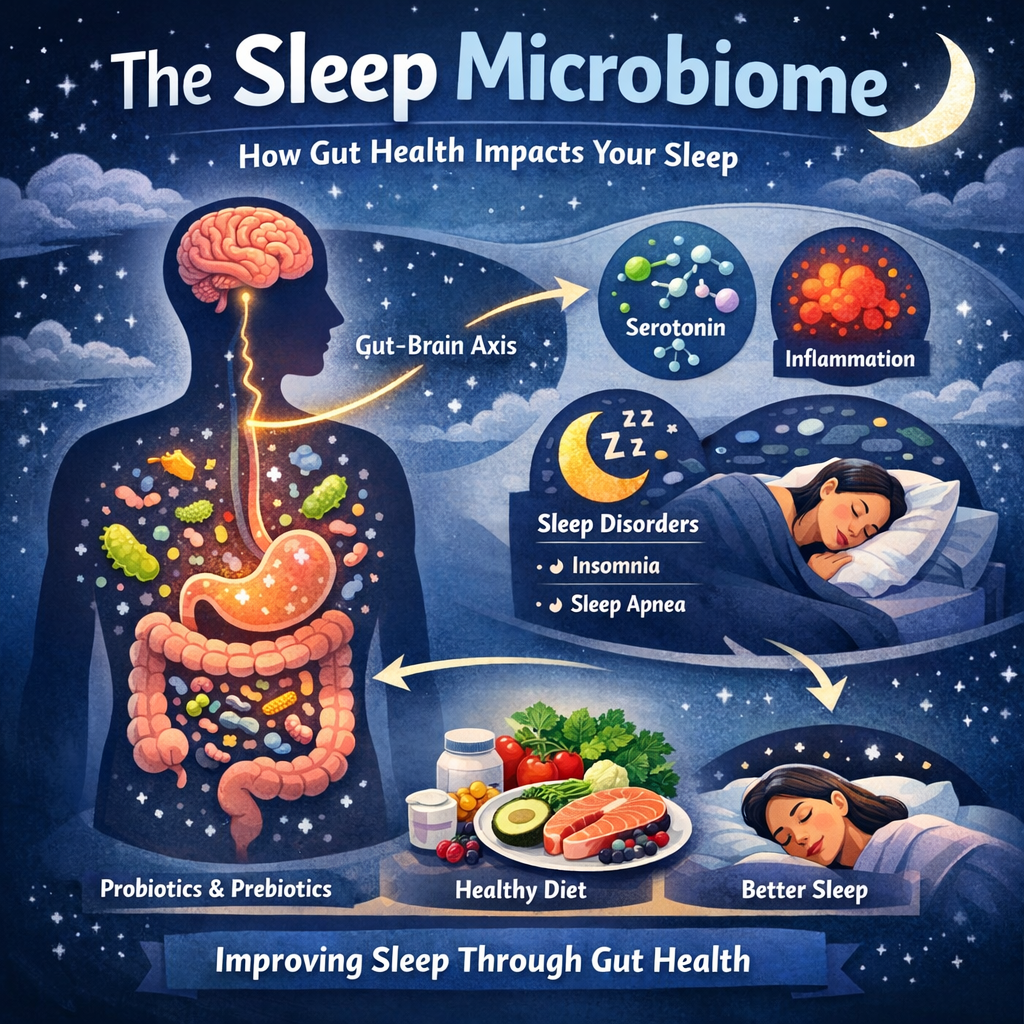
**Sleep disorders** such as **insomnia**, **sleep apnea**, and **restless leg syndrome**, among others, are remarkably prevalent, affecting millions worldwide. While an array of factors such as stress, lifestyle, and environment are known to affect sleep, recent studies suggest that the **gut microbiota** may also play a pivotal role. The **gut-brain axis**, a bidirectional communication system between the gut and the central nervous system, is a crucial component of this relationship. Here, **gut bacteria** produce metabolites that can influence brain activity, affecting sleep habits.
Our gut bacteria undertake the synthesis of neurotransmitters like **serotonin** and **gamma-aminobutyric acid (GABA)**, both of which are essential for regulating sleep cycles. Disruptions in these neurotransmitter systems are often observed in people suffering from sleep disorders. Moreover, **inflammation**—a condition rampant when our gut bacteria are out of balance—is known to interfere with sleep patterns by influencing neuroendocrine signaling pathways.
The challenges in sleep health are profound, as inadequate sleep can lead to numerous physical and psychological conditions, impacting quality of life, work productivity, and health outcomes. Therefore, understanding how gut bacteria influence sleep disorders invites new treatment avenues—potentially advocating for dietary adjustments, probiotics, prebiotics, or more tailored therapeutic microbial interventions as effective strategies for enhancing sleep health. As we delve into this complex interaction, the prospect of cultivating a healthier microbiome to foster improved sleep outcomes is not only plausible but exciting.
Features
Recent research into the **sleep microbiome** has begun to unravel exciting insights about the **gut-brain-sleep axis**, supported by a series of professional and medical studies. One pivotal study published in the journal [*Gut Microbes* in 2019](https://www.tandfonline.com/doi/full/10.1080/19490976.2019.1564038) examined the linkage between microbiome composition and sleep quality. Researchers found that specific bacterial genera, such as **Bacteroidetes**, were closely associated with the regulation of sleep architecture, including **REM** and **non-REM sleep phases**. This study underscores a potential correlation between certain microbiota compositions and sleep quality, raising questions about causality and therapeutic relevance.
Broader studies also indicate that **dietary interventions** influencing gut microbiota can impact sleep patterns. For instance, a 2020 study in the journal [*Nutrients*](https://www.mdpi.com/2072-6643/12/2/457) highlighted the role of **prebiotics** in promoting sleep-enhancing intestinal bacteria. When subjects consumed diets high in **prebiotics**—such as fibers found in **garlic**, **onions**, and **bananas**—they experienced notable improvements in **sleep efficiency** and sleep cycle dynamics.
Moreover, the balance of gut bacteria can potentially alleviate or exacerbate sleep disorders through its interaction with **inflammation pathways**. Inflammation has long been associated with sleep disruption; a study in [*Biological Psychiatry*](https://www.sciencedirect.com/science/article/pii/S0006322318307362) identified how alterations in gut microbiota could modulate inflammation and, by extension, impact sleep health. Through metabolites like **short-chain fatty acids**, a healthy gut microbiome can mitigate systemic inflammation, thereby supporting normal sleep regulation.
The burgeoning field of **psychobiotics**—the use of probiotic strains for mental and neurological health—also shows promise. A study published in [*Frontiers in Psychiatry* in 2022](https://www.frontiersin.org/articles/10.3389/fpsyt.2022.848193/full) looked at the effects of **Lactobacillus** and **Bifidobacterium** strains on sleep-deprived individuals, finding these probiotics improved sleep duration and quality after only a few weeks. These findings suggest that **probiotics** could be valuable in clinical settings to support both mental health and sleep wellness.
These studies, while emerging, point towards the potential of microbiome manipulation as a therapeutic pathway for sleep disorders. Future research is needed to uncover the exact mechanisms and optimal ways to harness this knowledge for public health benefits.
Conclusion
The exploration of the **sleep microbiome** offers promising opportunities for understanding and managing sleep health in new, innovative ways. The connection between the **gut** and sleep is becoming undeniable, with the **gut-brain axis** playing a pivotal role in how we sleep and respond to sleep disorders. As research continues to evolve, leveraging **dietary habits**, **supplements**, and targeted **probiotic therapies** to cultivate a healthful microbiome presents a compelling approach to improve sleep quality for individuals across all age groups.
While the science is still developing, the potential benefits of adjusting our microbiome to support better sleep are vast. Comprehensive studies and clinical trials will be essential in translating these findings into practical applications. For now, individuals looking to enhance their sleep health can consider incorporating **prebiotic-rich foods** or **probiotics** into their diets as a precautionary step. As medical science uncovers more about this intricate **microbial puzzle**, it is likely to pave the way for a future where sleep disorders can be managed as much through the gut as through the mind.
**Concise Summary:** The burgeoning field of the sleep microbiome highlights the significant impact of gut bacteria on sleep disorders via the gut-brain axis. Research suggests that dietary adjustments, probiotics, and prebiotics like garlic and bananas can improve sleep quality by enhancing gut health. Studies show promising links between certain bacteria and better sleep outcomes, suggesting potential new treatment pathways for sleep disorders. Understanding this intricate relationship may lead to innovative therapeutic approaches, emphasizing the management of sleep disorders through the gut as well as the mind.

Dominic E. is a passionate filmmaker navigating the exciting intersection of art and science. By day, he delves into the complexities of the human body as a full-time medical writer, meticulously translating intricate medical concepts into accessible and engaging narratives. By night, he explores the boundless realm of cinematic storytelling, crafting narratives that evoke emotion and challenge perspectives.
Film Student and Full-time Medical Writer for ContentVendor.com