Why Addressing Sleep Apnea Could Be the Key to Unlocking Human Longevity: A Medical Revolution
Introduction
In the quest for **human longevity**, sleep emerges as a vital component, yet it often remains misunderstood and undervalued. Within the realm of **sleep disorders**, **sleep apnea** stands out as a critical yet underdiagnosed condition with far-reaching implications for health and longevity. Sleep apnea is more than just disrupted sleep; it’s a chronic condition where breathing stops and starts repeatedly through the night. The most common form, **obstructive sleep apnea (OSA)**, occurs when throat muscles intermittently relax and block the airway during sleep.
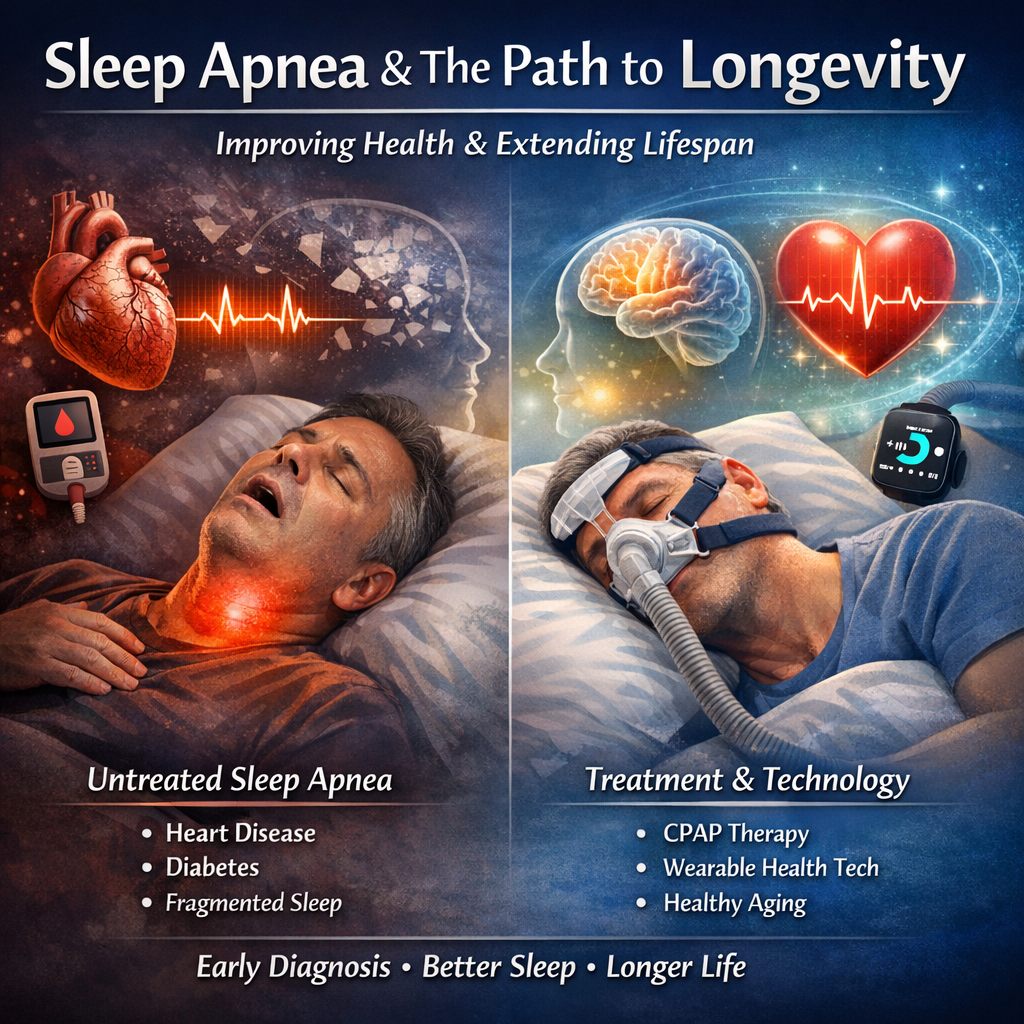
Understanding the gravity of sleep apnea begins with acknowledging its impact on overall health. Individuals suffering from sleep apnea experience fragmented sleep cycles and reduced deep sleep stages. This leads to a host of problems—ranging from daytime fatigue to more severe health risks such as **cardiovascular disease**, **diabetes**, and **hypertension**. When left untreated, sleep apnea can significantly diminish one’s quality of life and expedite the aging process due to the physiological stress it imposes on the body.
The correlation between sleep apnea and longevity is an emerging focus of medical research. Identifying and treating sleep apnea could not only enhance life quality but potentially extend one’s lifespan. Recent developments in sleep medicine suggest that effective management of sleep apnea can lead to a reduction in biomarkers for chronic diseases, thereby contributing to healthier aging.
The implications of untreated sleep apnea stretch beyond individual health, affecting societal well-being and healthcare systems. Given that a significant portion of the population remains undiagnosed, efforts to raise awareness and improve diagnosis rates are essential. Addressing sleep apnea could, therefore, ignite a public health revolution with the potential to improve **life expectancy** across populations.
In this article, we’ll delve into the latest studies and technological advancements in sleep apnea research, exploring how tackling this condition can pave the way for a longer, healthier life. By understanding and addressing sleep apnea, we unlock more than restful nights; we open doors to a future where longevity and life quality are not at odds, but in harmony.
Features
Recent studies underscore the profound impact of sleep apnea on health and longevity. A pivotal study published in the **American Journal of Respiratory and Critical Care Medicine** found that untreated sleep apnea significantly increased **all-cause mortality risk**. The study highlighted that severe obstructive sleep apnea was associated with more than double the mortality rate compared to those without the condition. [Journal link here](https://www.atsjournals.org).
Another groundbreaking study from the **European Heart Journal** linked sleep apnea to an increased risk of cardiovascular events, such as **heart attack** and **stroke**. It emphasized that the repetitive dips in oxygen levels during apneic events contribute to **endothelial dysfunction**, a precursor for many cardiovascular diseases. This research calls for prioritizing early detection and continuous positive airway pressure (**CPAP therapy**) as interventions to mitigate these risks. [European Heart Journal link here](https://academic.oup.com).
Technological advancements are also contributing to better management of sleep apnea. **Smart devices** equipped with **artificial intelligence** now offer promising avenues for both diagnosis and management, allowing individuals to monitor their sleep apnea symptoms at home accurately. A study out of **Stanford University** demonstrated that **wearable technology** could accurately screen for sleep apnea, offering a non-invasive and effective tool for early diagnosis. [Stanford study link here](https://sleep.stanford.edu).
Moreover, **genetics** play a critical role in understanding sleep apnea’s impact on longevity. Research published in the journal **Sleep Medicine** explored genetic predispositions to sleep apnea and found correlations with other age-related health conditions. This insight is pushing the frontier of **precision medicine**, whereby treatments are tailored based on individual genetic profiles for more effective management of sleep apnea. [Sleep Medicine Journal link here](https://www.journalsleep.org).
These studies collectively indicate that by addressing sleep apnea through early diagnosis, tailored treatments, and innovative technologies, we could significantly influence individual health outcomes and, by extension, lifespan.
Conclusion
Addressing sleep apnea offers a tangible pathway toward enhancing **human longevity**. The intersection of sleep health and chronic disease management suggests that early detection and treatment of sleep apnea could mitigate its detrimental health effects and ultimately extend life expectancy. The integration of advanced technologies and personalized treatments into routine healthcare underscores a revolutionary approach to combating this silent yet pervasive condition. Moreover, societal awareness and education about sleep apnea must rise to encourage proactive health measures among individuals.
In harnessing the potential for improved longevity through addressing sleep apnea, we embark on a journey toward a future where **healthy aging** is attainable for all. The importance of sleep, particularly in the context of sleep apnea, is gaining recognition as an integral part of the longevity puzzle. By shining a light on this condition and leveraging medical and technological advancements, we envision not just longer lives, but lives lived in vitality and health.
While many factors influence longevity, it’s becoming clear that sleep, particularly the management of sleep apnea, is a frontier in the pursuit of a longer, healthier life. As research continues to unveil the connections between sleep health and lifespan, addressing sleep apnea may indeed prove to be a crucial key in unlocking the potential of human longevity.
**Summary:** Addressing sleep apnea is crucial for improving both healthspan and lifespan. The condition, linked to increased risks of cardiovascular issues and mortality, can diminish quality of life. Research highlights the importance of early diagnosis using smart technology and precision medicine to manage sleep apnea effectively. By prioritizing treatment and raising societal awareness, sleep apnea can be transformed from a silent threat into a key component of public health efforts, ultimately enhancing human longevity and vitality.

Dominic E. is a passionate filmmaker navigating the exciting intersection of art and science. By day, he delves into the complexities of the human body as a full-time medical writer, meticulously translating intricate medical concepts into accessible and engaging narratives. By night, he explores the boundless realm of cinematic storytelling, crafting narratives that evoke emotion and challenge perspectives.
Film Student and Full-time Medical Writer for ContentVendor.com