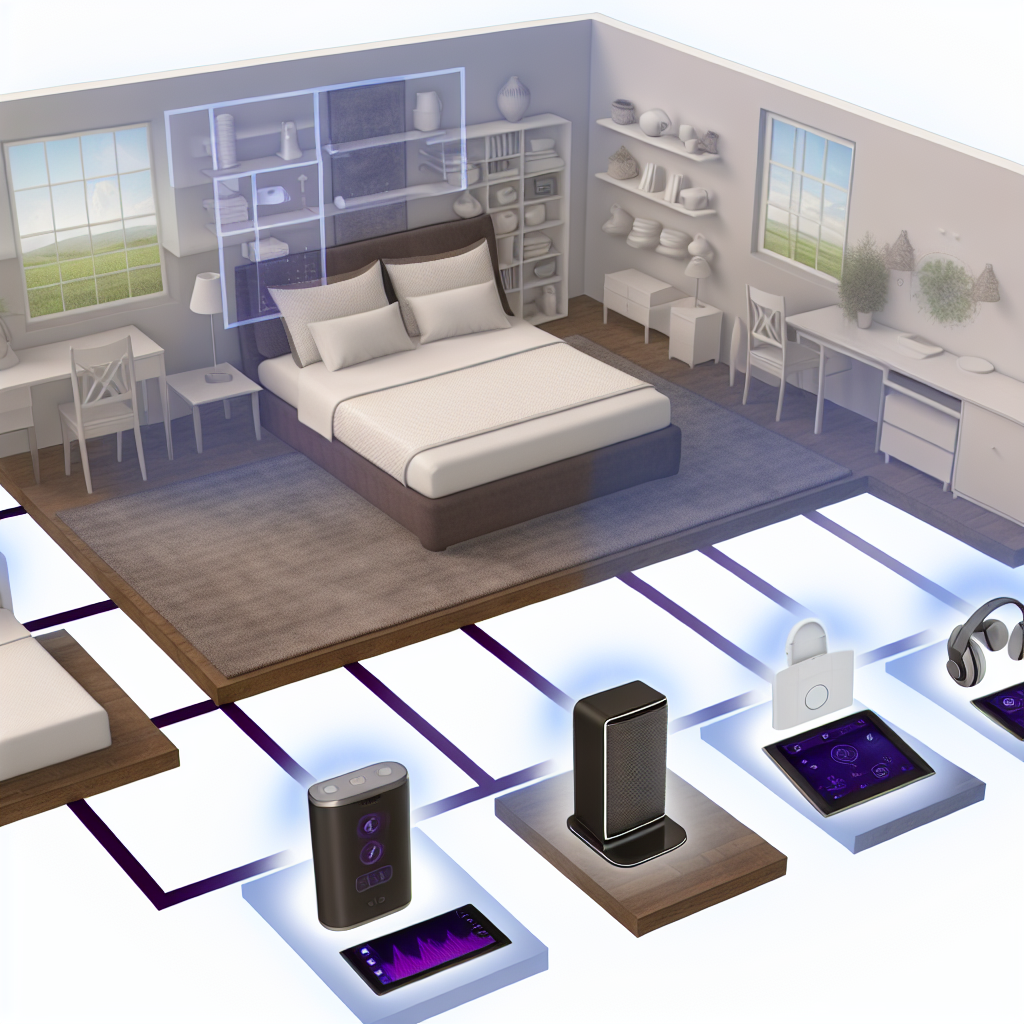
AI-Powered Sleep Diagnostics Will Transform Healthcare by 2025
Introduction
The pursuit of enhancing **sleep health** is a prevalent concern transcending age demographics globally. As the recognition of sleep’s critical role in overall **health** broadens, the imperative for advanced, more accurate **diagnostic tools** becomes increasingly evident. Enter **artificial intelligence (AI)**, a technological marvel revolutionizing countless industries, healthcare included. The integration of **AI in sleep diagnostics** is not merely a step forward; it is a transformative leap that could redefine **healthcare by 2025**.
Traditional sleep diagnostics primarily involve **polysomnography**, a comprehensive test used to diagnose sleep disorders. However, this method often requires patients to undergo examinations in unfamiliar environments such as sleep labs, which may not reflect their natural sleep patterns. Moreover, the logistics, costs, and inconvenience associated with these methods can be prohibitive. According to the American Sleep Association, around 50-70 million adults in the United States have a sleep disorder, necessitating innovation in diagnostic approaches that can cater to a broader audience efficiently.
**AI-powered sleep diagnostics** promise a paradigm shift. By utilizing vast amounts of data, **AI** can provide a more precise analysis of **sleep patterns** and disturbances. This technology can process and interpret complex biological signals with far greater speed and accuracy than traditional methods. **Machine learning algorithms** can identify subtle irregularities in sleep data that might elude human analysis, leading to earlier detection and treatment of **sleep disorders**.
Beyond diagnostics, **AI** facilitates the personalization of **treatment plans**. By understanding individual sleep habits and needs through continuous monitoring, AI systems can recommend lifestyle adjustments and therapies tailored to each patient. This personalized approach can vastly improve sleep health outcomes by not just treating but preventing issues.
The global AI in **healthcare market** demonstrates promising growth, with **AI technologies** becoming increasingly sophisticated and accessible. By 2025, it is projected that **AI** will have a profound impact on **sleep diagnostics**, contributing to a more precise, personalized, and proactive approach in managing sleep health, thus transforming healthcare as we know it.
Features
Recent studies and professional insights underscore the transformative potential of **AI in sleep diagnostics**. The Journal of Clinical Sleep Medicine published a study highlighting **AI’s** ability to enhance accuracy in diagnosing **obstructive sleep apnea** (OSA), a common but often misdiagnosed sleep disorder. By employing **deep learning algorithms**, the study demonstrated that **AI** could reduce the dependency on subjective interpretation by human specialists, thereby minimizing diagnostic errors.
Another pivotal study in the field came from the Mayo Clinic, where researchers utilized **AI algorithms** to analyze overnight oximetry data for detecting **OSA** with remarkable sensitivity and specificity. The implications of these findings are significant, suggesting that non-invasive, home-based **diagnostic tools** powered by **AI** could become standard practice, making **sleep diagnostics** accessible to a broader population.
A collaboration between Google and the University of California, San Francisco (UCSF) further exemplifies **AI’s** potential. The research project developed an **AI model** capable of predicting **sleep disturbances** by analyzing non-invasive signals and data from wearables. This model achieved comparable accuracy to traditional sleep studies conducted in clinical settings, indicating a future where at-home monitoring could replace the need for in-lab diagnostics.
Additionally, **AI’s** predictive capabilities are being harnessed to proactively manage **sleep health**. **AI systems** can predict potential sleep issues by analyzing trends and anomalies in data over time. For instance, **machine learning models** can anticipate the development of chronic **insomnia** based on stress levels, lifestyle patterns, and other contributing factors, enabling preemptive interventions.
The collective findings of these studies emphasize the revolutionary potential of **AI** in transforming sleep diagnostics. By 2025, not only will **AI** enhance diagnostic precision and accessibility, but it will also facilitate a more nuanced understanding of **sleep health**, paving the way for innovations in treatment strategies.
Conclusion
As we edge closer to 2025, the integration of **AI** into **sleep diagnostics** stands poised to transform healthcare. The application of **AI technologies** offers unprecedented opportunities to enhance diagnostic accuracy and accessibility, thereby addressing the limitations inherent in traditional sleep studies. Moreover, **AI’s** capacity for personalization and predictive analytics holds promise for proactive **sleep health** management, potentially reducing the prevalence of sleep disorders and improving quality of life. The ongoing advancements in **AI models**, coupled with growing investment in healthcare innovation, suggest a future where **sleep diagnostics** will be more efficient and effective than ever before.
By embracing **AI-powered solutions**, healthcare providers can ensure a more comprehensive approach to diagnosing and managing **sleep disorders**, fundamentally altering the landscape of **sleep health** for years to come. In doing so, they not only enhance individual health outcomes but also contribute to the overarching goal of advancing global health standards.
References
1. [American Sleep Association – Sleep Statistics and Research](https://www.sleepassociation.org/)
2. [Journal of Clinical Sleep Medicine – AI and Sleep Apnea Diagnosis](https://jcsm.aasm.org/)
3. [Mayo Clinic Study on AI and Sleep Apnea](https://www.mayoclinicproceedings.org/)
4. [Google and UCSF AI Sleep Study](https://www.nature.com/articles/s41746-019-0171-7)
Concise Summary
The integration of **AI** into **sleep diagnostics** promises to revolutionize healthcare by 2025. By offering precision, personalization, and proactive management, **AI technologies** enhance the accuracy and accessibility of diagnosing and treating **sleep disorders**. Recent studies show AI’s potential in improving diagnostic processes, particularly in home settings, making **sleep health management** more comprehensive and individualized. As **AI** continues to develop, it will enable healthcare providers to move beyond traditional methods, thus reshaping the future of sleep health and contributing to global health improvements.

Dominic E. is a passionate filmmaker navigating the exciting intersection of art and science. By day, he delves into the complexities of the human body as a full-time medical writer, meticulously translating intricate medical concepts into accessible and engaging narratives. By night, he explores the boundless realm of cinematic storytelling, crafting narratives that evoke emotion and challenge perspectives.
Film Student and Full-time Medical Writer for ContentVendor.com