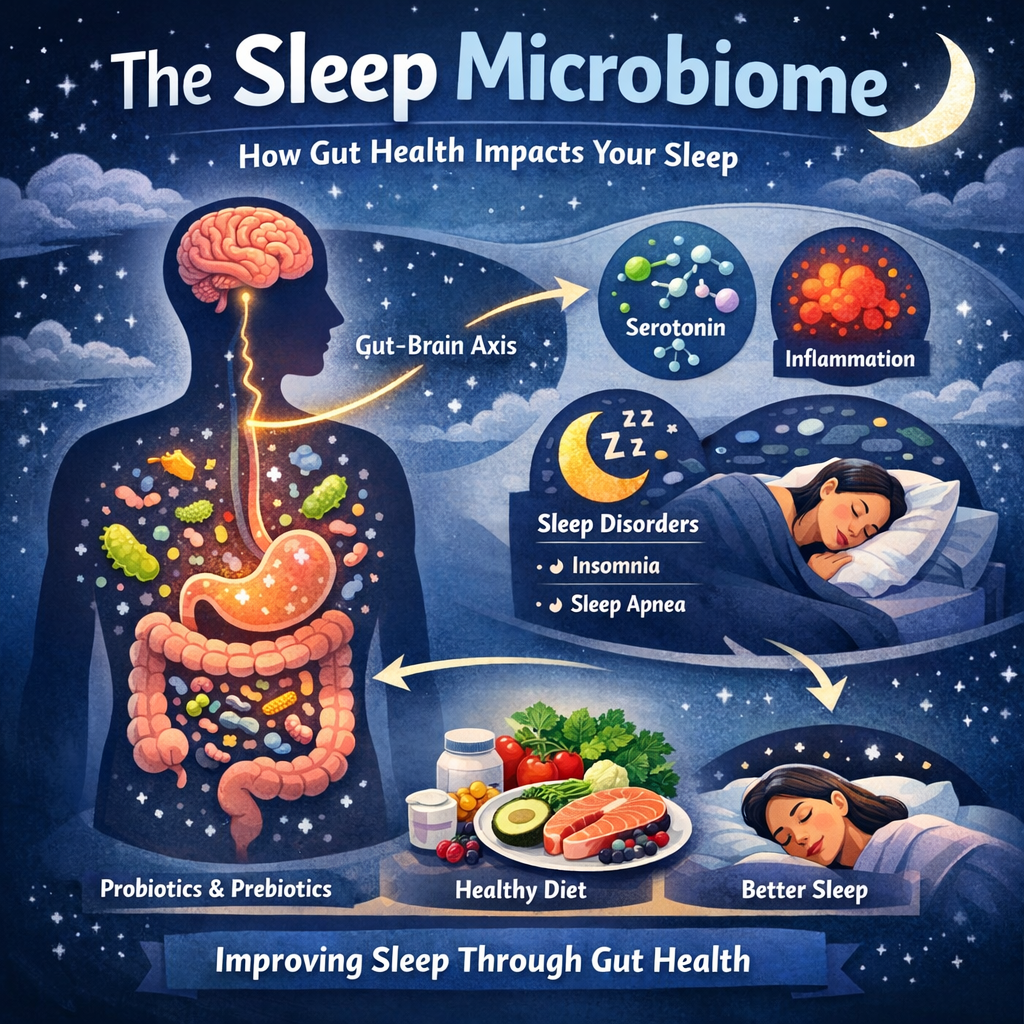
The Hidden Sleep Crisis: How Micronutrient Deficiencies Are Sabotaging Your Breathing Health
Introduction
In today’s fast-paced world, achieving **optimal health** is increasingly challenging, especially concerning **sleep quality**. Millions constantly struggle with **sleep disturbances**, a growing issue. While common narratives focus on **screen time**, stress, and irregular lifestyles, an overlooked factor significantly influencing sleep health is **micronutrient deficiencies**. **Micronutrients**—such as vitamins, minerals, and trace elements—are crucial for numerous bodily functions, including those impacting **breathing** and thus sleep quality.
**Breathing health** is vital for good sleep as it impacts the oxygenation of the blood and carbon dioxide removal, affecting overall body functions, including the brain. Conditions like **sleep apnea** and related respiratory challenges during sleep are linked to various micronutrient **imbalances**. Deficiencies in **vitamin D**, **magnesium**, and certain **B vitamins** are associated with compromised **respiratory muscles** and disturbances in **circadian rhythms**, essential for a healthy sleep cycle.
**Inadequate micronutrient** levels can weaken the body’s capacity to perform essential involuntary functions during sleep, such as regulating breathing patterns and maintaining open airways. This dysfunction can lead to fragmented sleep, frequent awakenings, and reduced time spent in restorative sleep stages. These disturbances impact not only **daytime alertness** and cognitive functioning but may also contribute to long-term health issues like **cardiovascular diseases** and **metabolic disorders**.
Though dietary choices are crucial for ensuring sufficient intake of these nutrients, many people unknowingly operate at a deficit due to poor dietary habits, increased nutritional needs during stress, or conditions like **gastrointestinal disturbances** impairing nutrient absorption. It’s essential to raise awareness of these hidden deficiencies, as addressing them could significantly improve sleep health and breathing efficiency.
Features
Recent studies emphasize the profound impact of **micronutrients** on sleep and respiratory health. For example, a [study published in the journal Respiratory Research](https://respiratory-research.biomedcentral.com/) identifies a clear link between **vitamin D deficiency** and **obstructive sleep apnea (OSA)**. Researchers found individuals with lower vitamin D levels were more likely to exhibit exacerbated OSA symptoms, including increased **apnea-hypopnea index scores**, indicating repeated breathing cessation episodes during sleep.
**Magnesium**, another essential micronutrient, is fundamental for proper muscle function and avoiding sleep disturbances. A [2012 study in the Journal of Research in Medical Sciences](https://jrms.mui.ac.ir/) examined magnesium supplementation effects on elderly subjects with **insomnia**. Results showed significant improvements in sleep duration and efficiency, supporting magnesium’s role in enhancing muscle relaxation and reducing sleep apnea by keeping airway muscles less constricted.
Additionally, **B vitamins**, notably **B6**, **B12**, and **folate**, contribute to neurotransmitter synthesis regulating sleep patterns. Findings published in the [International Journal of Psychophysiology](https://www.journals.elsevier.com/international-journal-of-psychophysiology) correlate deficiencies in these vitamins with disturbed sleep architecture and poor sleep quality. The research underscores their role in sustaining the nervous system and potential therapeutic use in addressing insomnia and restless sleep caused by neuromuscular instability.
Furthermore, **zinc**, a lesser-discussed mineral, also influences sleep health. A study in the journal [Nutrients](https://www.mdpi.com/journal/nutrients) concludes that adequate zinc levels improve sleep regulation and reduce oxidative stress in respiratory pathways, crucial for maintaining healthy breathing during sleep.
These studies highlight the significance of prioritizing sufficient micronutrient intake through diet, lifestyle modifications, and possibly professional supplementation. A proactive approach could be pivotal in addressing the root causes of sleep-related breathing issues.
Conclusion
Improving sleep health extends beyond merely practicing good “sleep hygiene”; it requires comprehensively understanding and addressing our body’s nutritional needs. As explored, micronutrient deficiencies can severely undermine breathing health during sleep by affecting muscle function, airway stability, and neurological balance. Acknowledging the link between these nutrients and respiratory efficiency enables targeted interventions; thus, the next step in combating sleep-related issues may lie in a personalized nutrition approach. Simple **dietary changes**, increased nutrient-rich food consumption, and professional supplementation could lead to better sleep and enhanced daytime vitality. Addressing the hidden sleep crisis begins with replenishing essential nutrient levels, ensuring each breath during the night supports a restful and restorative sleep.
Summary
This article delves into how **micronutrient deficiencies** like those in **vitamin D**, **magnesium**, and **B vitamins** impact respiratory health during sleep, influencing conditions such as **sleep apnea**. These deficiencies can lead to poor sleep quality and broader health implications, including cardiovascular issues. Studies highlight the role of boosting these nutrients through diet or supplementation to improve **breathing efficiency** and sleep health. Emphasizing the balance of these nutrients could be crucial in addressing sleep disturbances, suggesting that personalized nutrition approaches are essential for achieving better sleep quality and overall well-being.

Dominic E. is a passionate filmmaker navigating the exciting intersection of art and science. By day, he delves into the complexities of the human body as a full-time medical writer, meticulously translating intricate medical concepts into accessible and engaging narratives. By night, he explores the boundless realm of cinematic storytelling, crafting narratives that evoke emotion and challenge perspectives.
Film Student and Full-time Medical Writer for ContentVendor.com