Beyond the CPAP: How AI is Revolutionizing Sleep Apnea Diagnosis and Treatment
Introduction
**Sleep apnea** is a common yet potentially serious sleep disorder characterized by repeated interruptions in breathing during sleep. These interruptions can lead to a wide range of health issues, including cardiovascular problems, daytime fatigue, and reduced quality of life. Traditionally, the management of sleep apnea has centered around Continuous Positive Airway Pressure (**CPAP**) therapy. While CPAP is often effective, it presents drawbacks such as user discomfort and compliance issues. Enter the era of **artificial intelligence (AI)**, a force that is revolutionizing various fields, including healthcare. AI is now emerging as a transformative tool in the diagnosis and treatment of sleep apnea, offering new hope to millions of sufferers worldwide.
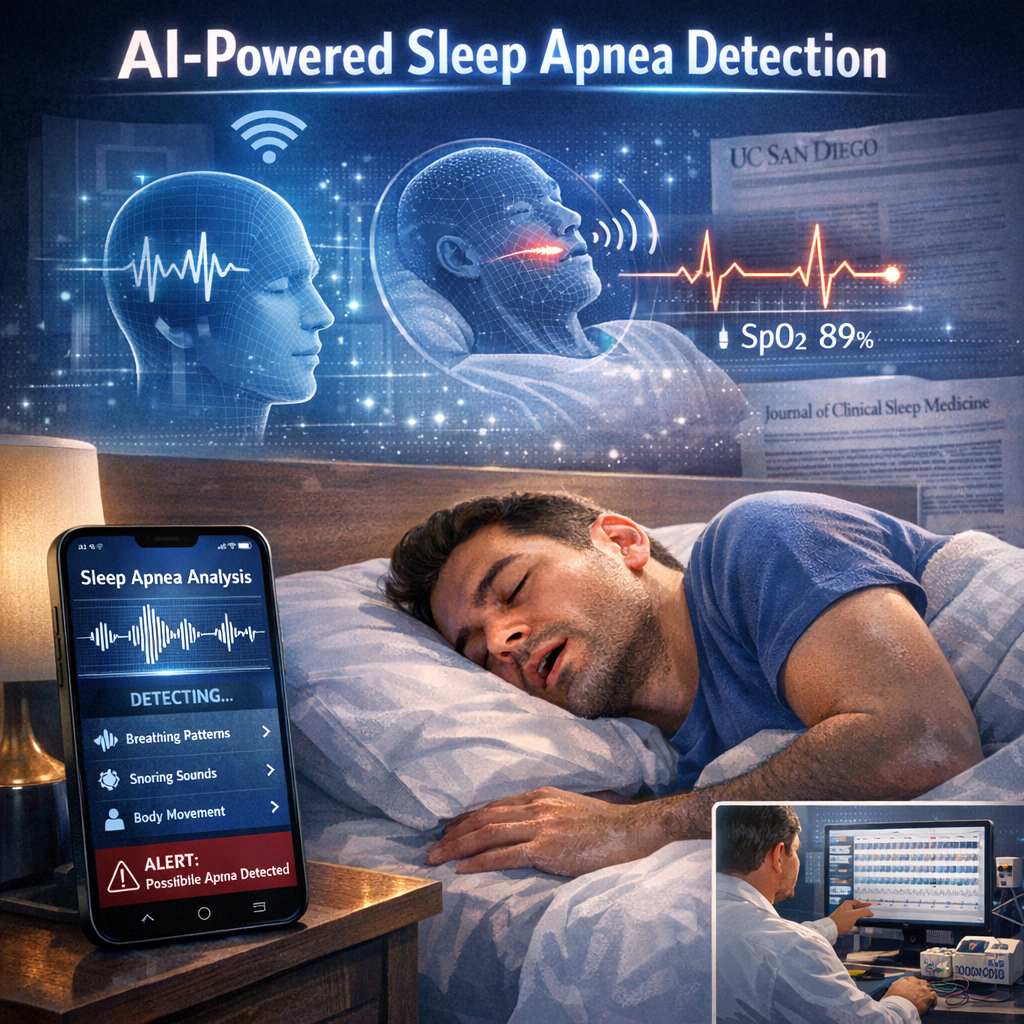
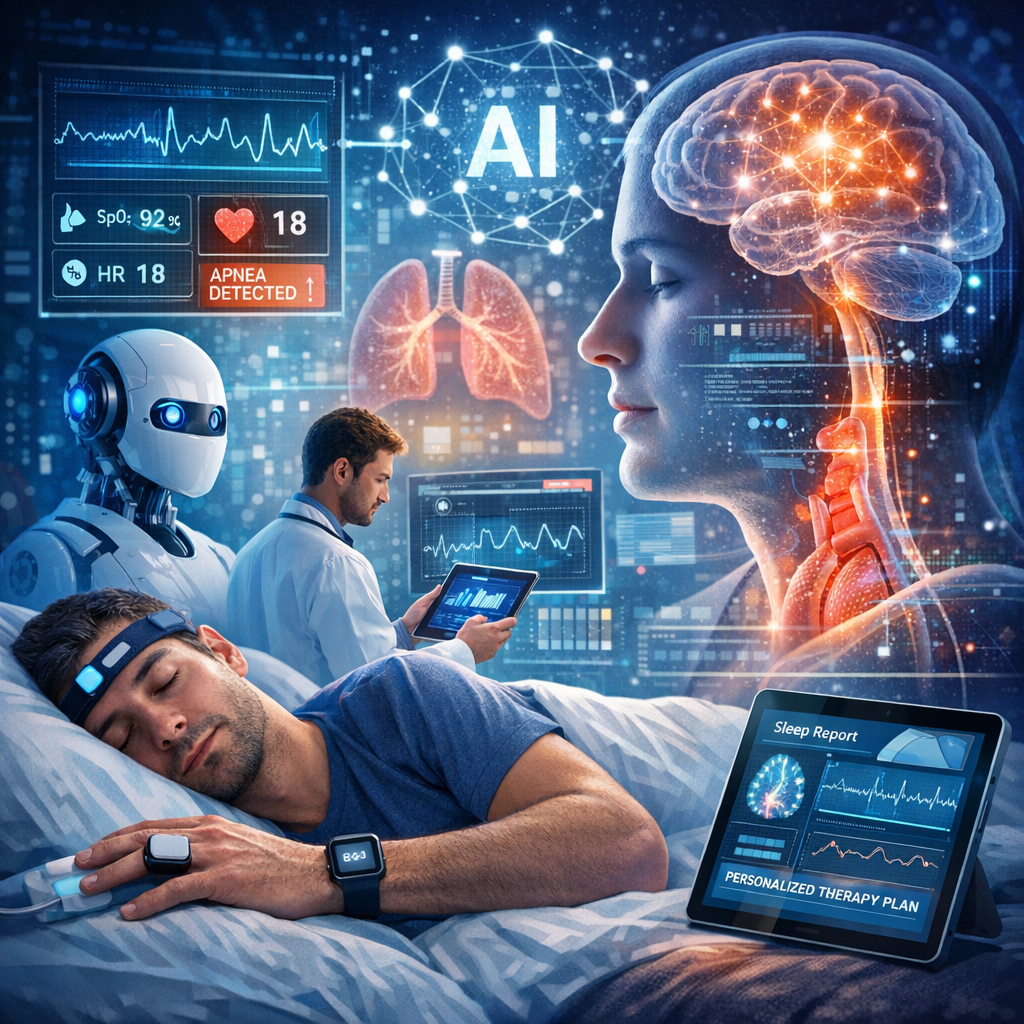
AI technologies are enhancing traditional diagnostic methods by providing more accurate, faster, and less invasive solutions. For instance, AI algorithms can analyze complex sleep data, such as those obtained from polysomnography or home sleep tests, with greater precision than ever before. This not only improves diagnostic accuracy but also helps in tailoring personalized treatment plans. Furthermore, **AI-powered wearable devices** are being developed to continuously monitor patients in real-time, providing insights into sleep patterns and apnea events without the need for cumbersome equipment.
In addition to improving diagnostics, AI is reshaping treatment strategies. By analyzing vast amounts of patient data, AI can identify patterns and predict which treatments will be most effective for individual patients. This shift towards **personalized medicine** holds the potential to significantly enhance treatment outcomes and patient satisfaction. Moreover, **machine learning models** are being developed to predict the onset of apnea events and make real-time adjustments to therapy, such as altering CPAP settings or administering neuromodulation therapies, thereby minimizing the burden on patients.
The integration of AI in sleep medicine is not only promising better outcomes for patients but is also paving the way for more efficient healthcare systems. As these technologies continue to evolve, they promise to offer more accessible, affordable, and patient-friendly solutions, surpassing the limitations of traditional approaches. Thus, we are standing on the brink of a new era in sleep apnea management, driven by the power of artificial intelligence.
Features
A number of professional and medical studies have highlighted the transformative potential of AI in diagnosing and treating sleep apnea. A notable study published in the *Journal of Clinical Sleep Medicine* explored the use of a deep learning algorithm to analyze polysomnography data. The researchers developed a **convolutional neural network** that demonstrated superior accuracy in detecting sleep apnea events compared to traditional scoring by sleep technicians. The study concluded that such AI-driven approaches could significantly streamline the diagnostic process, reduce the burden on sleep laboratories, and improve diagnostic consistency.
Another compelling development is the use of AI in **wearable technology**. A study in the *Nature and Science of Sleep* examined an AI-driven wearable device designed to detect sleep apnea events. The device employed advanced machine learning algorithms to analyze biometric data such as heart rate variability, respiratory patterns, and body movements. The study found that the device was not only effective in identifying apnea events but also in predicting the severity of the condition, offering a viable alternative to conventional in-lab sleep studies.
AI is also being integrated into treatment modalities. A pilot study conducted by researchers at the University of California investigated an AI-based adaptive servo-ventilation technology designed to optimize CPAP therapy in real-time. The system utilized predictive analytics to adjust airflow pressure in response to detected changes in the patient’s breathing patterns. Results indicated that this individualized approach improved adherence and therapeutic outcomes, highlighting the potential for AI to refine existing treatment options.
Moreover, a large-scale analysis published in the *Sleep Medicine Reviews* journal reviewed various AI applications in sleep medicine, emphasizing their role in facilitating personalized therapy. The review underscored how AI can harness data from electronic health records and patient feedback to optimize treatment plans, demonstrating its ability to transform the management of sleep apnea from a one-size-fits-all approach to a more individualized form of care.
These studies and emerging technologies illustrate that AI is more than just a futuristic concept in sleep medicine; it is a present-day reality with the potential to reshape how we diagnose and treat sleep apnea.
Conclusion
The integration of artificial intelligence into the diagnosis and treatment of sleep apnea marks a significant advancement in sleep medicine. From enhancing diagnostic precision with deep learning algorithms to offering personalized treatment plans through predictive analytics, AI is poised to address some of the most pressing challenges in managing sleep apnea. By providing more accurate, faster, and hassle-free solutions, AI not only promises to improve patient outcomes but also stands to relieve healthcare systems burdened by traditional approaches. As research and technology continue to evolve, the potential for AI to revolutionize sleep medicine becomes increasingly plausible. Looking ahead, patients and healthcare providers can expect a future where **sleep apnea management** is more efficient, personalized, and accessible than ever before, ushering in a new era of sleep health.
**Concise Summary**
Artificial intelligence is transforming sleep apnea management by enhancing both diagnosis and treatment. AI technologies enable faster and more precise analysis of complex sleep data, while AI-powered wearables offer real-time monitoring, improving patient care without cumbersome equipment. Additionally, AI facilitates personalized treatment strategies by analyzing patient data to predict effective therapies. AI-driven approaches improve CPAP therapy adherence and outcomes while offering viable alternatives to conventional sleep studies. As these technologies evolve, AI promises to make sleep apnea management more efficient, personalized, and accessible, revolutionizing the future of sleep medicine.

Dominic E. is a passionate filmmaker navigating the exciting intersection of art and science. By day, he delves into the complexities of the human body as a full-time medical writer, meticulously translating intricate medical concepts into accessible and engaging narratives. By night, he explores the boundless realm of cinematic storytelling, crafting narratives that evoke emotion and challenge perspectives.
Film Student and Full-time Medical Writer for ContentVendor.com