Revolutionizing Sleep Medicine: How AI-Powered Breath Analysis is Breaking New Ground in Diagnosing Sleep Apnea
Introduction
In recent years, the realm of **sleep medicine** has been significantly transformed by technological advancements, particularly through the integration of **artificial intelligence (AI)**. As sleep disorders like **sleep apnea** continue to affect millions globally, innovative solutions are vital for improving diagnostic accuracy and treatment efficacy. One groundbreaking development at the intersection of AI and **respiratory health** is **AI-powered breath analysis**. By leveraging artificial intelligence, this cutting-edge technology offers a **non-invasive**, efficient, and highly accurate method for diagnosing sleep apnea, a condition characterized by repeated interruptions in breathing during sleep.
Sleep apnea is a condition that affects people of all ages, yet it often goes undiagnosed due to the traditionally cumbersome testing methods, such as **polysomnography** conducted in sleep labs. These tests, while comprehensive, can be inconvenient, expensive, and uncomfortable, requiring a person to sleep overnight with various sensors attached to their body in an unfamiliar environment. Consequently, many individuals either avoid getting evaluated or learn to live with the condition, which can lead to severe health risks including **hypertension**, **cardiovascular disease**, and diminished quality of life.
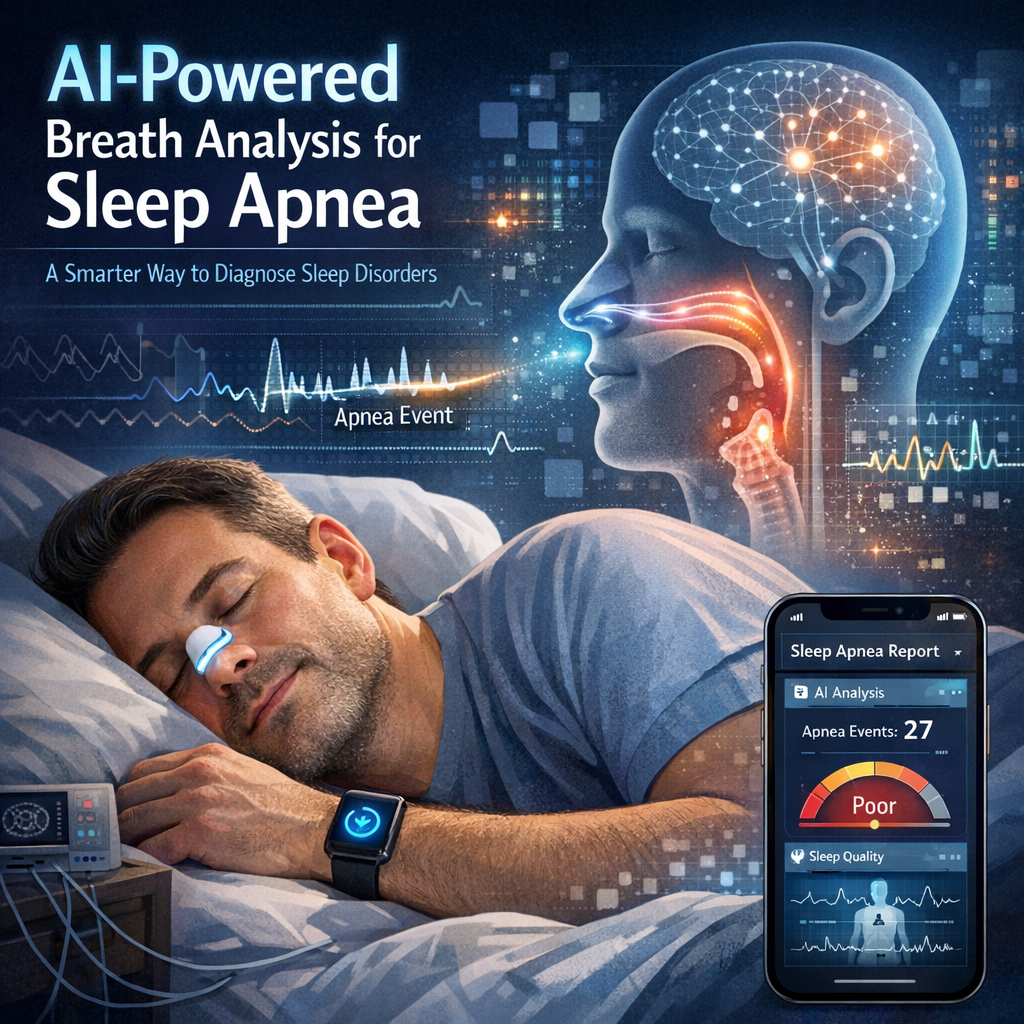
**AI-powered breath analysis** emerges in this landscape as a promising alternative. By analyzing patterns in a person’s breath through advanced algorithms and machine learning techniques, this technology can detect subtle respiratory anomalies indicative of sleep apnea. The process is simple: a patient breathes into a device that captures breath data, which the AI then processes to produce a sleep apnea diagnosis. This method reduces the need for invasive procedures, lowers costs, and allows for rapid and accurate diagnosis, making it accessible to a broader population.
Moreover, as AI continues to evolve, these systems are becoming more refined, capable of accommodating variances across different demographics and integrating data from wearable devices. By enhancing the precision and availability of sleep apnea diagnostics, **AI-powered breath analysis** ultimately has the potential to revolutionize sleep health, offering patients more personalized and timely intervention strategies. As we move towards a future where AI enables us to understand our sleep patterns and disorders more deeply, possibilities seem endless, significantly improving health outcomes.
Features
The application of **AI** in the medical field, particularly in diagnosing **sleep apnea**, is backed by various professional and medical studies emphasizing its potential. A study published in the journal *Chest* explores the use of machine learning algorithms in analyzing respiratory patterns, demonstrating an accuracy rate comparable to traditional polysomnography for diagnosing **obstructive sleep apnea (OSA)** [source](https://journal.chestnet.org/article/S0012-3692(20)34202-3/fulltext). This research underscores the capability of AI to enhance diagnostic processes while maintaining reliability.
Additionally, the University of California, San Diego conducted a significant study wherein researchers developed an AI system that successfully analyzed breath sounds recorded from a smartphone during sleep. The system achieved a diagnostic accuracy of over 90% when identifying sleep apnea events, illustrating the viability of using everyday technology alongside AI to monitor sleep health [source](https://health.ucsd.edu/news/releases/Pages/2020-08-10-ai-tool-analyzes-sounds-for-sleep-apnea-diagnosis.aspx).
Further validating these findings, the European Respiratory Journal published research investigating the fusion of AI with wearable technology for sleep apnea diagnosis. Through the evaluation of bio-signals like **oxygen saturation** and **heart rate variability**, AI algorithms could classify sleep apnea with a high degree of precision, emphasizing the potential of integrating AI into existing health tech ecosystems [source](https://erj.ersjournals.com/content/56/5/1902058).
These studies collectively highlight the promise of **AI-powered breath analysis** in detecting sleep apnea. They focus on the efficiency, accuracy, and cost-effectiveness of AI technologies, making them a viable alternative to traditional diagnostic methods. In addition to improving accessibility, AI-driven solutions can also continuously learn and adapt, providing personalized insights into each patient’s condition, leading to more tailored treatments.
Conclusion
As **AI-powered breath analysis** continues to evolve, it is poised to revolutionize how **sleep apnea** is diagnosed and managed. The implementation of AI in breath analysis not only simplifies the diagnostic process but also broadens access to effective and timely intervention for individuals suffering from sleep apnea. With the integration of AI into daily life through wearables and smartphones, monitoring sleep health could become as easy as tracking daily steps or calories.
Ultimately, the fusion of advanced technology with sleep medicine heralds a new era for diagnosing and treating sleep disorders, ensuring a healthier, more restful future for individuals across the globe. As this technology advances, it will inevitably lead to better health outcomes and a deeper understanding of sleep-related conditions. This transformation underscores a commitment to innovation in healthcare, paving the way for cutting-edge diagnostics and personalized care strategies that meet the needs of patients in a modern world.
Concise Summary
AI-powered breath analysis is revolutionizing sleep medicine by offering a non-invasive, efficient, and accurate method to diagnose sleep apnea. Traditional diagnosis through polysomnography is cumbersome and costly, causing many cases to go undiagnosed. AI breath analysis employs advanced algorithms to detect respiratory anomalies via simple breath data, enhancing accessibility and precision. Backed by multiple studies, AI exhibits similar accuracy to traditional methods and integrates with daily technologies, promising a significant transformation in diagnosing and managing sleep apnea. This innovation leads to personalized, timely interventions, ensuring improved health outcomes worldwide.

Dominic E. is a passionate filmmaker navigating the exciting intersection of art and science. By day, he delves into the complexities of the human body as a full-time medical writer, meticulously translating intricate medical concepts into accessible and engaging narratives. By night, he explores the boundless realm of cinematic storytelling, crafting narratives that evoke emotion and challenge perspectives.
Film Student and Full-time Medical Writer for ContentVendor.com