Unlocking Hidden Health Risks: How Sleep Disorders Are the Silent Culprits Behind Your Company’s Bottom Line
**Introduction**
**Sleep** is a crucial pillar of health, often overlooked in both personal lives and professional environments. Yet in recent years, the spotlight has increasingly been cast on **sleep disorders**, revealing a crack in the foundation of corporate productivity and **profitability**. As an organization striving to maximize efficiency and employee satisfaction, understanding the hidden impacts of sleep on your company’s bottom line is not just beneficial; it’s essential.
In today’s fast-paced work environment, employees are frequently pressured to sideline sleep to meet demands, favoring long hours over rest. This culture has led to an alarming rise in **sleep disorders** such as **insomnia**, **sleep apnea**, and **restless leg syndrome**, which are quietly wreaking havoc on workplace productivity. According to the **American Academy of Sleep Medicine**, more than 50 million Americans suffer from sleep disorders, a significant portion of which remain undiagnosed and untreated. The implications of these disorders extend far beyond individual health, seeping into company culture, employee efficiency, and ultimately, **fiscal performance**.
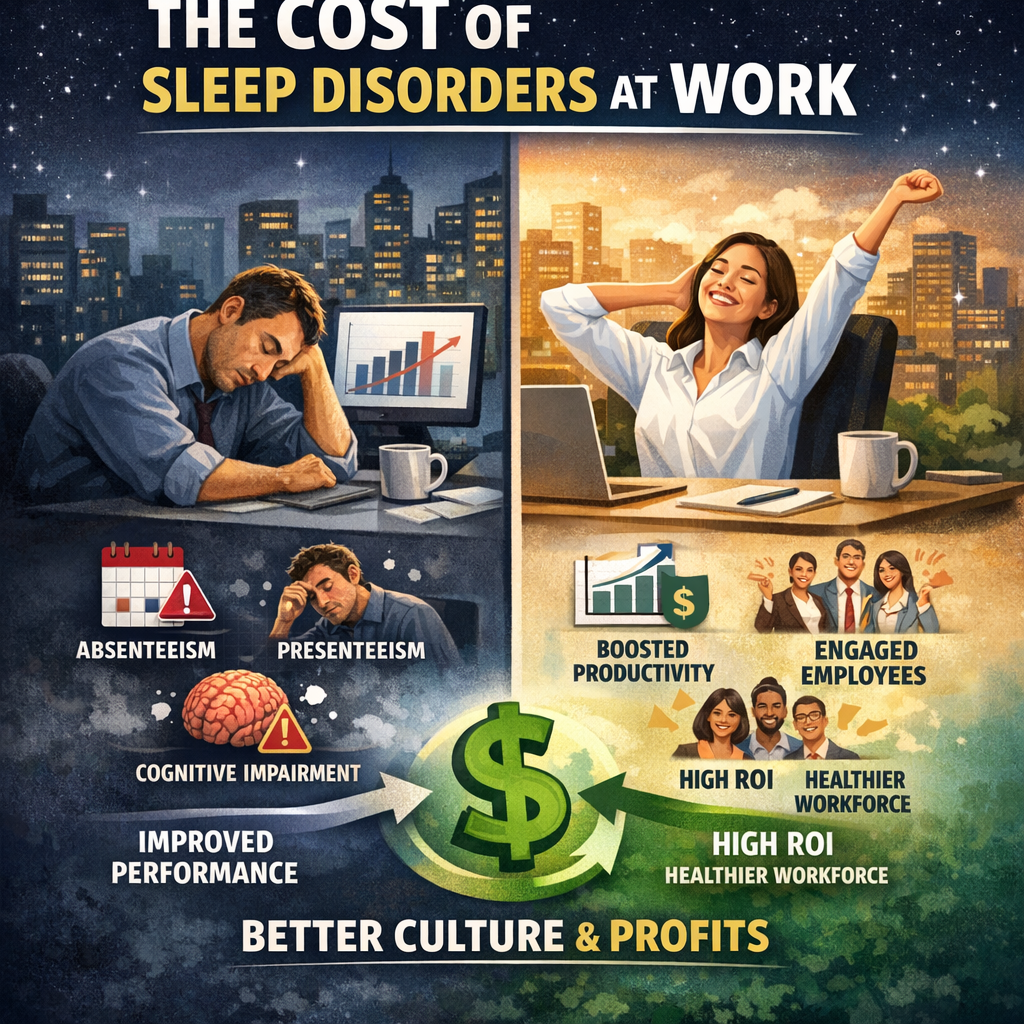
**Absenteeism** and **presenteeism** are two significant manifestations of sleep-related issues within organizations. **Sleep-deprived employees** are more prone to illness and accidents, contributing to higher rates of absenteeism. Even when present, their performance is often compromised by impaired **cognitive function**, reduced attention to detail, and decreased problem-solving abilities—known collectively as presenteeism. In a survey conducted by the **National Sleep Foundation**, it was revealed that U.S. workers lose an estimated $63 billion annually due to sleep deprivation-related productivity losses.
Furthermore, sleep disorders can escalate into chronic health conditions such as **cardiovascular diseases** and **diabetes**, driving up healthcare costs for employers. The **Journal of Occupational and Environmental Medicine** published a study suggesting that sleep disorders increase healthcare expenses by nearly 60%. By recognizing and addressing sleep issues within the workplace, companies can not only enhance the quality of life for their employees but also realize significant economic benefits.
Features
A growing body of research underscores the profound influence of sleep on workplace effectiveness. A study published in “Sleep,” a leading journal in sleep research, investigated the impact of sleep disorders on workforce productivity. The study found that individuals with moderate to severe sleep disorders had decreased cognitive functions comparable to alcohol intoxication, which directly translates to reduced workplace efficiency and increased error rates.
Moreover, another pivotal study by **Harvard University** emphasizes the economic burden of sleep disorders. Their research outlines that insomnia alone is linked with over 250 million days of lost productivity annually in the U.S., equating to an estimated cost of $411 billion each year. These staggering figures highlight the critical need for businesses to prioritize **sleep health** alongside physical and mental well-being initiatives.
The **Institute of Medicine** provides additional evidence indicating that treating sleep disorders can return a significant **return on investment (ROI)** for companies. Their guidelines suggest that every dollar spent on sleep disorder treatment can yield a threefold reduction in costs related to healthcare and lost productivity. Emphasizing sleep health within employee wellness programs not only boosts morale but also promotes a sustainable working environment.
Corporate leaders must also consider the indirect benefits of addressing sleep disorders. Reducing workplace stress and improving sleep quality can foster a culture of well-being, enhancing overall **job satisfaction** and employee retention. Such a shift can be vital for companies aiming to attract and retain top talent in today’s competitive job market. Implementing educational workshops on sleep hygiene, relaxation techniques, and stress management can be an effective starting point for businesses eager to make an impactful change.
Conclusion
Addressing sleep disorders is a strategic investment in the health and productivity of an organization. As research consistently highlights, sleep health cannot be separated from overall employee performance and corporate success. By championing a culture that prioritizes rest and recovery, companies can unlock a wealth of benefits including enhanced employee well-being, reduced healthcare costs, and improved bottom-line performance. It is time for businesses to recognize the silent but significant role of sleep in shaping the future sustainability and success of their operations.
**References**
1. [American Academy of Sleep Medicine – Sleep Disorders](https://aasm.org/)
2. [National Sleep Foundation – Loss of Productivity](https://www.sleepfoundation.org/)
3. [Harvard University Study on Economics of Sleep](https://scholar.harvard.edu/)
4. [Journal of Occupational and Environmental Medicine – Study on Sleep and Healthcare Costs](https://journals.lww.com/joem/)
5. [Institute of Medicine – Guidelines on Sleep Disorders](https://www.ncbi.nlm.nih.gov/books/NBK19961/)
**Concise Summary**
Addressing **sleep disorders** is crucial for businesses aiming to enhance employee health and productivity. With over 50 million Americans affected, these disorders escalate absenteeism and presenteeism, costing U.S. businesses $63 billion annually. Studies reveal that treating sleep issues can give a threefold return on investment, reducing healthcare costs linked to chronic conditions. Prioritizing sleep health not only boosts productivity but also enhances employee satisfaction and retention. Implementing sleep health programs can significantly contribute to a company’s bottom line by fostering a sustainable, efficient work environment.

Dominic E. is a passionate filmmaker navigating the exciting intersection of art and science. By day, he delves into the complexities of the human body as a full-time medical writer, meticulously translating intricate medical concepts into accessible and engaging narratives. By night, he explores the boundless realm of cinematic storytelling, crafting narratives that evoke emotion and challenge perspectives.
Film Student and Full-time Medical Writer for ContentVendor.com