Harnessing Neuroplasticity: The Next Frontier in Personalized Sleep Disorder Treatments
Introduction
In the fast-evolving world of **sleep science**, one concept is increasingly taking center stage: **neuroplasticity**. Neuroplasticity is the brain’s remarkable ability to reorganize itself by forming new neural connections throughout life. It is gaining recognition as a crucial factor in understanding and treating **sleep disorders**. With daily stressors increasing and sleep patterns becoming more disrupted, addressing sleep disorders with precise, individualized treatments is more vital than ever. Neuroplasticity offers promising prospects for developing these personalized therapies.
The journey of neuroplasticity and sleep began with the understanding that the brain is not a static organ but a dynamic system capable of adapting to various stimuli and experiences. Research has elucidated how the brain’s plastic nature may play a pivotal role in sleep health. Sleep disorders such as **insomnia**, **sleep apnea**, **narcolepsy**, and **restless leg syndrome**, among others, affect millions globally, impairing daily functioning and overall health. Traditional treatments, from pharmacological interventions to **cognitive-behavioral therapies**, while effective for many, are often generalized and don’t work for all, underscoring the necessity for personalization in treatment plans.
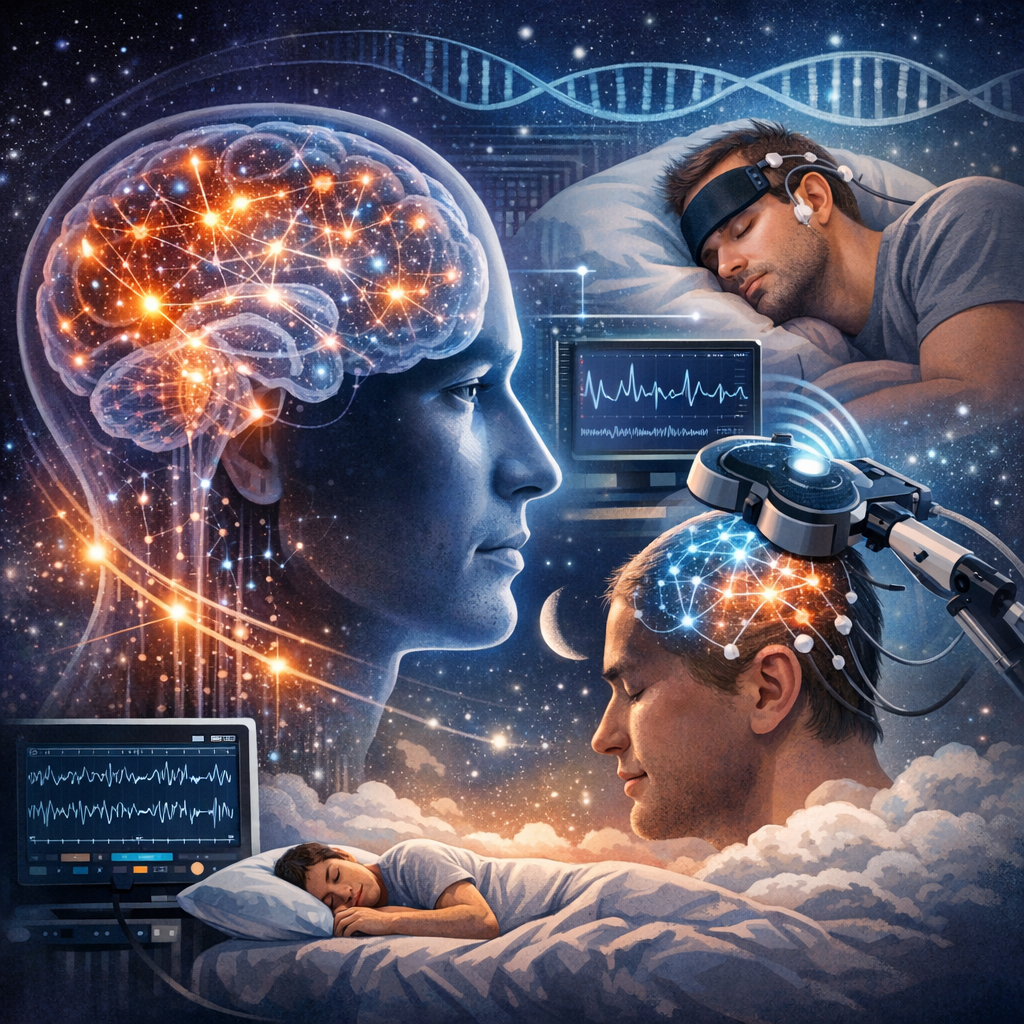
Neuroplasticity provides a framework for personalized treatment, allowing interventions to be tailored to an individual’s unique neural architecture and specific needs. Recent advancements in **neuroimaging** and biomarker identification are paving the way for understanding the neural underpinnings of sleep disorders. This knowledge enables medical professionals to craft interventions that ‘rewire’ the brain, promoting healthier sleep patterns. Techniques like **transcranial magnetic stimulation (TMS)** and **neurofeedback** are being explored for their potential to enhance brain plasticity, facilitating recovery and improvement in sleep disorder patients.
Understanding and leveraging neuroplasticity could revolutionize our approach to sleep disorders. With the ability to adapt and modify neural pathways, the brain is key to unlocking personalized sleep health solutions. Integrating this knowledge into clinical practice promises enhanced patient outcomes and innovative, individualized care that addresses the root of sleep disturbances.
Features
Numerous studies underline the significance of neuroplasticity in sleep science. A study by **Harvard Medical School** investigated the impact of neuroplastic interventions on patients with chronic insomnia. Researchers employed cognitive-behavioral therapy tailored to stimulate specific neuroplastic responses in the brain. The results demonstrated significant improvements in sleep quality and duration, affirming the potential of neuroplasticity-based treatments [source](https://hms.harvard.edu).
Another groundbreaking study in the journal *Nature Communications* explored **transcranial magnetic stimulation (TMS)** to alter brain plasticity in sleep disorder patients. TMS uses magnetic fields to stimulate nerve cells in the brain, aiming to modify neural circuitry involved in sleep processes. The findings were promising, showing improved sleep continuity and reduced symptoms of sleep disorders, suggesting that plasticity-focused treatments could soon become mainstream [source](https://www.nature.com/ncomms).
Moreover, neuroplasticity is studied in the context of sleep apnea. Researchers from the **University of California** conducted a trial using neurofeedback training to modulate the brain’s theta wave patterns, commonly associated with sleep disturbances. Participants exhibited improved sleep apnea symptoms, illustrating how targeted neural training can lead to beneficial outcomes [source](https://www.universityofcalifornia.edu).
These studies highlight a shift in sleep disorder treatment paradigms. With advanced neuroimaging techniques, these interventions can be customized to the individual’s brain structure and function, revolutionizing therapeutic effectiveness. By focusing on how sleep experiences are encoded and transformed in the brain, scientists can craft approaches that optimize neuroplasticity, ultimately enhancing sleep quality and health.
Conclusion
**Neuroplasticity** represents a promising horizon in the treatment of sleep disorders, offering a pathway to more personalized, effective, and enduring solutions. As research progresses, leveraging the brain’s inherent ability to adapt and rewire itself will likely lead to breakthroughs in sleep medicine that address the complex neural underpinnings of sleep disorders. By focusing on an individual’s unique neural profile and employing neuroplastic interventions, medical professionals can open a new frontier in sleep health, where treatments are designed not only to alleviate symptoms but to address the fundamental neural changes needed for better sleep. This innovative approach holds the potential to vastly improve the lives of those struggling with sleep disruptions, transforming how we understand and tackle one of modern society’s most pervasive health issues. Continued exploration and integration of neuroplasticity into sleep medicine will undoubtedly lead to more refined and personalized care, paving the way for healthier sleep and healthier lives for all.
Concise Summary
Neuroplasticity, the brain’s adaptive capacity, is emerging as a critical factor in treating sleep disorders, providing a framework for personalized therapies. Traditional treatments like pharmacological and cognitive-behavioral therapies often lack customization, highlighting the need for tailored approaches. Advances in neuroimaging and techniques such as transcranial magnetic stimulation and neurofeedback offer new avenues for intervention by enhancing brain plasticity. Studies from institutions like Harvard Medical School and the University of California showcase successful application in improving insomnia and sleep apnea symptoms. Incorporating neuroplasticity into sleep medicine may revolutionize treatment, addressing the root causes and enhancing patient outcomes.
**References**
– [Harvard Medical School](https://hms.harvard.edu)
– [Nature Communications](https://www.nature.com/ncomms)
– [University of California](https://www.universityofcalifornia.edu)

Dominic E. is a passionate filmmaker navigating the exciting intersection of art and science. By day, he delves into the complexities of the human body as a full-time medical writer, meticulously translating intricate medical concepts into accessible and engaging narratives. By night, he explores the boundless realm of cinematic storytelling, crafting narratives that evoke emotion and challenge perspectives.
Film Student and Full-time Medical Writer for ContentVendor.com