AI-Powered Symptom Tracking Revolutionizing Sleep Apnea Diagnosis from Your Smartphone
Introduction
**Sleep apnea**, a prevalent sleep disorder affecting millions globally, involves repeated interruptions in breathing during sleep. Traditionally, **diagnosis** relies on overnight **polysomnography** in a sleep lab, which, despite its thoroughness, is often inaccessible due to financial constraints, wait times, and geographical limitations.
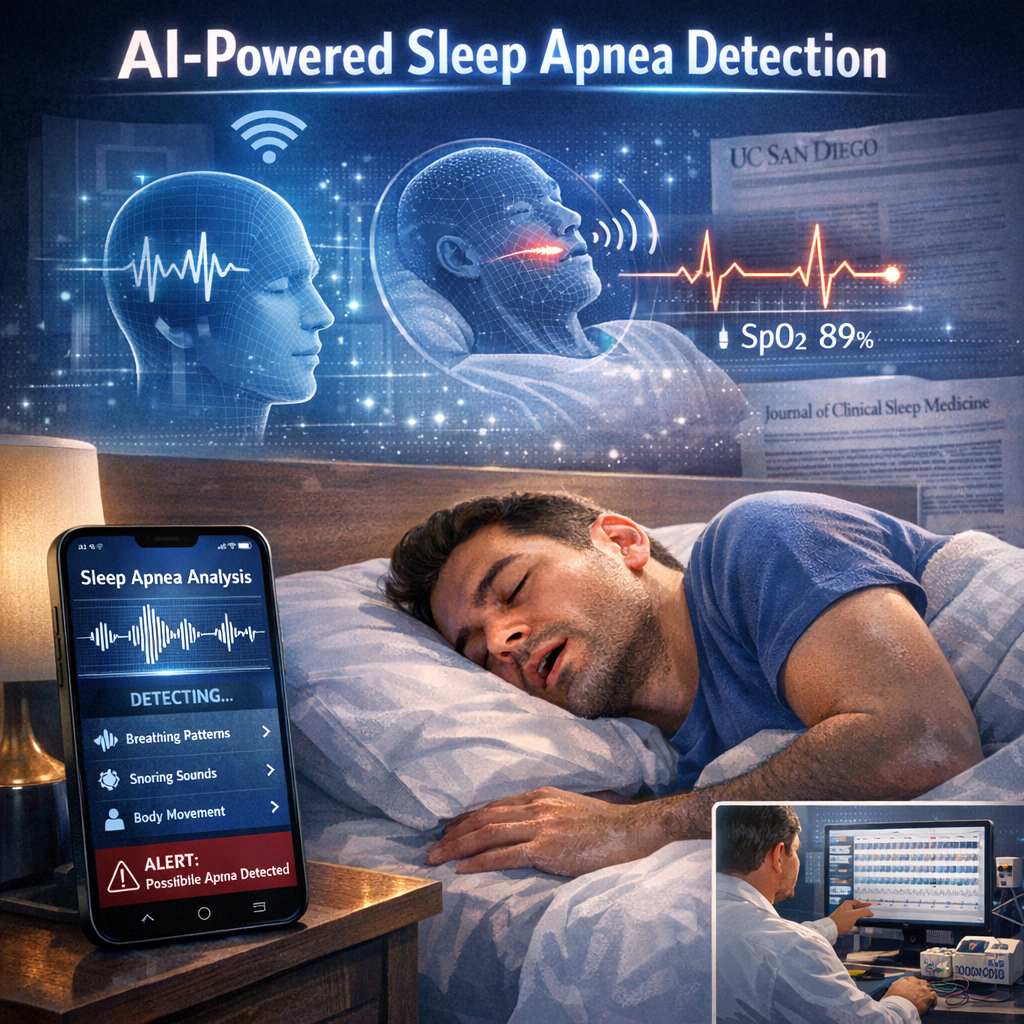
The digital age has introduced **AI-powered symptom tracking** via smartphones, leveraging **artificial intelligence** and **machine learning** for a more accessible solution. With smartphones equipped with advanced sensors, they can track and analyze **sleep patterns**, potentially detect sleep apnea symptoms, and provide users with a preliminary overview of their sleep health.
Recent technological advancements enable smartphones to monitor sleep by using AI algorithms to analyze **sound patterns**, **breathing irregularities**, and **movements** overnight. This proactive health management tool allows individuals to regularly track their sleep quality and identify potentially worrisome patterns related to sleep apnea.
These technologies are continually improving, gathering vast data amounts to refine AI model accuracy. By recognizing subtle sleep disruptions, they empower users to manage their sleep health and assist healthcare providers in evidence-based decision-making. As AI integrates more deeply, the precision of these diagnostics improves, offering a complementary tool to traditional sleep studies.
Features
Professional communities are recognizing **AI applications**’ potential. For instance, a **University of California, San Diego** study showed how AI-driven smartphone sensors effectively detect sleep apnea. By analyzing **breathing** and **sleep movements**, it suggested AI models could potentially perform preliminary screenings accurately.
Another study in the **Journal of Clinical Sleep Medicine** revealed that smartphone technology combined with AI could minimize reliance on traditional sleep labs. Offering a **cost-effective** and **scalable solution**, it’s particularly beneficial for individuals in remote areas or with mobility issues.
AI deployments provide users with ongoing sleep reports, health indicators, and breathing behaviors. Continuous tracking detects sleep apnea early, aiding in preventing associated risks like cardiovascular diseases and hypertension. Mapping trends over time gives clinicians and patients comprehensive insights into sleep health.
Smartphone-based diagnostics encourage more individuals to engage in their healthcare. As these technologies lower barriers, more individuals monitor their health and consult healthcare professionals with relevant data.
Conclusion
Integrating **AI-powered** symptom tracking into smartphones marks a transformative leap in medical diagnostics, especially for diagnosing sleep apnea. These technologies democratize healthcare by providing an accessible, cost-effective, and accurate method of tracking symptoms and offering preliminary diagnosis. Early **detection** and **management** can lessen the burden on healthcare systems.
While these technologies offer promising solutions, they complement rather than replace traditional diagnostic methods. Collaboration between technology developers, healthcare providers, and patients is essential to maximize these AI tools’ utility and accuracy. As technology increasingly integrates into healthcare, AI-powered applications hold the potential to revolutionize sleep apnea diagnosis, meriting our attention and investment.
**References**
1. [University of California, San Diego Study on Smartphone Sleep Apnea Detection](#)
2. [Journal of Clinical Sleep Medicine article on AI and Home-based Sleep Apnea Detection](#)
**Concise Summary**
AI-powered smartphone applications are revolutionizing the diagnosis of sleep apnea by offering a more accessible and cost-effective approach. Leveraging artificial intelligence and smartphone sensors, these technologies can analyze sleep patterns, breathing irregularities, and movements to provide a preliminary overview of sleep health. While traditional in-lab sleep studies remain essential, AI-based tools serve as a supplementary diagnostic method, enabling early detection and management of sleep apnea risks. By democratizing healthcare, these technologies allow more individuals to monitor their sleep health, engage in proactive management, and consult with healthcare providers when necessary.

Dominic E. is a passionate filmmaker navigating the exciting intersection of art and science. By day, he delves into the complexities of the human body as a full-time medical writer, meticulously translating intricate medical concepts into accessible and engaging narratives. By night, he explores the boundless realm of cinematic storytelling, crafting narratives that evoke emotion and challenge perspectives.
Film Student and Full-time Medical Writer for ContentVendor.com