The Sleep-Breathing Connection: How Hidden Airway Disorders Might Be Sabotaging Your Cognitive Health
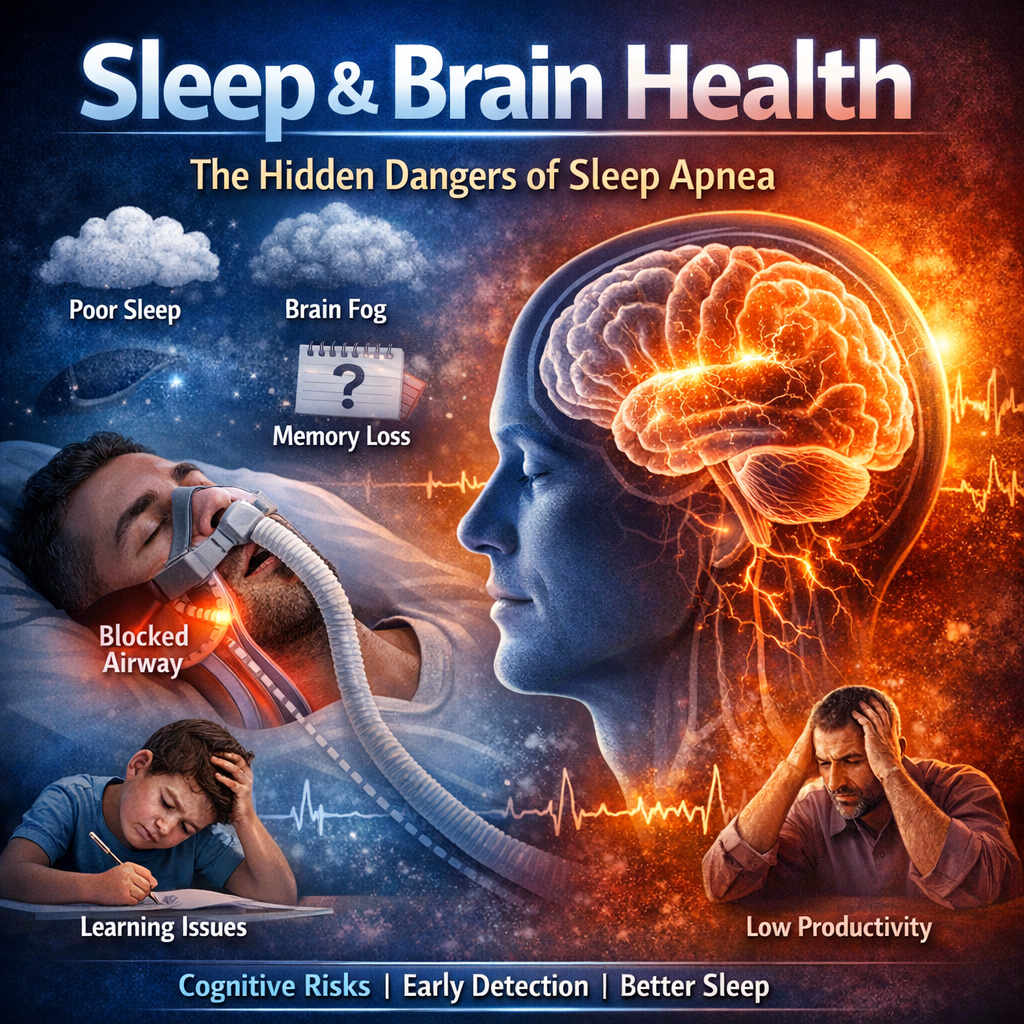
Good quality **sleep** is more than just a restful night; it’s integral to physical and **cognitive health**. Yet, many people are unaware of how their **breathing while sleeping** may be impacting these aspects of their lives. **Breathing disorders** during sleep, such as **sleep apnea** or **upper airway resistance syndrome (UARS)**, can silently wreak havoc on a person’s health, leading to significant **cognitive decline** over time. These disorders, often unnoticed due to their subtle symptoms, are more common than you might think and could be the culprit behind **brain fog**, impaired memory, and decreased productivity.
**Sleep** is a complex biological process where the brain and body go through various restorative cycles. During sleep, breathing should be smooth and unobstructed. However, for those with **airway disorders**, periods of disrupted breathing can occur, causing **sleep fragmentation** and reducing the quality of sleep. These interruptions cause reduced **oxygen levels**, increased **heart workload**, and affect the brain’s ability to consolidate memories, process information, and regenerate neurons.
In children and adults alike, cognitive processes are heavily impacted by sleep quality. Among children, **sleep-disordered breathing** can manifest in **behavioral issues** or decreased **academic performance** due to their developing brains’ vulnerability. In adults, chronic poor sleep can lead to conditions such as difficulty concentrating, forgetfulness, and slower cognitive processing speeds, often mistaken for signs of aging or stress.
Oftentimes, individuals with sleep-related breathing disorders are unaware of their condition, attributing their fatigue or cognitive issues to other lifestyle factors. However, identifying and treating these disorders could substantially improve one’s overall cognitive function and quality of life. This article delves into the profound connection between sleep, breathing, and cognitive health, emphasizing the importance of recognizing and addressing hidden airway disorders.
Features:
**Medical research** has extensively studied the link between sleep, breathing disorders, and **cognitive function**. The **Sleep Heart Health Study** ([Sleep Heart Health Study](https://journal.chestnet.org/article/S0012-3692(16)51191-5/fulltext)), a landmark study, found a significant association between sleep apnea and cognitive decline. Participants with untreated severe sleep apnea showed more substantial cognitive deterioration over time compared to those without the disorder. This research highlights how critical oxygen regulation during sleep is for **mental acuity**.
Moreover, a study published in the journal “**Chest**” explored how even mild forms of sleep-disordered breathing could affect cognitive functions. This study outlined that those with untreated mild sleep apnea underperformed in tasks involving memory, attention, and executive functions compared to a control group. Importantly, this study suggests that treatment of even mild airway disorders could potentially prevent cognitive decline.
The connection between airway disorders and cognitive health isn’t limited to adults. Pediatric studies, such as one published in the “**American Journal of Respiratory and Critical Care Medicine**” ([American Journal of Respiratory and Critical Care Medicine](https://www.atsjournals.org/doi/full/10.1164/ajrccm.162.2.2001045)), have shown similar findings in children. The research indicated that children with untreated sleep apnea often experienced difficulties in attention, behavior, and higher-level cognitive skills like decision-making and problem-solving. These studies underscore how crucial it is to identify and treat airway issues early, potentially mitigating long-term adverse effects on brain function.
Despite these insights, sleep-disordered breathing remains underdiagnosed. Many people do not recognize symptoms like **snoring**, nighttime awakenings, or daytime sleepiness as indicators of underlying airway issues. Public awareness and wider access to diagnostic tools, such as **at-home sleep tests**, may help more individuals seek timely intervention.
Conclusion:
The intricate relationship between sleep, breathing, and cognitive health is one that must not be overlooked. Hidden airway disorders, if left untreated, can silently but significantly deteriorate cognitive function, affecting every aspect of life from daily productivity to long-term mental health. By recognizing the signs and seeking appropriate treatment, individuals can dramatically enhance their cognitive function and overall well-being. As awareness grows, early detection and intervention remain essential in combating the insidious effects of sleep-disordered breathing. Understanding and addressing these issues not only improve sleep but hold the promise of maintaining and optimizing cognitive health well into the future. Investing time in diagnosing and treating any potential sleep-breathing disorders could be the key to unlocking your brain’s full potential and safeguarding it against decline.
For further reading, consult the following resources:
– [Sleep Heart Health Study](https://journal.chestnet.org/article/S0012-3692(16)51191-5/fulltext)
– [American Journal of Respiratory and Critical Care Medicine](https://www.atsjournals.org/doi/full/10.1164/ajrccm.162.2.2001045)
– [National Institute of Neurological Disorders and Stroke](https://www.ninds.nih.gov/health-information/patient-caregiver-education/brain-basis-cognition-and-behavior)
**Concise Summary:**
Sleep-related breathing disorders like sleep apnea critically impact cognitive health, often leading to brain fog and memory issues. These disorders are frequently undiagnosed but significantly affect oxygen levels, sleep quality, and mental functions. Studies reveal untreated sleep apnea accelerates cognitive decline in both adults and children. Highlighting the importance of awareness, diagnosis, and treatment, addressing these disorders not only aids in better sleep quality but also protects long-term cognitive health. Early intervention can vastly enhance brain function and overall quality of life.

Dominic E. is a passionate filmmaker navigating the exciting intersection of art and science. By day, he delves into the complexities of the human body as a full-time medical writer, meticulously translating intricate medical concepts into accessible and engaging narratives. By night, he explores the boundless realm of cinematic storytelling, crafting narratives that evoke emotion and challenge perspectives.
Film Student and Full-time Medical Writer for ContentVendor.com